£10.5 Billion Green Bonds Mask Water Firm Filth
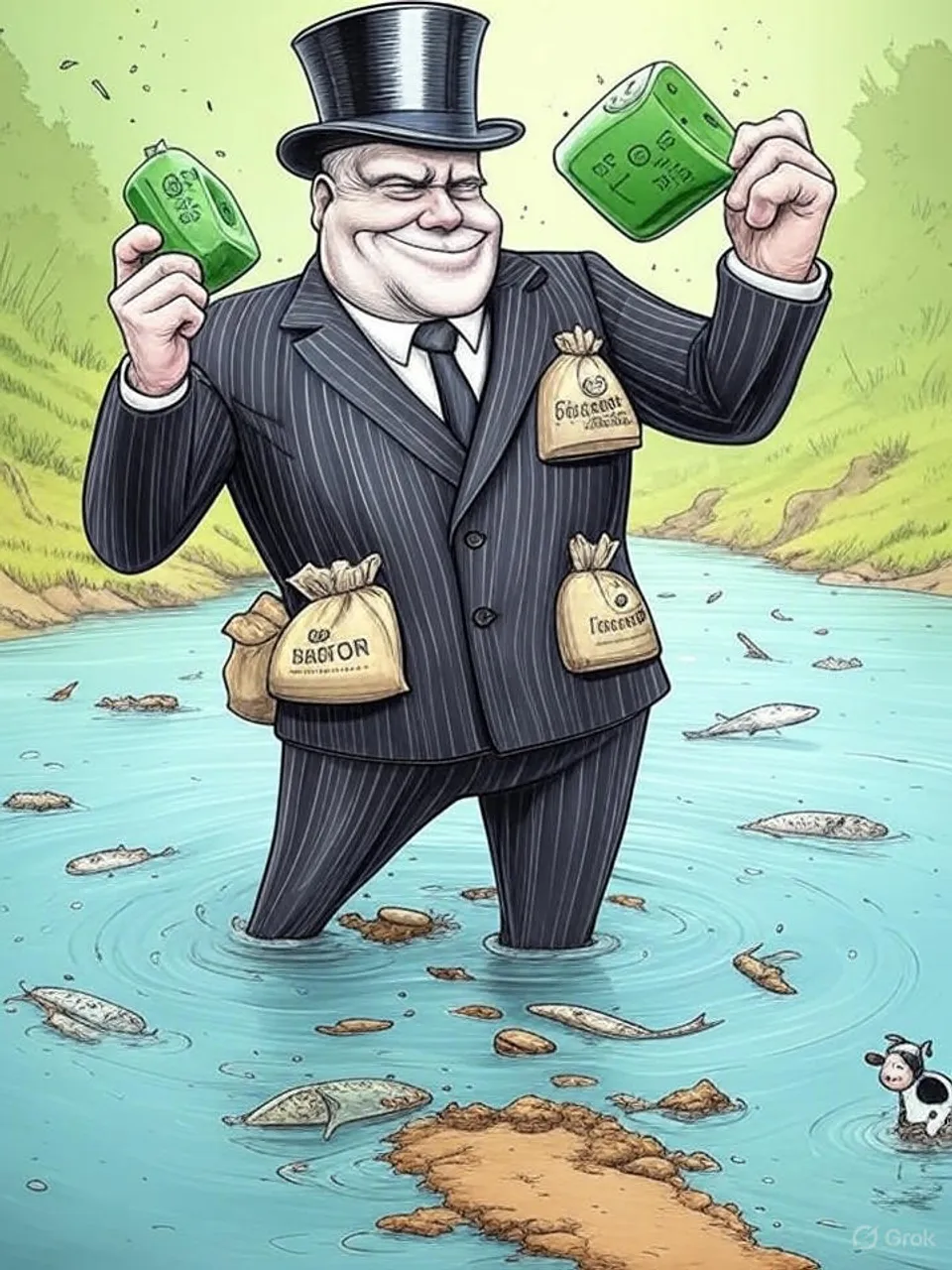
Thames and Anglian lead issuance amid record spills and dividend payouts
Privatised water companies raised £10.5bn in green bonds since 2017, promising environmental gains, while sewage pollution surged and dividends flowed to shareholders. Regulators collect fines but permit ongoing decay.
Commentary Based On
the Guardian
England’s water industry issued £10.5bn in ‘green bonds’ despite pollution record
England’s water firms issued £10.5 billion in green bonds since 2017, accounting for 19% of all UK corporate green bonds, as their sewage pollution worsened.
Thames Water raised £3.1 billion. Anglian Water led with £3.5 billion. Both rank among the top corporate issuers despite Environment Agency data showing sector-wide environmental decline last year.
Green bonds promise lower borrowing costs. Investors buy them for environmental impact. Proceeds target renewables, emissions cuts, or sustainable water management—categories that cover routine water firm operations.
Yet spills into rivers reached record levels. Thames Water dumped sewage for 1.7 million hours in 2023 alone. Firms paid £7.2 billion in dividends since privatization while infrastructure crumbled.
Regulatory Blind Spots
The Environment Agency noted stalled or reversed progress. It imposed record fines of £168 million last year. Fines recycle into government coffers, not river fixes.
Thames skipped impact reports for two years. These voluntary disclosures track green bond spending. The firm admitted falling short, promising future compliance.
Anglian claims funds drove carbon reductions. It calls for regulatory reform to make the sector “investable.” Pollution incidents persist regardless.
Dividend Drain Over Investment
Privatization in 1989 promised efficiency. Bills rose 40% real terms since then. Firms extracted £72 billion in dividends by 2023, per official data.
Debt ballooned to £15 billion industry-wide. Green bonds added to the pile at lower rates. Shareholders gained; ratepayers faced leaks and contamination.
Ofwat capped bills but approved bond issuances. It demands investment plans that firms routinely miss. Penalties rarely alter behavior.
Persistent Across Governments
Labour privatized the model in opposition silence. Tories regulated lightly post-2010. No party reversed the structure amid fiscal squeezes.
Thames owners now seek 15-year environmental leniency. Government weighs bailout risks. Ordinary households pay via bills and taxes.
Rivers host 70% more sewage bacteria than EU safe limits. Public health warnings multiply. Bathing sites close routinely.
Green bonds lured £10.5 billion on environmental pretense. Pollution data contradicts the pitch. Investors profited; rivers died.
This exposes privatization’s core flaw: profit extraction trumps public goods. Regulators enforce paperwork over outcomes. Twenty-five years prove the model entrenches decay, untouched by electoral shifts.
England’s waterways rot under green debt. Citizens inherit filth and bills. Institutional failure compounds across decades.
Commentary based on England’s water industry issued £10.5bn in ‘green bonds’ despite pollution record by Jasper Jolly on the Guardian.