£18 Billion Send Debt Looms as Overrides Vanish
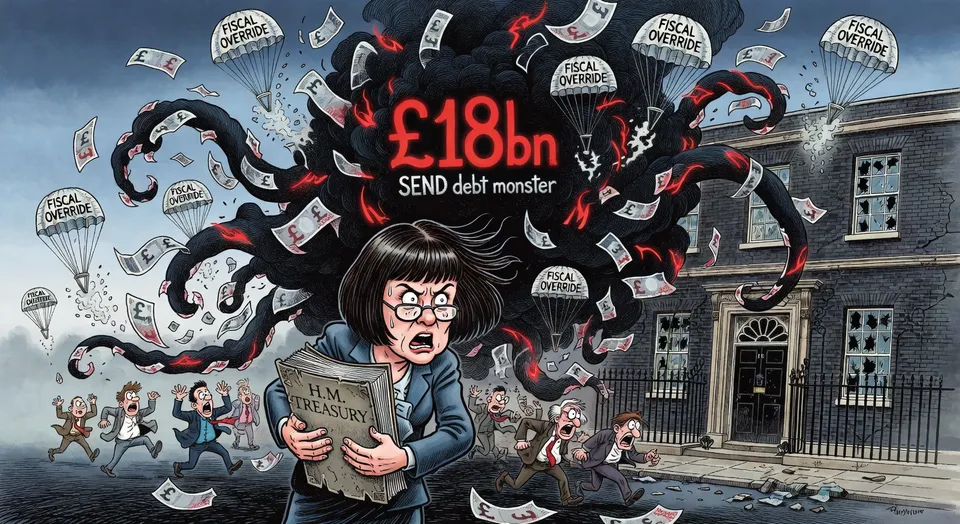
Annual £6bn bill risks erasing chancellor's £22bn fiscal buffer
Statutory overrides hid £18bn Send debts since 2014; Labour delays reckoning as costs threaten surpluses and school budgets. Systemic deferral across parties erodes public services.
Commentary Based On
the Guardian
Reeves urged to reassure MPs over public finances amid £6bn-a-year Send costs
Councils accumulated £18 billion in Send debts by 2028-29, funded through borrowing kept off the national balance sheet via statutory overrides since 2014.
Successive chancellors sanctioned this accounting trick to shield other spending. The annual bill now hits £6 billion, driven by surging pupil numbers and private provider price hikes.
The Office for Budget Responsibility flagged the unaccounted costs as a direct risk to public finances. Reeves doubled the budget surplus to £22 billion in November to buffer bond markets, but analysts warn Send overspends could erase it.
Historical Deferral
Governments from 2014 deferred Send costs, rolling them as arm’s-length debts. Councils borrowed freely with Treasury approval, protecting day-to-day budgets.
This ends in 2028-29 when Whitehall absorbs the bill. Reeves delays allocation until the 2027 spending review, leaving the responsible department unnamed.
Ministers cover 90% of £5 billion historical debts to March 2025. Councils must reform services in exchange, per an upcoming white paper.
Coverage Gaps Persist
Future overspends from 2026-28 remain unaddressed. Government pledges a “proportionate” approach without limits specified.
English councils saw Send costs explode as qualifying pupils rose. Private providers, dominant in delivery, jacked up charges unchecked.
Analyst Reckoning
Luke Sibieta of the IFS outlines three paths to close the £6 billion gap: reform Send growth, shift funds from elsewhere, or slash mainstream school budgets by 11%.
A fourth: borrow more, thinning the surplus. Capital Economics flags risks to departmental pledges, including defence.
Investors eye bond markets warily. Philip Shaw of Investec predicts concern if savings fail and borrowing rises.
Systemic Strain
Reeves faces Treasury committee pressure for transparency. Chair Meg Hillier demands long-term plans; Reeves points to next year.
Education Secretary Bridget Phillipson promises efficiency gains. Critics see rationing ahead, trimming OBR projections.
This mirrors procurement wastes and NHS silos. Root failures—demand surges, provider profiteering—persist across parties.
Councils quit viability without Send fixes. Taxpayers fund the backlog while schools face squeezes.
Ordinary families lose: delayed support for 1.5 million Send pupils, or diluted education for all. No chancellor since 2014 stemmed the tide.
The pattern endures. Governments promise containment, deliver deferral, then pass liabilities forward. Send exposes fiscal pretence amid service decay, another layer of Britain’s unmanaged decline.
Commentary based on Reeves urged to reassure MPs over public finances amid £6bn-a-year Send costs at the Guardian.