Adoptive breakdowns expose child protection's post-adoption void
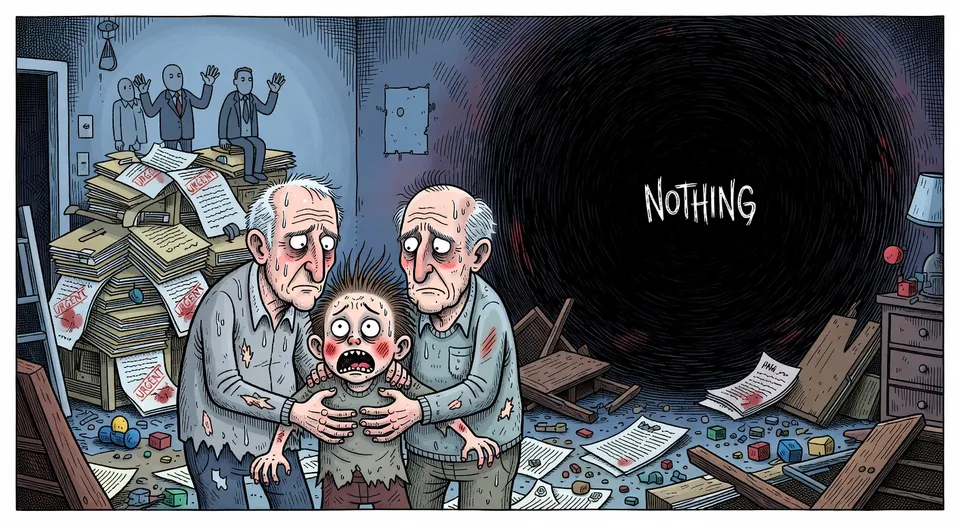
1,000 UK adoptions reversed in five years amid Welsh parents' physical assaults and service waits
Adoptive families face years of violence from traumatised children with minimal state support, revealing child protection's abandonment after placement. Low official breakdown rates hide parent-blaming and systemic voids across parties.
An adoptive mother in north Wales reports 15 years of physical assaults from her traumatised daughter. Councils record just 16 breakdowns across responding Welsh authorities in five years, a 2% rate they call stable. Parents face blame and barriers instead of backup.
Anna shields her daughter’s identity while describing daily survival. Pre-verbal trauma, dissociation manifesting as multiple personalities, and autism with pathological demand avoidance define the child’s needs. Local authorities and CAMHS force her to fight for therapies that sometimes help but arrive too late.
Physical attacks extend to other families. A second mother locks away sharp objects after repeated assaults from her “ball of anger” teenager, also in survival mode. Parenting courses arrive as the sole offering, despite destroyed careers, health, and marriages.
UK-wide, 1,000 adopted children returned to care over five years. Wales adopts 250-300 annually, with 22 disruptions noted in partial data. Low figures mask unreported crises, as adoptive parents speak only after reaching breaking point.
Care Inspectorate Wales flags waiting lists for psychologists and occupational therapists. Delays risk placements, per their report on north Wales services. Recruitment promises more capacity, but families report circular failures.
Welsh government cites £13m invested in the National Adoption Service since 2019. Joined-up services and trauma-informed support form the stated goal. Yet corporate parenting duties end at adoption, severing state responsibility despite lifelong needs.
Parent-Blaming Prevails
Professionals question boundaries and parenting quality. Anna recounts dismissal as inadequate despite her endurance. This shifts accountability from systemic gaps to individual families.
Children’s Commissioner Rocio Cifuentes deems it “deeply concerning,” pledging to raise post-adoption support with governments. Moral duty persists beyond legal adoption, she argues, demanding resource and coordination fixes. Parties from Reform UK to Greens echo calls for better integration across health, education, and social care.
Trauma from prior abuse and neglect follows children home unchecked. Art psychotherapist Lilith Gough notes its school disruptions and behavioural masks. No universal fix exists, but timely intervention prevents escalation—intervention routinely absent.
This pattern traces decades. Adoption promised permanency after foster failures, yet state withdrawal leaves carers exposed. Cross-party consensus on “support” yields persistent waiting lists and blame.
Public services overload compounds the breach. CAMHS strains mirror NHS pneumonia surges and mental health voids elsewhere. Adoptive families, hailed as heroes pre-placement, become isolated battlegrounds.
Rural and urban Wales share the load. Deprived areas amplify prior traumas, with no specialised pathways for ex-care children. Taxpayer funds build services that evaporate post-adoption order.
Child protection reveals its core fracture here. State removes children from birth families, places them with vetted adopters, then abandons both to unmanaged fallout. Ordinary citizens pay via returned care costs and shattered homes.
Failures recur under Labour, Conservatives, Plaid Cymru—same incentives, same deferrals. Professionals rotate roles unpunished; budgets announce without delivery. Adoptive crises quantify social services’ collapse, where vulnerable children cycle through institutional voids at family expense.
Britain’s child welfare system now exports trauma to private homes without infrastructure. Adoptions serve as offloading mechanisms, not resolutions. Families endure as collateral in a state that celebrates low stats over lived ruin.
Commentary based on Adoptive parents 'in crisis' living with traumatised children at BBC News.