Age Deception and Untreated Psychosis Converge in Uxbridge Stabbing
Dawood Safi entered Britain hidden in a lorry, lied about his age to secure asylum, and killed a dog walker after three mental health contacts failed to intervene, resulting in a hospital order.
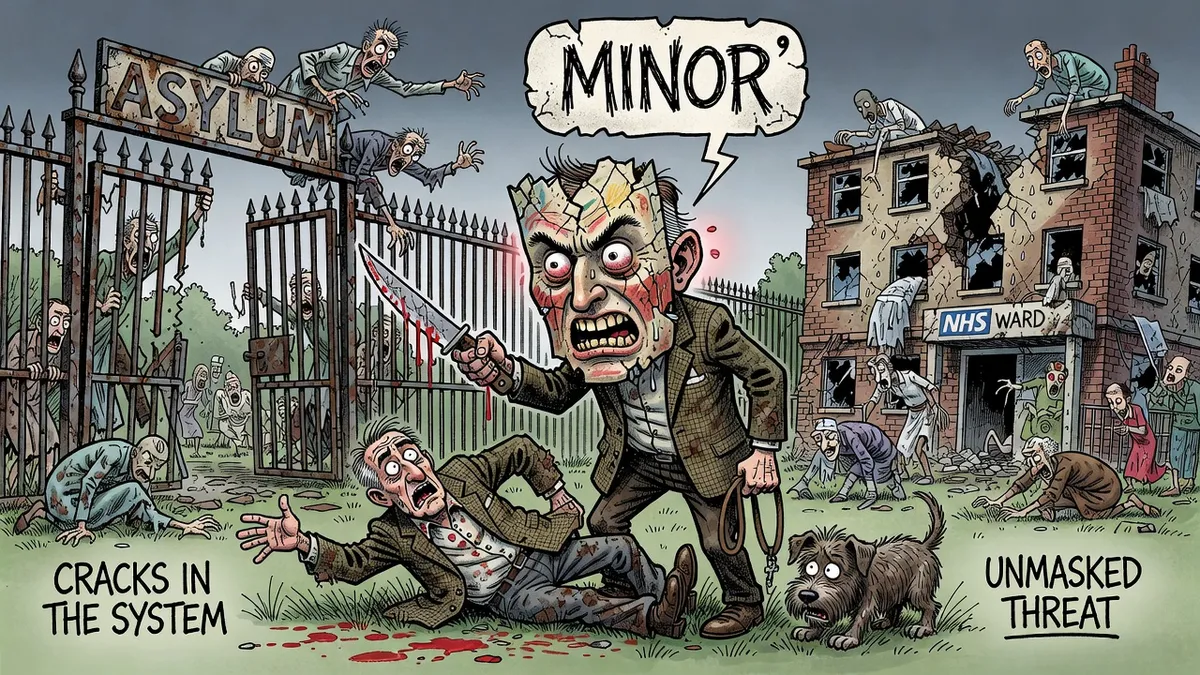
A man entered Britain hidden in a lorry, lied about his age to secure asylum, and later killed a dog walker after three separate mental health contacts in the days before the attack.
Dawood Safi arrived from Afghanistan in November 2020 and claimed to be 17 when he was 22. This deception allowed him to remain and access housing and education. He later worked as an Uber driver and studied mechanics while living in Uxbridge.
Three days before the October 2025 attacks, Safi visited his GP, received a mental health assessment at Hillingdon Hospital, and approached Hayes police station. None of these contacts produced intervention that prevented the violence. He then stabbed his landlord, killed Wayne Broadhurst with at least 14 knife wounds while the victim walked his dog, and attacked a 14-year-old boy.
Southwark Crown Court accepted a manslaughter plea by diminished responsibility. The judge recorded that Safi was in a psychotic state driven by paranoid delusions and voices. She would have imposed a life sentence with an eight-year minimum term absent the mental health findings. An indefinite hospital order followed, with an estimated minimum five years at Broadmoor before any transfer.
The court noted that deportation remains possible on the judge’s recommendation. Final authority rests with the Home Secretary. No prior criminal convictions existed, yet the combination of illegal entry, false age claim, and untreated psychotic depression produced three victims.
Entry and screening patterns
Official records show Safi received asylum after the age misrepresentation. Subsequent checks did not reverse the grant. Similar cases have produced repeated instances where initial deception on age or identity later coincides with serious offending.
Mental health system performance
Safi sought help repeatedly in the immediate lead-up to the attacks. Assessments occurred at primary care, hospital, and police levels. The system recorded symptoms but did not detain or medicate in time to avert the outcome. The resulting hospital order now places lifelong monitoring on the state after the damage occurred.
This sequence matches wider data on rising hospital admissions for psychotic disorders alongside unchanged or worsening rates of community violence linked to untreated cases. The public bears the cost through both the initial offences and subsequent secure care.
The case demonstrates how border decisions made years earlier and mental health responses made days earlier intersect in the same street. One British citizen is dead, another injured, and a teenager stabbed. The institutions that admitted the perpetrator and assessed his condition beforehand continue without structural change.
Commentary based on Man detained for stabbing dog walker to death at BBC.
← Back to commentary