AI Now Filters NHS Access as Staffing Capacity Stalls
The NHS app's new AI system manages demand rather than expanding supply, confirming long-term workforce and funding shortfalls.
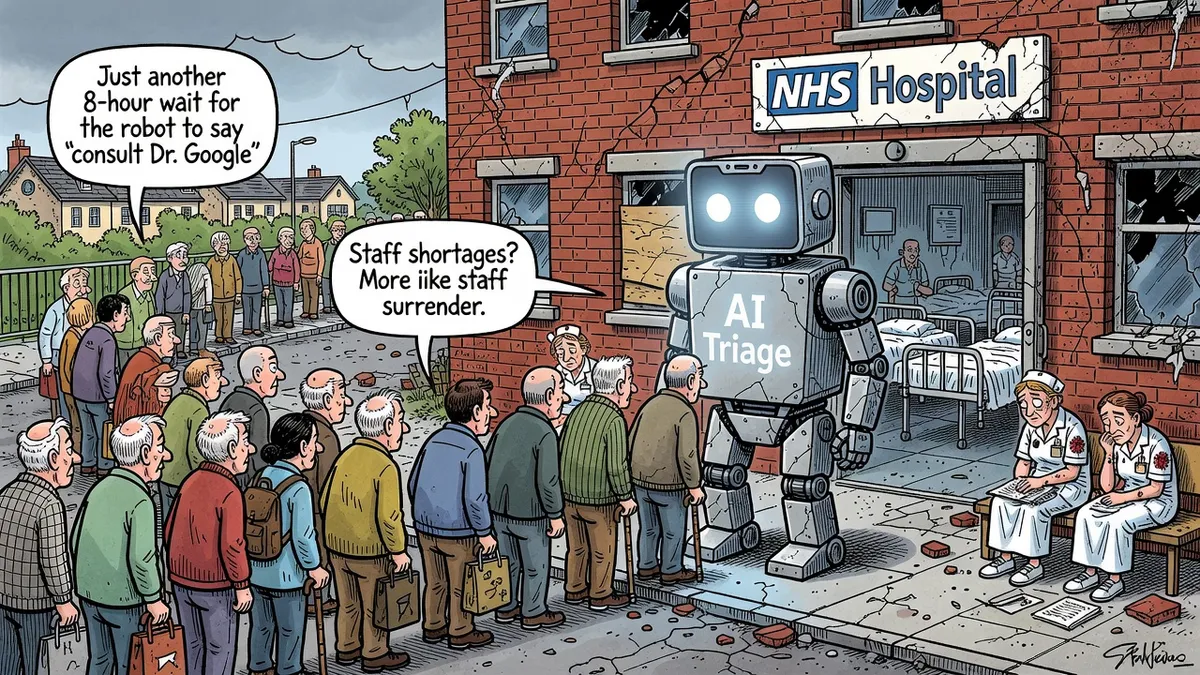
Triage tool reaches 200,000 patients next year while core shortages remain unaddressed
The NHS will roll out AI software through its app to triage patients in England, directing them toward GP appointments, pharmacies, A&E, community services or self-care advice. The system will reach more than 200,000 users within twelve months and become available to all app users by April 2028. Officials frame the change as part of a £10 billion technology overhaul, yet the tool addresses access bottlenecks that have persisted for years.
Demand Management Over Service Expansion
A trial at one Sussex practice recorded a 29 percent drop in patients queuing by phone. The reduction shows the software can reroute some queries away from overstretched reception staff. It does not increase the number of available appointments or clinicians.
Health Secretary James Murray stated the tool would not replace clinical decisions. The distinction matters little when primary care capacity remains fixed while patient contacts continue to rise. The software simply sorts existing demand more efficiently.
Workforce and Infrastructure Shortfalls
England’s GP practices have faced recruitment shortfalls and rising consultation volumes for more than a decade. The decision to automate initial contact follows repeated failures to match staffing levels to population needs. Similar patterns appear in ambulance response times and hospital bed occupancy, where technology substitutes for additional personnel.
The accompanying rollout of AI transcription tools at several trusts aims to reduce administrative time. Early data from one children’s hospital trial showed staff spending 25 percent more time with patients. These gains remain marginal against overall workforce deficits documented across NHS trusts.
Digital Access and Exclusion Risks
NHS England claims the changes will spread benefits nationwide. Patients without smartphones, reliable internet or the ability to navigate digital forms receive no equivalent improvement in access. The Royal College of Nursing and the King’s Fund both flagged risks around safety, data confidentiality and exclusion during the rollout.
These caveats repeat across multiple digital health initiatives. Each new system requires patients to adapt to institutional constraints rather than the reverse.
The introduction of algorithmic triage records the point at which Britain’s health service can no longer manage routine demand through conventional staffing. Successive governments have deferred the structural increases in workforce and facilities required to restore timely access. The result is a permanent shift toward automated filtering as the default entry point for care.
Commentary based on NHS app to use AI to determine which service best for patients at BBC News.
← Back to commentary