Ambulance Trusts Treat Summer Heat as System Failure
Routine June temperatures exposed fixed capacity shortfalls across NHS ambulance services with no structural reserve.
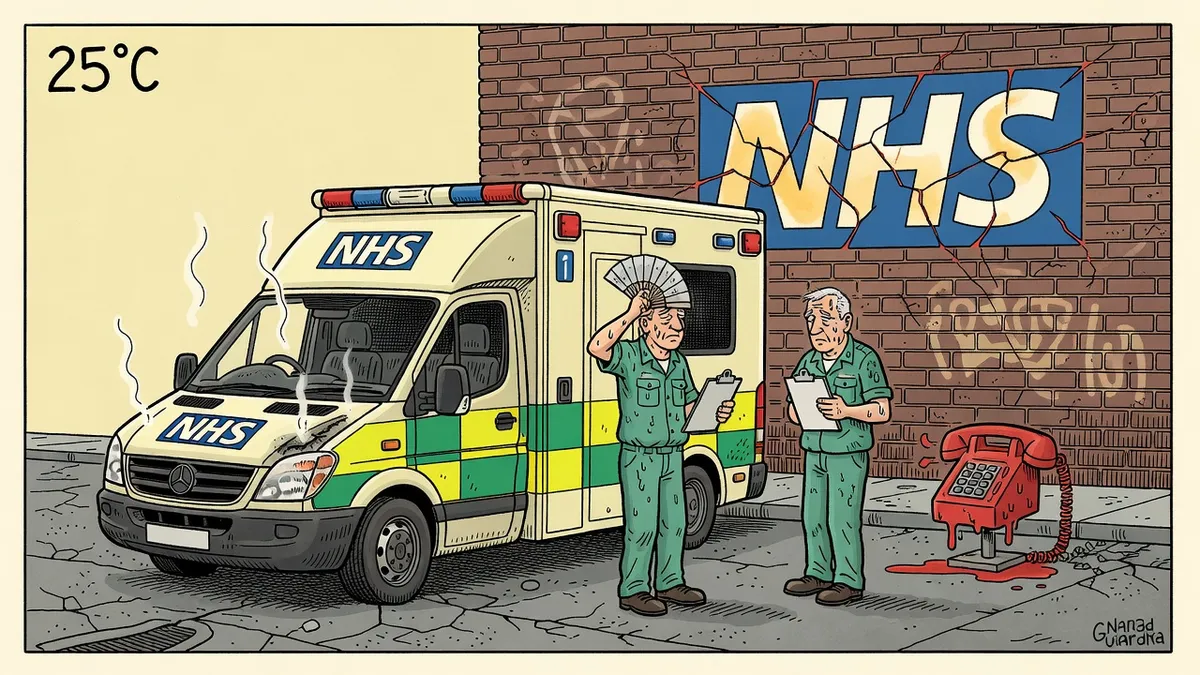
East Midlands declares critical incident while already at REAP Level 4
Britain’s ambulance services now treat routine summer temperatures as an operational emergency. East Midlands Ambulance Service declared a critical incident on 28 June after recording a sharp rise in calls during a period of elevated but not unprecedented heat. The service had already operated at Resource Escalation Action Plan Level 4 for several days beforehand.
This threshold indicates an acknowledged risk of service failure without immediate external intervention. The declaration followed sustained national pressure across multiple ambulance trusts rather than an isolated regional event. Hospitals continued to experience delayed patient handovers, leaving crews unavailable for new 999 responses.
Capacity Already Compromised
REAP Level 4 status reflects chronic under-resourcing rather than sudden weather-driven overload. The service cited both increased demand and existing NHS-wide constraints as the combined trigger. Public messaging shifted toward self-triage and avoidance of non-life-threatening presentations, confirming that core capacity cannot absorb normal seasonal variation.
June temperature records were broken in 2026, yet heat warnings have been issued in previous summers without equivalent system collapse. The repeated pattern shows infrastructure and staffing levels calibrated below the threshold required for predictable annual conditions.
Recurring National Pattern
Similar critical incidents have been declared by ambulance trusts across multiple regions in recent years during both winter and summer peaks. Each episode produces temporary escalation measures and renewed appeals for public restraint. No structural adjustment follows that prevents recurrence under the next period of elevated demand.
Labour and Conservative administrations alike have overseen the same cycle of declared emergencies and restored baseline operations without lasting surplus capacity. Workforce shortages, handover delays at hospitals, and fleet constraints persist as fixed features of the operating environment.
Public Bearing the Adjustment
Patients with long-term conditions received instructions to manage medication independently and seek alternatives to emergency calls. This transfers responsibility for system resilience onto individuals at the point of acute need. The approach succeeds only while most callers comply with reduced expectations of response.
Those who cannot self-manage or correctly assess urgency face extended waits. The critical incident mechanism exists to protect the most serious cases by deprioritising others, institutionalising rationing during ordinary weather events.
The East Midlands declaration demonstrates that emergency medical response no longer maintains headroom for seasonal fluctuations that occur every year. This condition has become the operating baseline rather than a temporary deviation.
Commentary based on East Midlands Ambulance Service declares critical incident in heat at BBC News.
← Back to commentary