Army Barracks Inherit the Hotel Burden
Labour shifts asylum seekers from hotels to costlier barracks, saving £65m on paper while 30,000 remain housed and backlogs persist across parties. This reveals systemic failure to resolve inflows or clear queues.
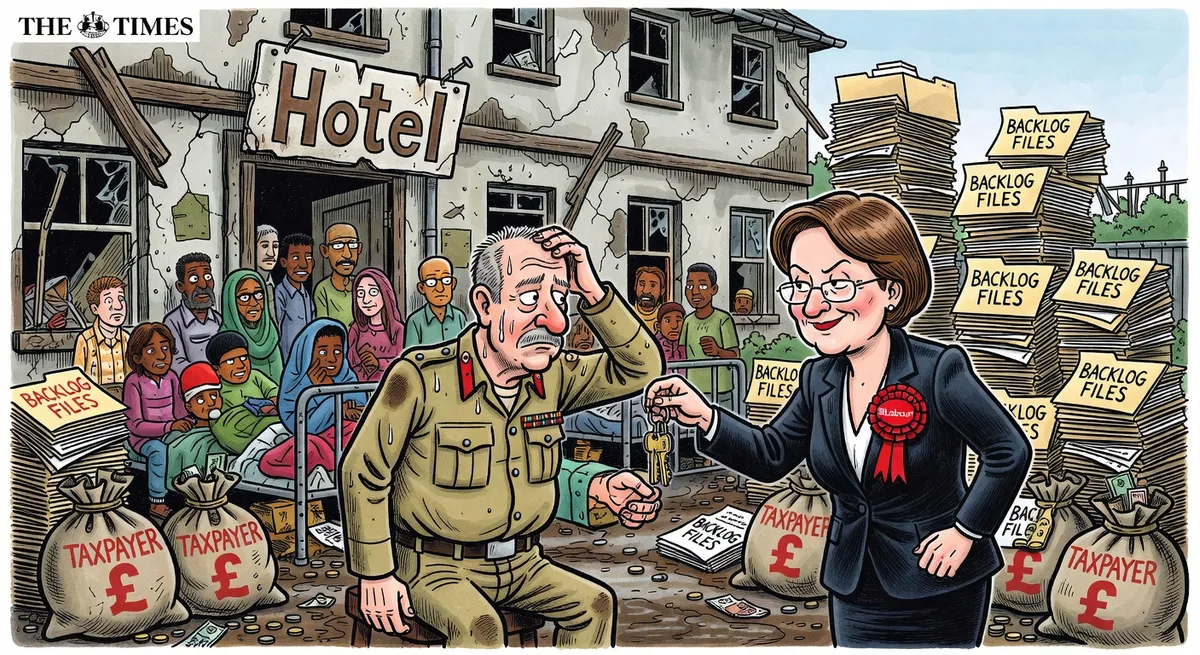
Eleven closures relocate 350 to military sites amid 185 hotels still open
Labour closes eleven asylum hotels across England, Scotland, and Northern Ireland.
The Home Office relocates 350 claimants to Crowborough military camp in East Sussex.
Officials label it “basic accommodation.”
Starmer pledged to eliminate all such hotels before the next general election.
Numbers tell another story.
Peak usage hit 400 hotels under the prior Conservative government.
Labour inherited 200-plus sites housing 30,000 people.
Now 185 hotels remain open.
More than 70,000 asylum seekers occupy government-funded housing of various types.
Claimants cannot work legally for their first year in the UK.
This forces total reliance on state provision.
Home Secretary Yvette Cooper’s team projects £65 million in savings from these eleven closures.
Refugee Council data contradicts the claim.
Military sites cost more per person than hotels, according to the government’s own spending watchdog.
Large camps isolate residents from communities and services.
Previous parliamentary probes labeled the system “failed, chaotic, and expensive.”
Hotels served as a temporary fix under Conservatives.
Usage spiraled with asylum decision-making halted.
Labour shifted some to residential apartments, per shadow home secretary Chris Philp.
Hotel numbers exceed election-day levels despite closure rhetoric.
Apartments vanish from local housing stock.
Young Britons face reduced options amid shortages.
Local backlash underscores the strain.
Protests targeted sites like Banbury House and Marine Court.
Violence erupted in Rotherham, with attempts to torch a hotel.
Crowborough saw an anti-immigrant march in January.
Closures followed activism in Cheltenham and vandalism in St Helens.
Communities bear uninvited dispersal.
Cross-Party Paralysis
Both major parties oversee the backlog.
Conservatives expanded hotels amid processing failures.
Labour promises wind-down but substitutes barracks and apartments.
Reform UK demands full closure; NGOs push limited stays for safe-country claimants.
No government clears the underlying queue.
Decisions languish for months or years.
Taxpayers fund the stasis.
Billions squandered since 2019 hotel rollout.
Shuffling locations masks the inertia.
Institutional Rigidity
Functional governance would accelerate decisions.
Rigorous checks could grant temporary status to low-risk cases from Sudan or Iran.
Hotels would empty rapidly.
Instead, policy locks in dependency.
Military sites repurpose training grounds.
Crowborough camp diverts from defence needs.
Procurement woes already plague barracks elsewhere.
This reallocates resources without resolving inflows.
Ordinary citizens absorb the costs.
Housing queues lengthen.
Local services stretch.
Protests signal fraying cohesion.
The asylum apparatus churns on.
Labour’s partial closures deliver optics, not overhaul.
Conservative inertia set the stage; Labour perpetuates it.
Britain’s borders remain unmanaged.
Taxpayer-funded dispersal defines the new normal.
Decline embeds in every relocation.
Commentary based on Hundreds of asylum seekers moved from hotels to army barracks, Home Office announces by Rajeev Syal on the Guardian.
← Back to commentary