B-1 Squadron's Abrupt Pullout from Fairford Highlights Uneven US-UK Threat Response
All twelve B-1 bombers left RAF Fairford after fresh Iran-linked intelligence, with some departing without full refuelling. UK statements stressed existing protocols while five men arrested nearby were released on bail.
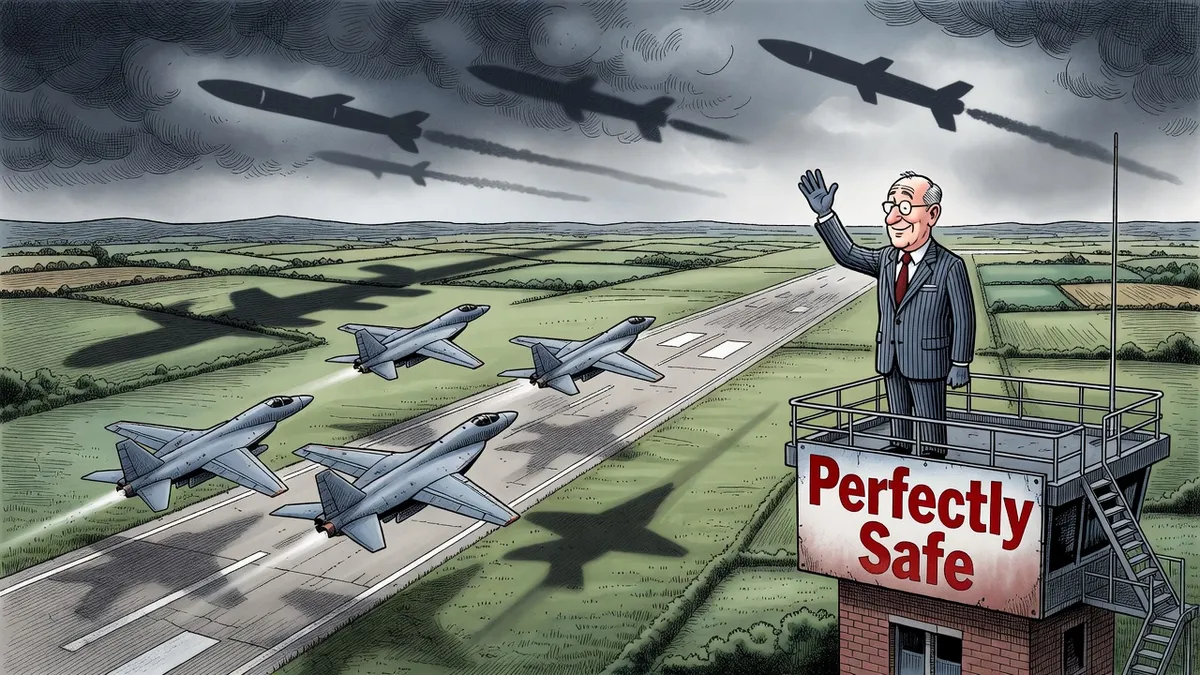
US forces removed an entire squadron of B-1 bombers from RAF Fairford on Sunday after receiving fresh intelligence on an Iran-backed plot. Downing Street responded the next day by confirming the Gloucestershire site remained secure.
The Pentagon confirmed the rapid redeployment of all twelve aircraft. Some left without full refuelling support, requiring additional tankers to be scrambled mid-flight. US officials cited specific new threats tied to the base’s earlier use in strikes against Iran.
British officials offered no matching assessment. The prime minister’s spokesperson cited existing defence protocols and referred back to comments made by the defence secretary the previous week. Neither the Ministry of Defence nor local police added detail when asked about elevated risk to nearby residents.
Arrests and releases
Five men were detained near the base in late September while driving white vans. Police recovered a barrel of petrol but no explosives. All five were released on bail within a day. A sixth dual UK-Iranian national was arrested in London on terrorism preparation charges and also released on bail.
US President Trump stated his administration would not have granted bail in equivalent cases. UK counter-terror police have provided no further public update on either investigation.
Coordination gap
The base sits in the centre of England yet hosts US aircraft used for operations against Iran. Iranian Revolutionary Guard statements have already named Fairford as a legitimate target. Missile reach from Iran remains possible though interception is expected; drone attacks would require proximity operations inside UK territory.
Developments show US commanders acting on threat information while UK authorities maintain public reassurance without parallel action. No joint statement has clarified shared intelligence handling or adjusted security posture.
This episode records another instance of British territory absorbing foreign policy consequences without matching domestic control. The pattern leaves residents and infrastructure exposed when external actors treat UK sites as extensions of distant conflicts.
Commentary based on No 10 insists RAF Fairford is safe after US withdraws its bombers from base by Dan Sabbagh on the Guardian.
← Back to commentary