BBC Curates Mitchell and Webb Archive for Modern Sensibilities
The BBC removed 11 sketches from That Mitchell and Webb Look after deeming them incompatible with current standards, including blackface and burka elements, as archives face ongoing review.
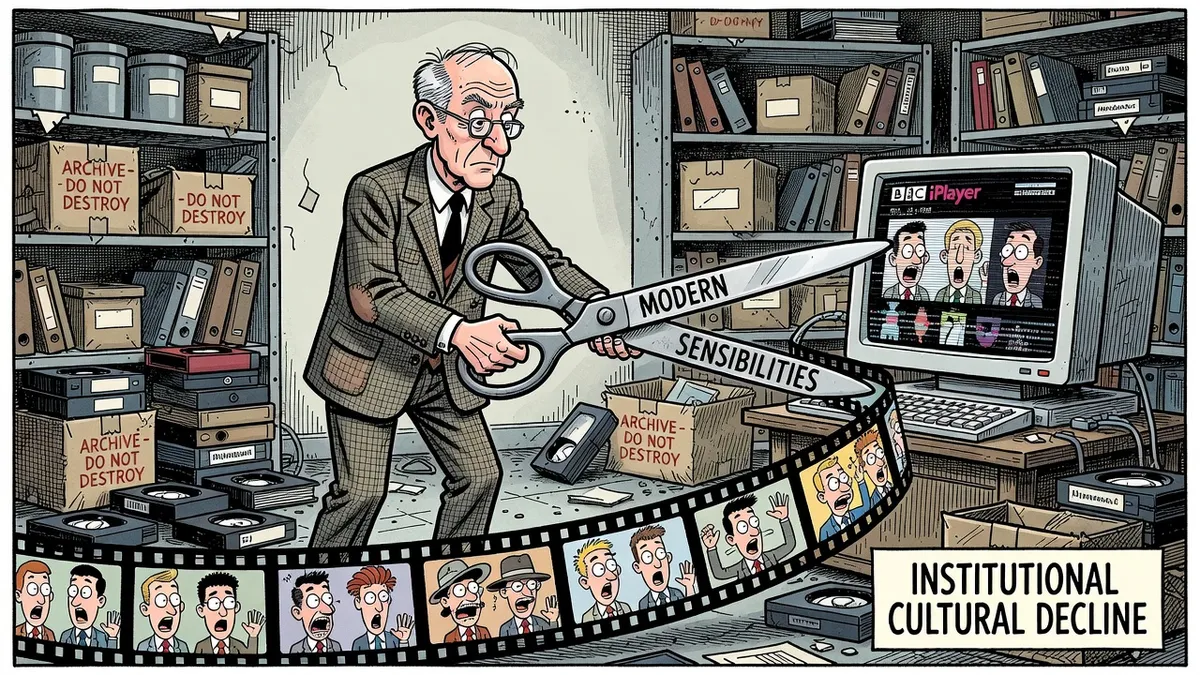
BBC Removes Sketches as Cultural Standards Shift
The BBC has removed 11 sketches from That Mitchell and Webb Look after determining they no longer meet current standards. The show returned to iPlayer for its 20th anniversary, yet producers excluded material featuring blackface war re-enactors, a burka-wearing contestant on a makeover parody, and a garden centre “tribe.”
The decision rests on a single criterion stated by the broadcaster. Sketches were kept only if they “still work today” in consultation with the original makers. No public criteria define what qualifies as functional in 2026 versus 2006.
This approach mirrors earlier interventions. Little Britain sketches were pulled from multiple platforms in 2020 and later restored with some material excised. Both cases involve retrospective judgment applied to pre-recorded content without new production or broadcast context.
Archive Alteration Pattern
Public broadcasters now treat their own libraries as living documents subject to ongoing review. Mitchell and Webb’s blackface sequences satirised racism rather than endorsing it, according to fellow comedians. The BBC removed them regardless, prioritising alignment with present attitudes over original intent.
Similar removals affect other programmes. Artists and producers have noted the risk of incremental cuts becoming standard practice. Once an institution accepts the principle of excising material that offends updated norms, the boundary for acceptable content narrows over successive reviews.
Institutional Incentives
The BBC operates under sustained pressure to demonstrate sensitivity to shifting social expectations. Removing content avoids external complaints and internal reviews. Retaining original versions risks accusations of insensitivity regardless of satirical framing.
No mechanism exists to restore the excised sketches if attitudes change again. The edited version becomes the default record available to future viewers. Historical accuracy gives way to curated presentation calibrated to the present moment.
This practice extends beyond individual programmes. It reflects a broader institutional habit of adjusting the past to fit contemporary requirements rather than preserving records as created. Comedy archives, once stable, now function as provisional holdings open to further subtraction.
The result is a steadily sanitised cultural record. Viewers encounter only material that passes successive filters applied years or decades after original transmission.
Commentary based on BBC removes 11 Mitchell and Webb comedy sketches from iPlayer at BBC News.
← Back to commentary