BBC Presenter Disciplined for Script Alteration
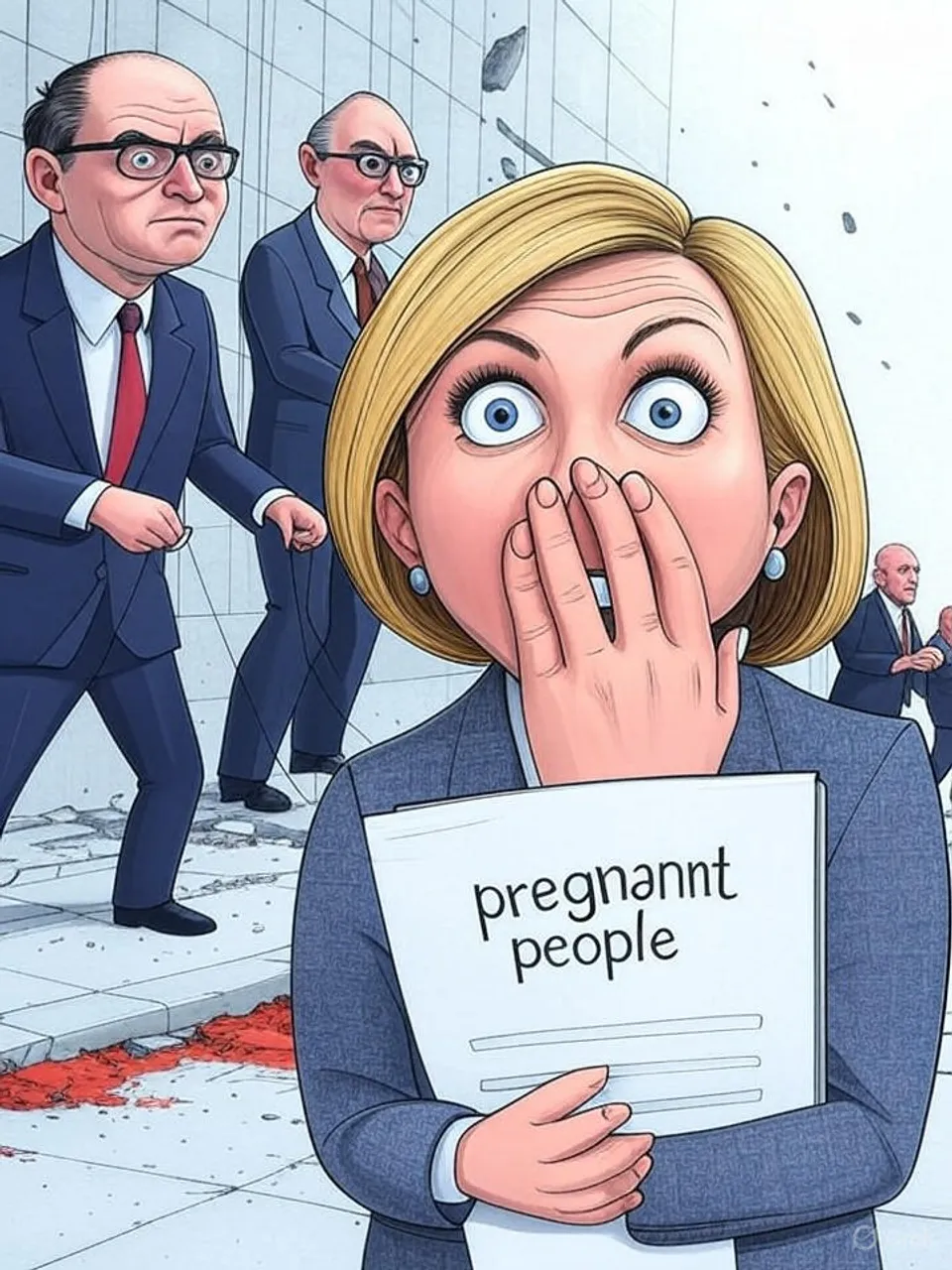
Facial expression deemed breach in transgender terminology debate
The BBC's reprimand of presenter Martine Croxall for altering 'pregnant people' to 'women' reveals overzealous impartiality enforcement that polices expressions and erodes journalistic autonomy amid cultural divides. This pattern highlights institutional capture prioritizing risk aversion over substantive reporting.
Commentary Based On
BBC News
Martine Croxall broke rules over 'pregnant people' facial expression, BBC says
Martine Croxall deviated from her script on BBC News by substituting “pregnant people” with “women” during a live segment on heatwave risks. The broadcaster’s Executive Complaints Unit upheld 20 complaints, ruling that her accompanying facial expression conveyed a personal stance on transgender identity debates. This incident exposes how BBC guidelines now police not just words, but involuntary reactions, in service of enforced neutrality.
The segment introduced research from the London School of Hygiene and Tropical Medicine, quoting a press release that used “pregnant people.” Croxall’s change aligned with the subsequent interview subject’s reference to “pregnant women,” yet the ECU deemed her pause and expression—interpreted as disgust or exasperation—breached impartiality standards. Complainants spanned viewpoints, with social media responses confirming the perception of bias.
BBC management attributed the reaction to awkward phrasing in the script, including “the aged,” which deviated from house style. Despite this, the ECU concluded that even inadvertent impressions of partiality undermine journalistic expectations. The decision reached senior news leadership and involved discussions with Croxall and her team.
This marks Croxall’s second impartiality violation. In 2022, her comments during a newspaper review on Boris Johnson’s leadership bid risked audience perceptions of opinion on the Conservative contest. Both cases illustrate the BBC’s rigid application of rules amid polarized topics, where presenters face scrutiny over nuances that private media outlets ignore.
Public broadcasting in the UK operates under a charter mandating balance, funded by a compulsory license fee that extracts £169 annually from most households. Yet enforcement disproportionately targets cultural flashpoints like transgender terminology, as seen in prior ECU rulings on similar language debates. The charter’s impartiality clause, renewed across Labour and Conservative governments since 2006, prioritizes avoidance of controversy over substantive reporting.
Such interventions reveal deeper institutional pathologies. The BBC processes thousands of complaints yearly, but only a fraction—around 5% in recent reports—reach ECU adjudication. When upheld, they signal selective rigor: political coverage often escapes equivalent facial or tonal dissection, despite documented biases in election reporting.
Transgender identity controversies have infiltrated public discourse since the 2010 Equality Act, with terminology battles escalating under successive administrations. Labour’s 2024 manifesto pledged trans rights protections, while Conservatives tightened gender recognition rules in 2023. The BBC, navigating both, now micromanages on-air delivery to preempt accusations from advocacy groups on either side.
This policing erodes presenter autonomy. Croxall, a veteran journalist, received praise from figures like JK Rowling for her substitution, highlighting public appetite for unfiltered language on biological sex. Yet the ECU’s focus on “impression” over intent discourages deviation, fostering scripted uniformity that stifles live spontaneity.
Broader media trust suffers as a result. Ofcom data shows BBC impartiality complaints rose 20% in 2023-24, correlating with cultural divides. Viewers increasingly perceive the corporation as captured by elite consensus, where minor infractions on gender terms draw swifter rebuke than lapses in economic or foreign policy coverage.
The license fee model amplifies these tensions. With £3.7 billion in annual revenue, the BBC faces pressure to justify public funding through visible accountability. But this leads to over-correction: a 2021 review found editorial guidelines sometimes prioritize risk aversion over journalistic freedom, a pattern unchanged under the current charter.
Cross-party oversight perpetuates the issue. The Department for Culture, Media and Sport—Labour-led since July 2024—reviews charter compliance, yet predecessors under Conservatives enacted similar enforcement mechanisms. No administration has reformed the complaint process to distinguish inadvertent expressions from deliberate bias.
Ordinary citizens bear the cost. Households fund a broadcaster that disciplines staff for aligning with scientific terminology used by the interviewed expert, Dr. Malcolm Mistry. This disconnect fuels cynicism: a 2024 YouGov poll indicated 58% of Britons doubt BBC impartiality on social issues, eroding the institution’s role in informed democracy.
The incident underscores a chilling effect on public discourse. Presenters now self-censor amid fear of ECU scrutiny, mirroring private sector hesitancy but without commercial excuses. Functional governance would allow contextual judgment, not algorithmic parsing of expressions.
UK decline manifests here in institutional brittleness. The BBC, once a global benchmark for balanced reporting, now embodies reactive bureaucracy that amplifies divisions rather than bridging them. As cultural wars consume airtime, substantive coverage of pressing crises—like the £50 billion fiscal hole or rising violent crime—receives diluted attention, leaving citizens with sanitized narratives that obscure reality.
Commentary based on Martine Croxall broke rules over 'pregnant people' facial expression, BBC says at BBC News.