Britain Counts Unplugged Hybrids as Electric Progress
Policy counts plug-in hybrids toward EV mandates even though most cannot use the fastest chargers and real-world electric use remains low.
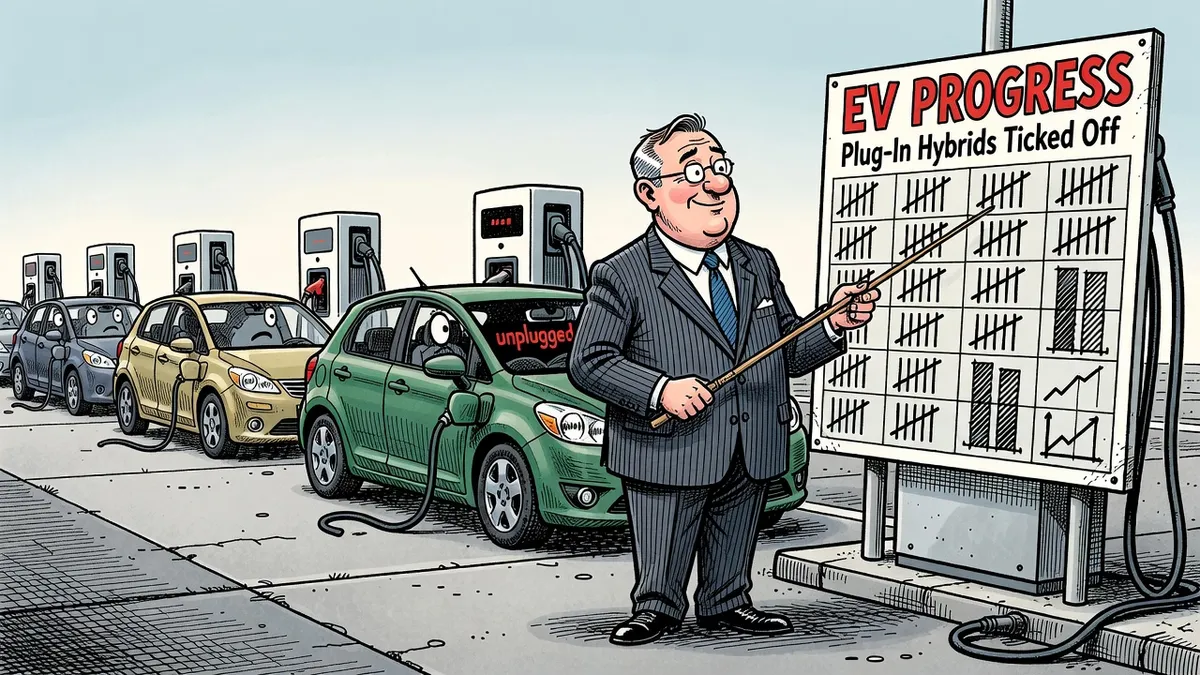
Three-quarters of top PHEV models locked out of rapid chargers while sales targets credit them anyway
Britain counts unplugged hybrids toward its electric vehicle targets. Three-quarters of the top-selling plug-in hybrid models cannot access rapid chargers rated at 50kW or above. Official policy treats these vehicles as meaningful steps toward lower emissions despite the hardware limitation.
Only 26 percent of the 20 highest-volume PHEV models sold in the UK support rapid charging. The remaining models, including several from Ford, Hyundai and MG, restrict drivers to slower outlets that require hours for meaningful range recovery. Every top-selling pure electric vehicle last year cleared the rapid charger threshold, and 64 percent handled ultra-rapid units.
Sales data shows PHEVs as the fastest-growing segment. Registrations reached 227,000 last year, a 35 percent increase, with another 180,000 recorded so far this year. Government rules still permit manufacturers to count these vehicles against zero-emission mandates even after internal analysis found real-world electric driving falls well below modelled assumptions.
Studies consistently record higher tailpipe emissions from PHEVs than laboratory figures indicate. Many owners never connect the vehicles to the grid, turning them into heavier petrol cars. ChargeUK data confirms that inability to use public rapid chargers reinforces this petrol-dependent pattern.
The government has responded to industry pressure by signalling further relaxation of pure EV sales requirements. Nissan has linked a planned £170 million investment in Sunderland to continued policy flexibility. Rapid and ultra-rapid chargers already account for most delivered charging capacity on the public network, yet three-quarters of popular PHEVs remain excluded from it.
This approach repeats a familiar pattern. Targets are adjusted after lobbying, compliance metrics diverge from physical outcomes, and the gap between stated decarbonisation goals and delivered infrastructure widens. Ordinary drivers face vehicles marketed for electric capability that cannot use the fastest parts of the charging system.
The result is measurable. Policy counts partial hybrids as progress while the vehicles themselves remain petrol-reliant by design and by charging constraints. Britain records rising hybrid registrations against a charging network that the same models cannot fully exploit.
Commentary based on Three-quarters of UK’s popular plug-in hybrid cars unable to use rapid chargers by Alex Daniel on the Guardian.
← Back to commentary