British Base Triggers Domestic Alert After US Strike Access
Foreign policy decisions have converted a Gloucestershire airbase into a domestic security liability with no clear mechanism for containing the fallout.
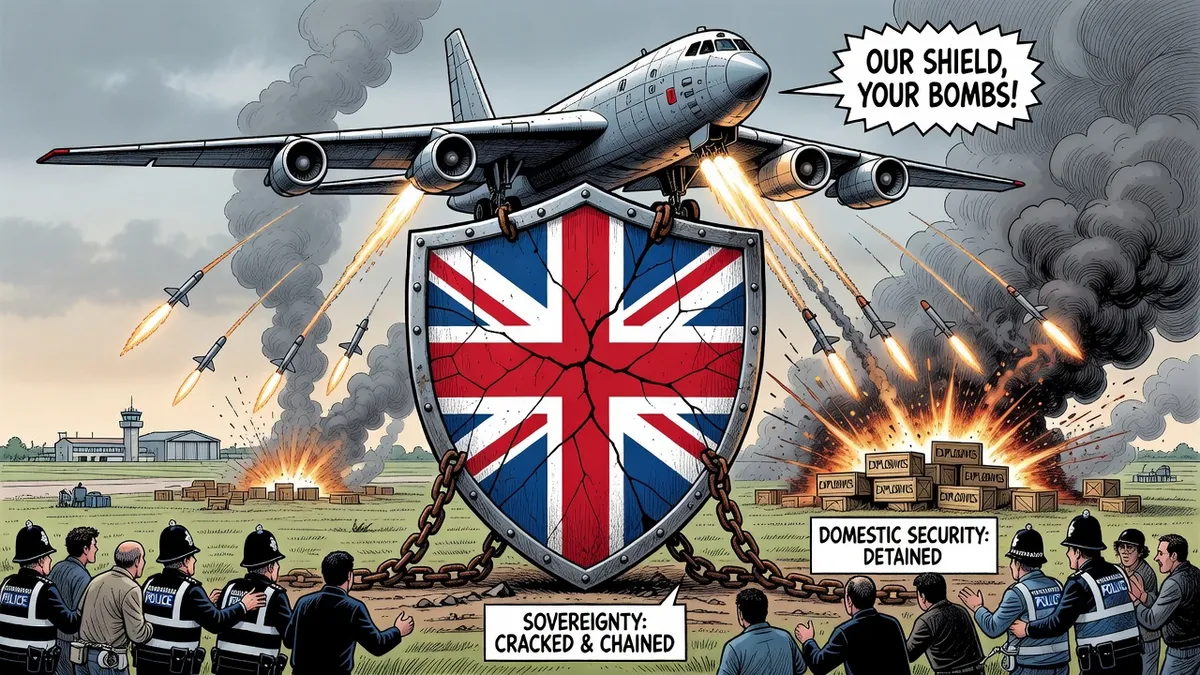
Explosives arrests at RAF Fairford follow approval for American operations against Iranian targets
Several men were arrested near RAF Fairford on explosives offences after a major incident was declared in the surrounding village. The Gloucestershire airbase, routinely used by American forces, had already seen heightened security and local protests over its role in strikes against Iranian targets.
The arrests followed Iran’s July warning that Britain should block US bomber operations from the site. Government statements at the time emphasised readiness to defend UK soil, yet the current response involved evacuations, roadblocks and army inspection of vehicles in a civilian area.
Police described the situation as contained and urged residents not to be alarmed. This reassurance came after repeated references to rehearsed contingency plans, a standard formulation that reveals how frequently such incidents now require activation.
The base’s involvement in Middle Eastern operations has already forced cancellation of the Royal International Air Tattoo in May. That decision reflected official assessment of rising regional tensions spilling into UK territory.
Foreign policy choices have produced measurable domestic consequences. Allowing US strikes from British soil created a predictable vector for retaliation, shifting risk from overseas theatres directly onto Gloucestershire communities and infrastructure.
Accountability remains diffuse. Ministers offer general assurances of vigilance while operational details stay classified. Local MPs receive updates confirming containment without addressing why the threat materialised on UK soil in the first place.
The pattern shows a country that retains the forms of alliance management but has lost effective control over the security externalities those alliances generate. Each escalation abroad now registers as an internal security event at home.
Commentary based on Major incident declared near RAF Fairford as men held on suspicion of explosives offences by Helena Horton on the Guardian.
← Back to commentary