British Editors Apologise to Defence Ministry Censors
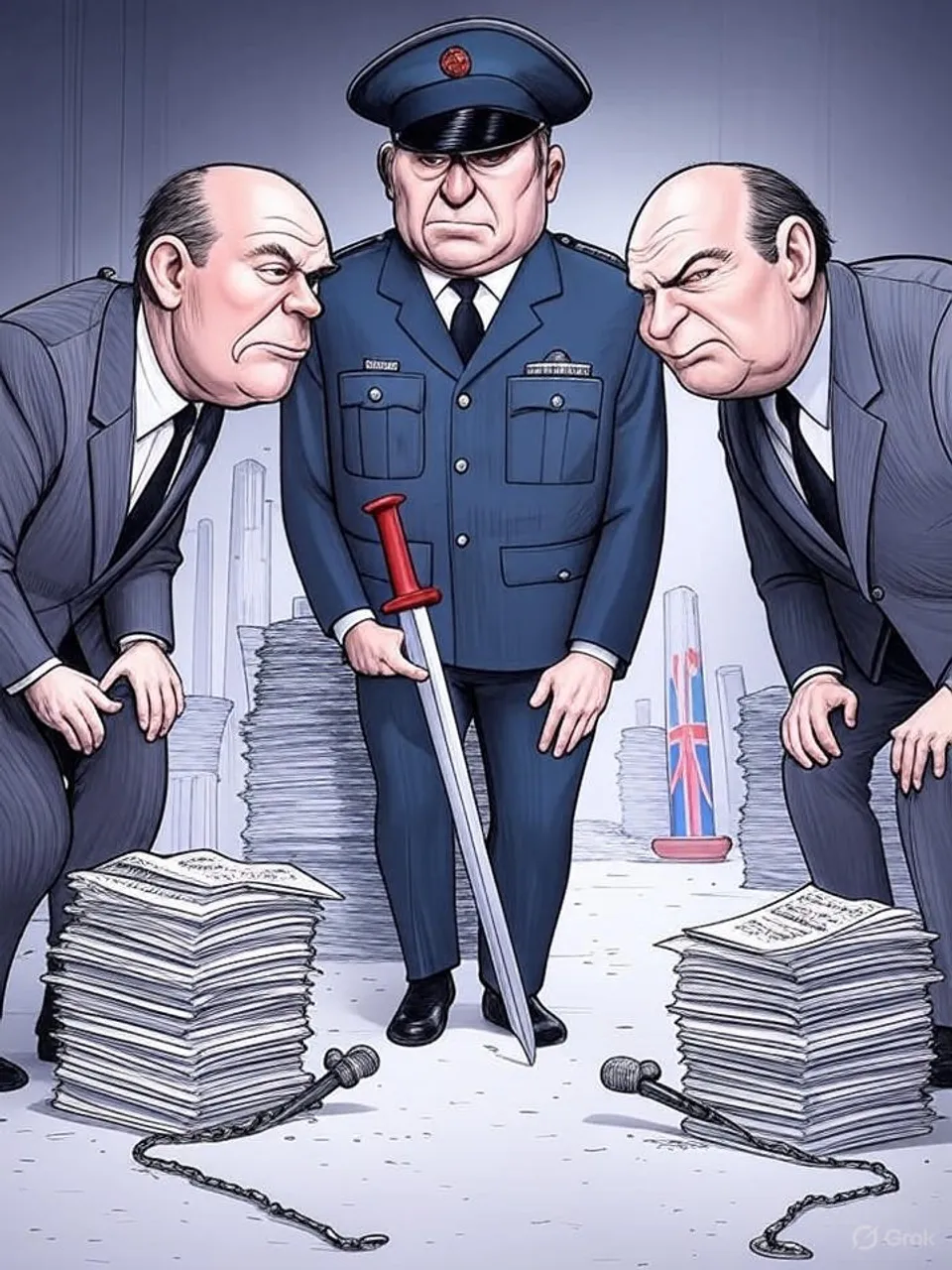
DSMA achieves 90% success in spiking security stories, files show
Declassified files reveal UK's DSMA Committee censors media with 90% success via D-Notices, logging 50 interventions on a spy's mysterious death alone. Legacy outlets apologise for compliance lapses as state control extends to social media.
Commentary Based On
The Grayzone - News and investigative journalism on empire
Files expose Britain’s secret D-Notice censorship regime
Files from Australia’s freedom of information release expose the Defence and Security Media Advisory (DSMA) Committee’s 90%+ success rate in spiking or altering national security stories.
Journalists submit apologies for “offences” to retain standing in mainstream media.
This voluntary system, housed in the Ministry of Defence, transforms reporters into compliant conduits.
DSMA’s Inner Workings
The committee comprises senior civil servants, security service representatives, army officers, and media editors.
It issues D-Notices demanding outlets seek “advice” before publishing sensitive topics.
Funded by the Ministry of Defence and chaired by its Director General of Security Policy, the body insists on independence despite exempt status from UK FOI laws.
Australian Trail Unlocks UK Secrets
The Grayzone obtained documents through Australia’s FOI regime.
UK officials shared operational details to help Canberra build its own D-Notice system.
Australian authorities resisted release for five months before the Information Commissioner compelled disclosure.
Gareth Williams Case Draws 50 Interventions
Between 2011 and 2014, the committee logged 50 D-Notice requests on GCHQ codebreaker Gareth Williams’ death and MI6 rendition ties to Gaddafi.
Williams died unnaturally in a locked MI6-owned bag in 2010, undiscovered for 10 days despite agency awareness.
Police faced blocks interviewing colleagues or accessing documents; the coroner flagged MI6 involvement as unexplored.
Media coverage faded amid proliferating unproven foreign conspiracy claims.
Broader Suppression Patterns
Twenty-nine requests targeted “intel agencies” in Libya during the 2011 Western-backed proxy war, likely covering captured MI6 and SAS operatives.
Other topics included MI6 operations in the Middle East and Africa, child sexual abuse by officials, and Princess Diana’s death.
The 2015 internal review lists these as routine suppressions or distortions.
Legacy Media Subservience
Journalists and editors apologise to DSMA for breaching guidelines.
Conversations remain confidential, exempt even from police or court scrutiny.
Compliance nears total: nearly all advice results in stories dropped or rewritten.
Legal Backstop Ensures Obedience
The system claims voluntariness, but breaches invite Official Secrets Act prosecutions or injunctions.
Post-Snowden laws expanded penalties for journalists and whistleblowers.
Brigadier Geoffrey Dodds, DSMA Secretary, stressed this to Australian officials.
Social Media Expansion Looms
Documents reveal plans to enlist “tech giants” like Meta and X in D-Notice enforcement.
The committee eyes suppressing disclosures on these platforms.
This extends state editorial control beyond traditional outlets.
Britain once prided itself on a fiercely independent press holding power accountable.
DSMA files document instead a clientelist pact subordinating journalism to security imperatives.
Ordinary citizens lose insight into spy agency failures, covert wars, and official misconduct.
The regime persists across governments because it shields institutional flaws from scrutiny.
UK media declines into scripted bulletins, mirroring eroding trust in all public institutions.
This censors not just secrets, but the accountability essential to democracy.
Commentary based on Files expose Britain’s secret D-Notice censorship regime by Kit Klarenberg on The Grayzone - News and investigative journalism on empire.