Budget Cuts End Ensemble Transport for Rural Northern Ireland Musicians
From 20 November the Education Authority withdraws buses for more than 2,000 pupils, removing rural access to orchestras and ensembles as part of required savings.
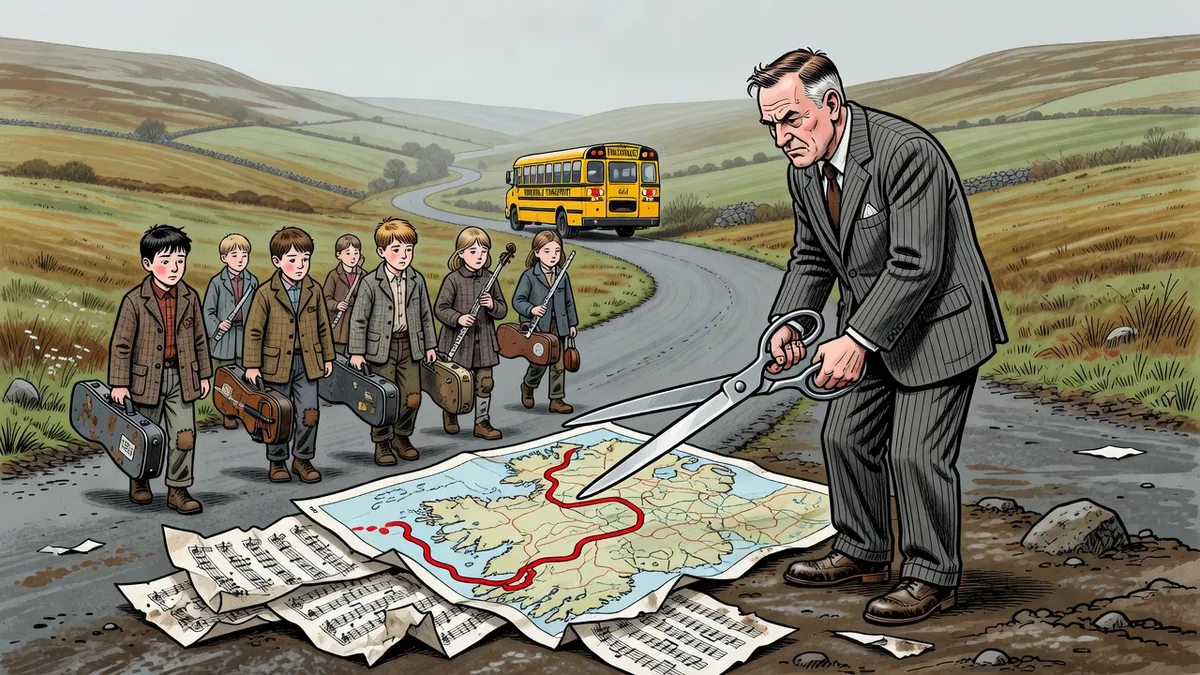
Northern Ireland’s Education Authority has withdrawn transport for more than 2,000 school musicians effective 20 November, ending organised access to regional orchestras and ensembles for pupils in rural districts.
The service previously arranged buses to rehearsals in towns including Ballymena, Londonderry and Lisburn. Rural participants now face daily fuel costs or reliance on working parents already stretched by existing fee increases for tuition and instruments. Two pupils at schools in Ballymoney and Dalriada described the change as ending their route to higher-level training and university auditions.
The Education Authority serves roughly 20,000 music students across Northern Ireland and is required to deliver millions in savings this financial year. Transport withdrawal forms part of wider reductions that also include higher school meal prices and the termination of some shared education programmes. These measures follow repeated warnings about the authority’s budget position.
Rural areas experience the sharpest effects because distances to central rehearsal venues are greater and public alternatives are limited. Urban students retain easier independent access. The pattern concentrates opportunity loss among families without spare vehicles or flexible schedules.
Service contraction pattern
Similar pressures have produced parallel reductions elsewhere in UK education provision. Music and arts enrichment programmes have been scaled back in multiple regions as core statutory duties consume available funds. Northern Ireland’s case illustrates the mechanism: statutory savings targets override discretionary transport support without compensatory alternatives.
The Children’s Commissioner has already rejected one cost-cutting proposal that advised pupils to wear extra layers rather than increase heating. That episode and the current transport decision both shift adjustment costs onto households. No senior officials have been required to account for the cumulative impact on participation rates.
Data on long-term outcomes for affected students remains absent from official statements. The authority has recorded the number of participants but offers no tracking of how many will drop out or fail to reach audition standards without the ensembles. Historical comparisons show these programmes previously supported progression into conservatoires and professional training for students outside major cities.
The withdrawal confirms that discretionary enrichment services contract first when budgets tighten. Rural students lose the structured exposure that urban peers can still reach through proximity or private means. This outcome follows directly from sustained fiscal constraint applied across education authorities without adjustment for geography or existing participation gaps.
Commentary based on Education: Young people in rural areas being penalised following orchestra cuts, principal says at BBC News.
← Back to commentary