Buried Bunkers Expose Rural Britain's Porous Defenses
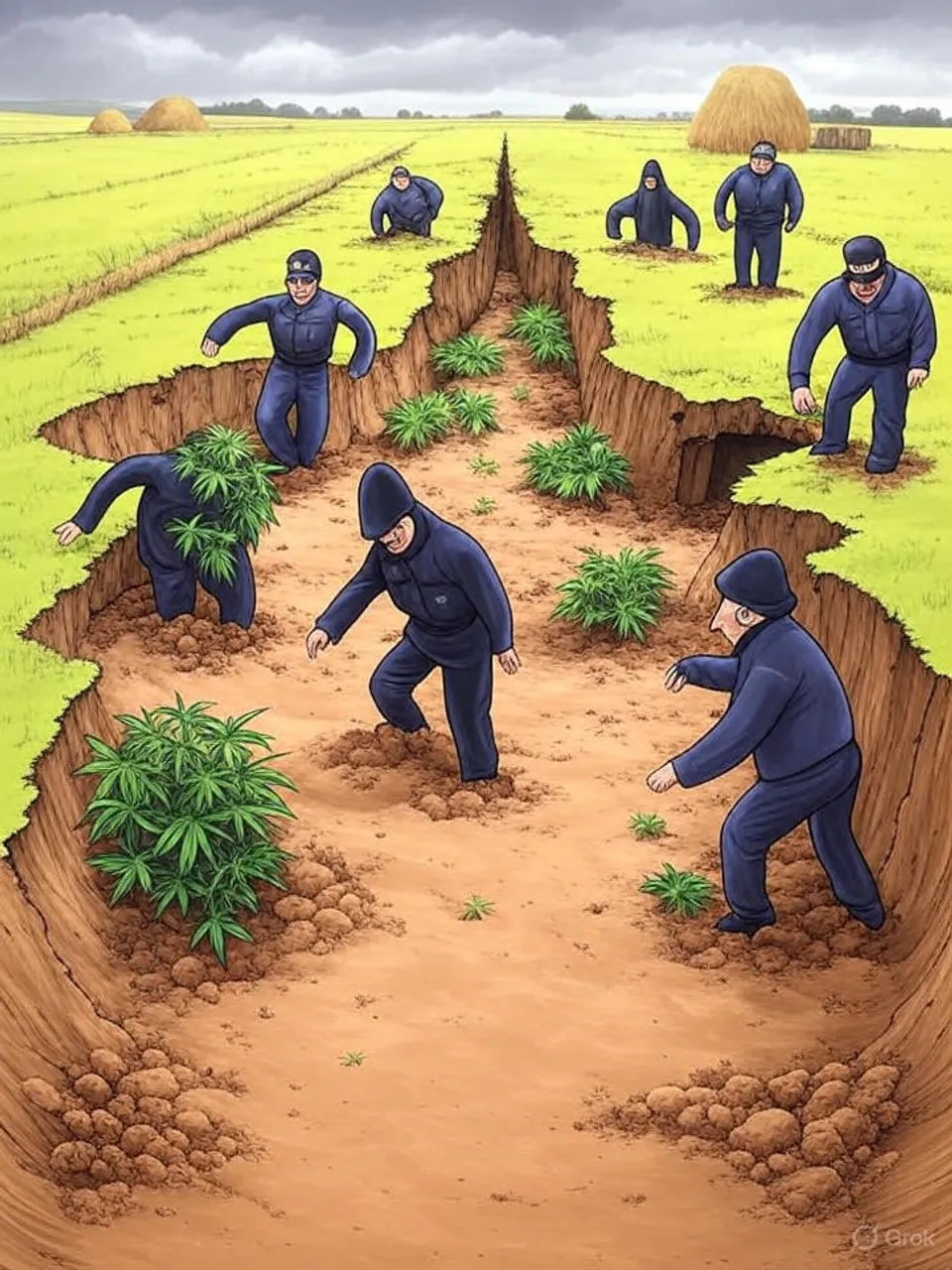
£800,000 cannabis operation evades detection for months in Lincolnshire fields
A sophisticated underground drug farm in rural Lincolnshire reveals systemic failures in policing, justice, and economic support that allow organised crime to infiltrate Britain's countryside unchecked. Suspended sentences and detection delays underscore broader institutional decay.
Lincolnshire Police uncovered four shipping containers buried 20 feet underground, each rigged as a sophisticated cannabis farm holding over 600 plants valued at up to £800,000. The raid, triggered by a tip from Spanish authorities in September 2020, revealed hidden entrances concealed among barns housing 22 horses and a llama. This operation evaded detection for months in a quiet rural corner, underscoring gaps in local surveillance.
The site’s scale demanded eight full days of police searching, a resource-intensive effort that highlights stretched thin rural forces. Lincolnshire, like much of England’s countryside, operates with limited patrols and intelligence amid budget cuts that have halved rural police numbers since 2010. Organised crime groups exploit these voids, turning farmland into production hubs without immediate alarm.
Nathan Allen and Kyle Robinson received suspended sentences—two years for Allen, 12 months for Robinson—despite their roles in conspiracy to produce and supply cannabis. Allen, driven by debt, admitted limited involvement including a firearm possession charge; Robinson shifted from animal care to site security. The judge cited the four-year delay and personal changes as reasons to avoid immediate custody, a leniency that aligns with rising suspended sentences across UK courts, up 20% since 2019.
This case follows a pattern of underground grows infiltrating rural properties nationwide. National Crime Agency data logs over 1,000 such sites dismantled yearly, often linked to international networks from Albania to Vietnam, yet convictions rarely lead to asset seizures or farm repurposing. Local councils, facing their own fiscal squeezes, rarely reclaim contaminated land, leaving taxpayers to foot remediation costs estimated at £50,000 per site.
Enforcement Echoes Past Neglect
The tip-off from Spain’s Guardia Civil points to cross-border criminal flows that UK border controls fail to stem. Home Office figures show organised crime generating £9 billion annually from drugs, with cannabis farms contributing a third, yet rural intelligence sharing remains fragmented. Successive governments since 1997 have prioritised urban policing, allowing countryside vulnerabilities to fester unchecked.
Economic desperation fuels local complicity. Allen’s debt-driven role mirrors how low farm incomes—down 15% in real terms over a decade—push residents toward illicit gigs. Robinson’s progression from legitimate labour to guarding bunkers illustrates the thin line in areas where median wages lag 20% behind urban averages, eroding community oversight.
Justice delays compound the issue. The 2020 raid reached sentencing in 2024, part of a backlog that clogs Crown Courts with 65,000 outstanding cases. Suspended terms, now 40% of sentences, reflect judicial overload rather than rehabilitation success, as reoffending rates hover at 25% within a year.
Broader implications ripple through rural economies. Contaminated sites degrade soil and water, hitting agriculture already strained by post-Brexit labour shortages and subsidy cuts. Lincolnshire’s £2 billion farming sector loses productivity to such incursions, while public health costs from drug distribution climb, with NHS admissions for cannabis-related issues up 50% since 2015.
This underground empire thrived amid institutional blind spots that span parties and decades. Police resource starvation, judicial backlogs, and economic neglect form a triad enabling crime to burrow deeper into Britain’s heartlands. The suspended sentences signal not justice served, but a system too strained to uproot the rot, leaving rural communities exposed to further decline.
Commentary based on Men sentenced over underground drug farms in Skendleby at BBC News.