Cambridge Clears Professor After PhD Passages Match Earlier Thesis
Cambridge defended its youngest black professor against plagiarism claims by deferring to the awarding university's internal clearance.
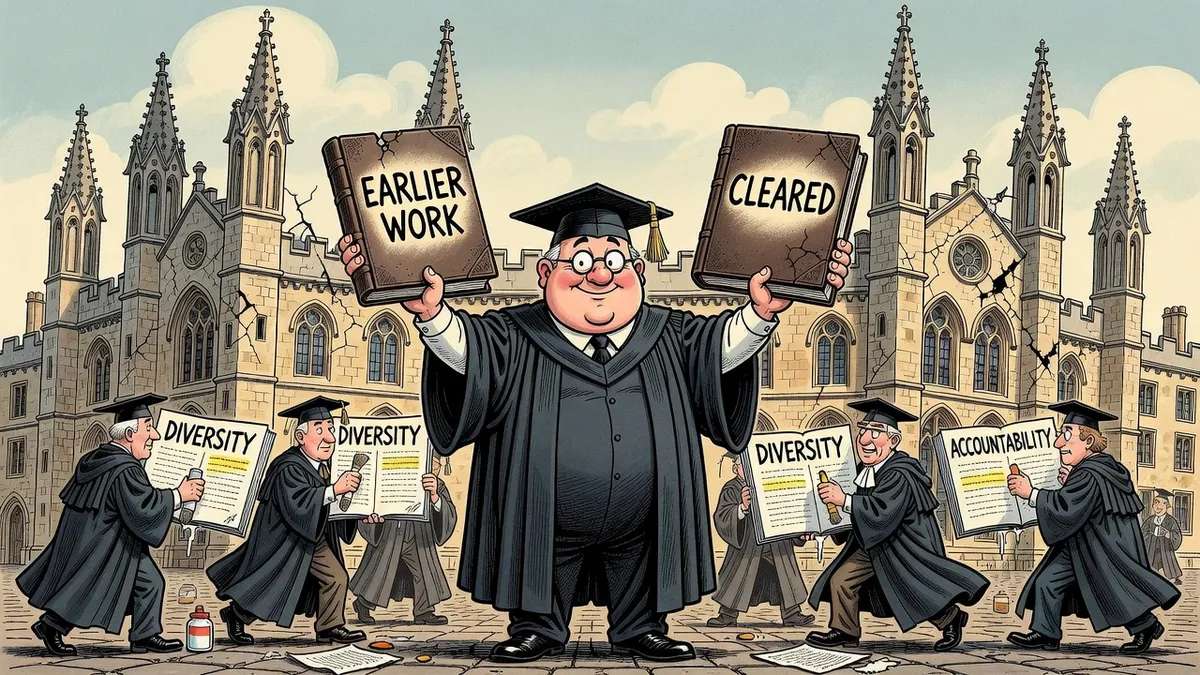
Institutional review protects record diversity hire despite external evidence of copying
Cambridge appointed Jason Arday as its youngest black professor in 2021 amid post-BLM pressure to increase faculty diversity. Questions over more than 100 passages in his Liverpool John Moores PhD, flagged as similar to an earlier thesis by Paula Zwozdiak-Myers, have since produced institutional clearance rather than independent verification.
The similarities include minimal editing and retained copy-editing errors from the source document. Analysis by Nathan Cofnas using plagiarism detection software identified the matches. Emeritus professor John Preston reviewed the evidence and concluded a case exists to answer. Cambridge referred complaints to the awarding institution, which cleared Arday after internal review.
Institutional Response
Cambridge described the claims as a “vile smear campaign.” An open letter signed by Green Party leader Zack Polanski and academic Kehinde Andrews framed the scrutiny as an effort to delegitimise a “brilliant, young, working-class academic for the sin of being successful while Black.” Arday stated that multiple investigations found no misconduct and rejected the positioning of himself as a liar.
Critics of Arday include figures previously involved in race-related disputes. Cofnas lost his Cambridge position over a blogpost but was cleared of discrimination. David Harris had his emeritus title temporarily removed after writing on critical race theory. These backgrounds allowed Cambridge to present the complaints as motivated by external agendas rather than the textual evidence itself.
Academic Standards
Plagiarism remains the most serious breach of academic integrity short of fabrication. UK universities routinely investigate such claims through the institution that awarded the degree. When that process produces clearance despite external identification of copied passages, the outcome rests on internal judgment rather than open replication of the findings.
The pattern shows elite institutions shielding high-profile appointments tied to diversity targets. Cambridge faced criticism for low faculty diversity before Arday’s hiring. Subsequent defence of his record prioritised narrative protection over transparent re-examination of the PhD text.
Broader Pattern
Similar institutional reflexes appear across UK higher education when competence questions intersect with protected characteristics. Investigations conclude quickly, external evidence receives secondary weight, and dissent is labelled as targeted harassment. The result is reduced public confidence that academic titles reflect verified standards rather than managed outcomes.
This case shows how accountability mechanisms function when prestige and demographic goals coincide. Cambridge retains the appointment. The original thesis remains unaltered. Questions about the work persist without further public resolution.
Commentary based on Playbooks, plagiarism and a pig’s head: new claims surrounding a star Cambridge professor at the Guardian.
← Back to commentary