Cambridge Delays Appointment Audit Until Resignation
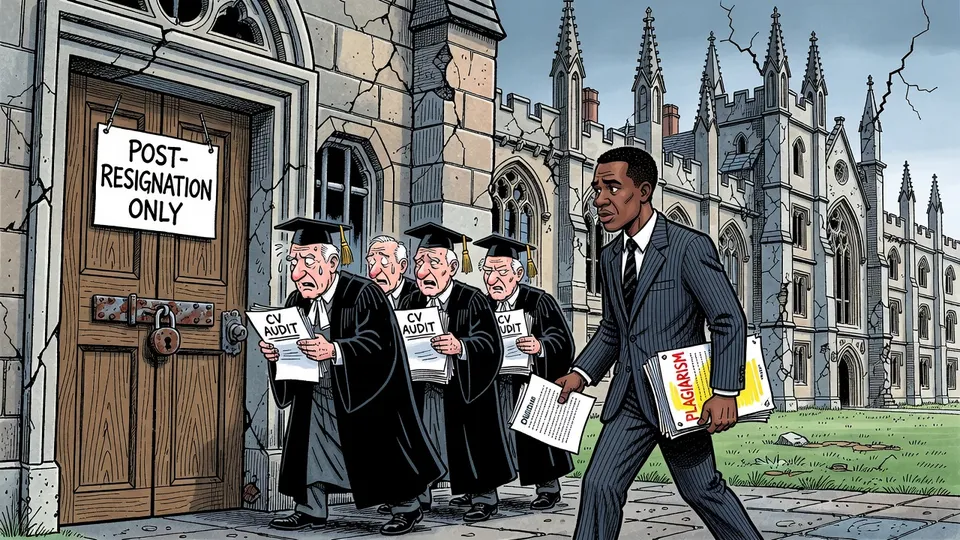
Internal review announced after CV discrepancies and plagiarism claims surface
Cambridge begins reviewing senior hiring only after Arday's exit exposed unchecked credentials and institutional responses.
Commentary Based On
BBC News
Cambridge to review process for hiring senior academics after Jason Arday resignation
Cambridge launched a review of its senior academic hiring procedures only after Jason Arday resigned from his professorship and Jesus College fellowship. The timing follows accusations that his CV contained fabricated positions, exaggerated achievements, and passages in his work that matched earlier theses without attribution.
Arday’s PhD was awarded by Liverpool John Moores University, which rejected plagiarism claims last year as honest error. Multiple universities listed on his CV have since stated he held no such roles. Glasgow University, where he worked for just over a year, has now opened its own review of that appointment. Cambridge’s investigation into his qualifications and tenure remains internal.
Vetting Shortfalls
The sequence shows repeated gaps in credential checks at the point of appointment. Arday moved from Glasgow to a senior Cambridge post in a compressed timeframe, with media promotion that later drew scrutiny. Concerns raised by external researchers about his publications prompted journal corrections, yet these did not trigger earlier institutional action.
Police records add another layer. The Metropolitan Police opened a harassment investigation into a Times Higher Education reporter after he contacted Arday about the allegations. The force later dropped the case and its commissioner apologised, stating the complaint should have been screened out immediately.
Institutional Response Patterns
Cambridge has stated it will feed findings from the Arday inquiry into a broader appointments review. Jesus College noted its fellowship depended on the university position. Priyamvada Gopal, one of the academics calling for an independent inquiry, described the episode as causing widespread reputational damage across disciplines. She argued the university should not mark its own homework.
Arday has attributed discrepancies to insufficient supervision and autism, while rejecting claims of deliberate fabrication. His memoir publisher intends to proceed with release despite reported inconsistencies between the proposal and the final text. LJMU maintains the PhD stands.
The episode records how elite institutions respond once external pressure accumulates. Reviews are announced after departures rather than before appointments. Cross-institutional checks appear limited until public records and external researchers compile contradictions. This sequence leaves the underlying appointment standards unexamined until damage is already recorded.
Cambridge’s handling of the case, including prior contact with police over reporting, illustrates the priority placed on managing external scrutiny over rigorous pre-appointment verification. Similar patterns of delayed examination have appeared in other UK universities when credential questions arise. The result is continued erosion of the documented standards required for senior academic roles.
Commentary based on Cambridge to review process for hiring senior academics after Jason Arday resignation at BBC News.