Cambridge Professor Reports Academic Critic to Police
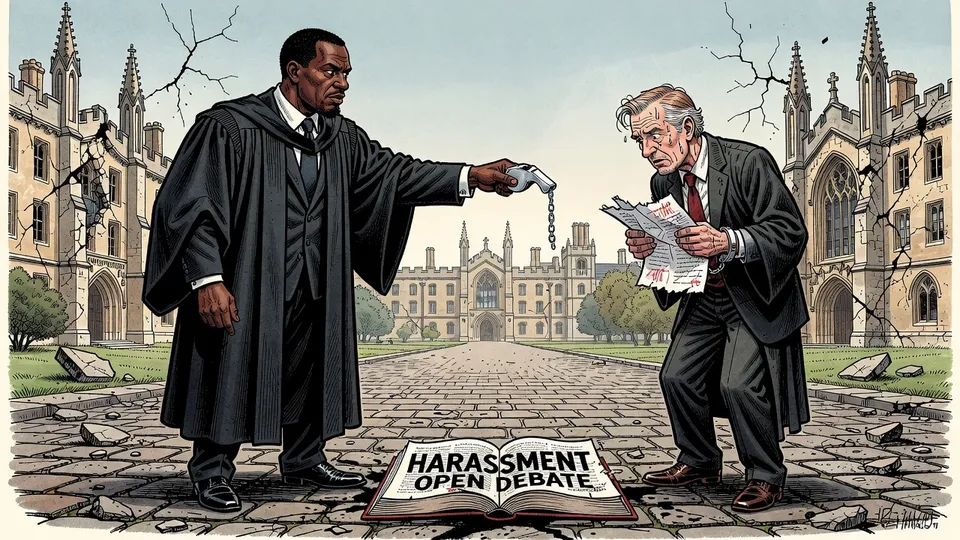
Scholarly questions on data and attribution met with harassment complaint under 1997 Act
Arday reframed evidence queries as racism and ableism, triggering police referral that Devon and Cornwall declined to pursue.
Commentary Based On
Committee For Academic Freedom
Jason Arday reported academic critic to police after questions over his research - Committee For Academic Freedom
Cambridge Professor Jason Arday reported fellow academic Dr David Harris to the police after Harris raised specific questions about data inconsistencies, repeated passages and possible attribution failures in Arday’s publications. The complaint followed a polite initial email and a single follow-up from Harris, who sought clarification rather than confrontation. Devon and Cornwall Police declined to investigate.
Harris, Professor Emeritus at Plymouth Marjon University, had previously examined empirical uses of critical race theory and related frameworks in education research. His 2023 correspondence with Arday formed part of that wider project. Arday did not engage with the substantive points. He instead described the queries as evidence of racism and ableism, and warned that further contact would be treated as harassment.
Institutional Response Patterns
Marjon University had already revoked Harris’s emeritus title after he published a monograph critical of critical race theory. Internal emails obtained through a Subject Access Request showed administrators labelling the work “controversial” and recommending the university “sever ties.” The title was restored only after external pressure from the Committee for Academic Freedom.
Arday’s appointment as Professor of Sociology of Education at Cambridge in March 2023 occurred amid significant publicity. The university has not publicly addressed the concerns Harris raised about Arday’s doctoral thesis and subsequent peer-reviewed papers.
Legal Thresholds Ignored
The Protection from Harassment Act 1997 requires a course of conduct that is oppressive and unacceptable, grave enough to sustain criminal liability. Courts have repeatedly stated that irritations, annoyances or even robust criticism do not meet this standard. Arday’s complaint nonetheless sought to place scholarly correspondence within the scope of the criminal offence.
The European Court of Human Rights has held that academic work addressing matters of public concern receives the highest protection under Article 10. Domestic rulings similarly distinguish between subjective offence and the objective test for harassment. The police correctly applied these standards by taking no action.
Wider Institutional Effects
This episode illustrates how identity-based claims can be deployed to deflect empirical scrutiny of published research. The pattern recurs across UK universities where challenges to favoured frameworks on race, inequality and decolonisation trigger institutional or legal responses rather than direct rebuttal. Harris’s experience at Marjon and the subsequent police complaint show the mechanism operating at two different institutions.
Ordinary standards of evidence and attribution become secondary when institutional prestige attaches to particular scholars or narratives. The result is reduced capacity for self-correction within the academic system itself.
Cambridge’s handling of the matter, combined with the earlier Marjon episode, demonstrates that accountability for research integrity now depends on external intervention rather than internal processes. This shift erodes the epistemic function that justified public funding and legal protections for universities in the first place.
Commentary based on Jason Arday reported academic critic to police after questions over his research - Committee For Academic Freedom by Frederick Attenborough on Committee For Academic Freedom.