Capacity Targets Override Risk Assessments in Dogan Bail Releases
Government pressure to reduce remand numbers led courts to grant bail three times to Zafer Dogan despite police and prosecutor objections, leaving child victims exposed after his AI exploitation of their images.
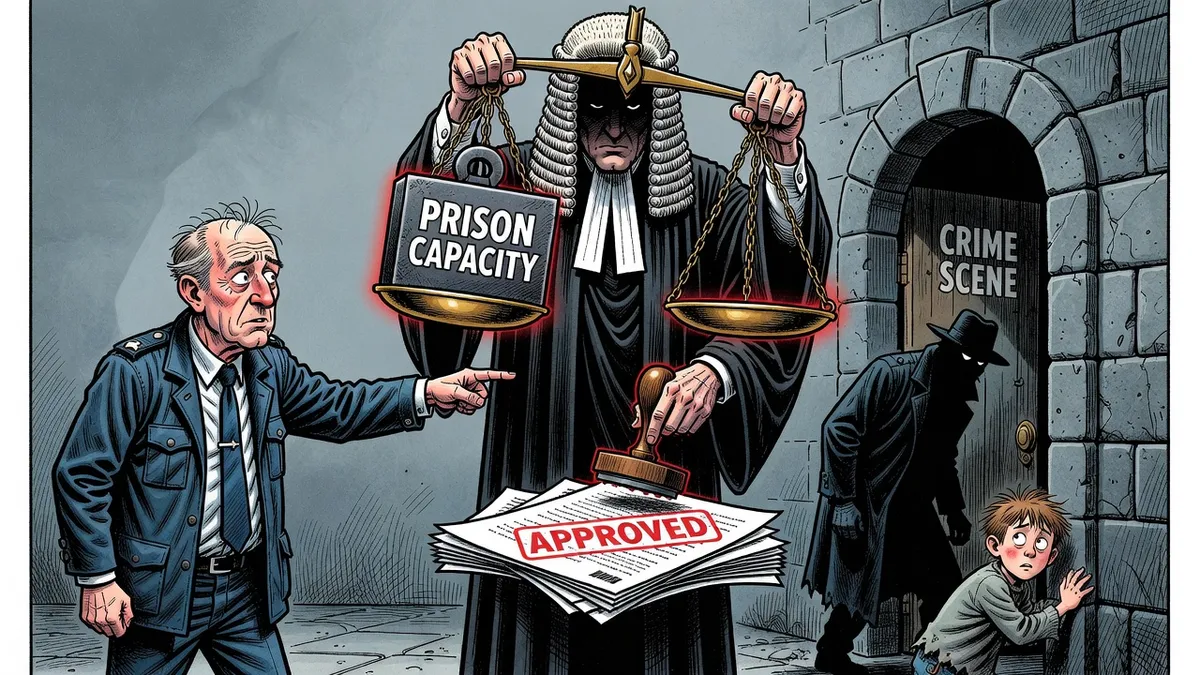
Bail decisions for Zafer Dogan show the direct effect of government pressure to cut the remand population. Courts returned the offender to his flat overlooking a playground on three occasions despite formal objections from both police and prosecutors. One affected family relocated to temporary accommodation as a result.
Dogan accumulated more than 5,000 covert photographs of adults and children before applying AI tools to generate explicit images. Among the victims were two girls aged seven and thirteen whose images were altered. He pleaded guilty to multiple counts of making indecent images of children, including 653 category A files, and received a sentence of two years and four months.
Metropolitan Police Commissioner Mark Rowley stated that officers now feel hamstrung by routine bail grants to prolific offenders. He attributed the pattern to explicit efforts to shrink the remand population, noting that strong submissions from police and the Crown Prosecution Service are routinely set aside. Rowley also criticised AI developers for releasing tools without adequate safeguards against such misuse.
Remand Policy Consequences
Prison capacity constraints have produced measurable changes in bail practice. Courts have lowered the threshold for releasing defendants charged with serious sexual offences when remand numbers become the dominant metric. The result is that individuals with extensive offending histories return to the locations of their crimes while cases proceed.
Victim statements record immediate displacement and lasting fear. The mothers of the child victims described helplessness and concern that images could circulate online. No mechanism restored their prior living arrangements or guaranteed separation from the offender during proceedings.
Institutional Patterns
Similar bail outcomes have appeared under successive governments facing the same prison population pressures. Each administration has issued targets to limit remand numbers, and each has seen courts apply those targets in individual cases involving high-risk defendants. The structural incentive remains constant: reduce the headcount or face capacity breaches.
The justice system records the opposition of police and prosecutors yet proceeds with release. Accountability for the decision rests with the judiciary, but no public mechanism tracks how often such releases produce further incidents or require later emergency action.
This case records one instance in which capacity targets overrode risk assessments. The outcome left children exposed to an offender who had already used their images for sexual purposes and who retained access to the vantage point used to obtain them.
Commentary based on Met chief criticises court system after bailed paedophile returns to scene of crime by PA Media on the Guardian.
← Back to commentary