Chocolate Shelves Fall to Organised Raids
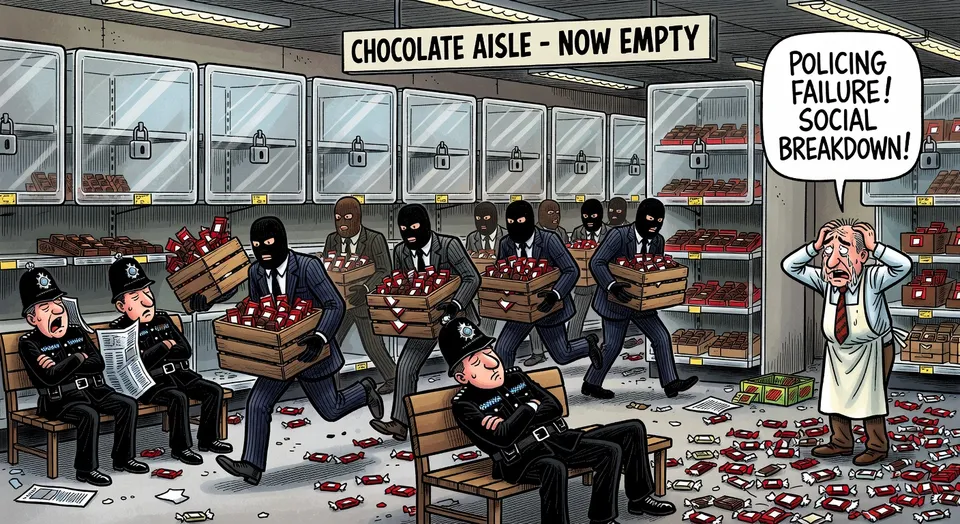
Co-ops lose £250,000 yearly as security boxes lock Cadbury Dairy Milk
Retailers cage chocolate bars amid 5.5 million shop thefts, with organised criminals targeting it to order. Police highlight incidents but fail to stem losses burdening stores and staff.
Commentary Based On
BBC News
Chocolate kept in anti-theft boxes as shops warn it's being stolen to order
Chocolate bars commandeer security boxes in Sainsbury’s London stores. A £2.60 Cadbury Dairy Milk now requires staff intervention to access. Retailers confirm thieves target it to order, stripping shelves in organised raids.
West Midlands Police released CCTV of a man seizing trays from a Stourbridge shop. Wiltshire Police captured footage of an entire shelving unit dragged out a door. Cambridgeshire officers arrested a suspect with a coat stuffed with Cadbury Creme Eggs.
These incidents expose chocolate’s shift to high-value theft target. The Association of Convenience Stores notes prolific offenders resell it through illicit networks. Proceeds fund broader criminal activity.
Heart of England Co-op lost £250,000 to chocolate theft in 2024 alone. That figure topped all other products except alcohol the following year. Chief executive Steve Browne reported single thieves costing thousands weekly by clearing £500 shelves.
Retailer Defences Multiply
Tesco and Co-op join Sainsbury’s in deploying transparent security boxes. Independent owners like Sunita Aggarwal half-fill shelves and install 30 CCTV cameras with AI thief detection. Fiona Avenal Malone loses £200-300 weekly in Wales, spotting emptied lines via footage.
Paul Cheema of Coventry stores calls chocolate “primetime” for organised crime. Thieves stuff £200-250 into rucksacks for resale in cafes and bars. Razors and cheese preceded it; now confectionery dominates.
British Retail Consortium data records 5.5 million detected shop thefts last year. Violence and abuse against retail workers hit 1,600 incidents daily. Levels dropped a fifth from prior peaks but remain second-highest on record.
Policing Response Lags
National Police Chiefs’ Council pursues a Retail Crime Strategy with retailer training and intelligence sharing. Opal unit maps organised acquisitive crime for targeted probes. Forces post videos to raise awareness, yet the Association of Convenience Stores demands stronger sentences and network disruptions.
Retailers bear the burden. Shops invest millions in security—Heart of England Co-op spent £3 million. Staff face abuse and intimidation as theft surges unchecked.
This pattern echoes wider retail collapse. High-value staples like meat, alcohol, and coffee face identical raids. Organised groups exploit low-risk, high-reward opportunities.
Economic pressures amplify the trend. Low deterrence stems from bail practices and light sentencing, unchanged across governments. Police prioritisation falters amid resource strains.
Shoplifting volumes quadrupled since 2019, per official figures. Convenience stores absorb disproportionate hits from “swipe the whole shelf” tactics. Illicit resale sustains the cycle.
Britain’s retail frontline crumbles under repeated failure. Governments pledge crackdowns—Labour’s recent plans mirror Tory efforts—yet theft escalates. Ordinary citizens pay via higher prices and locked basics.
Chocolate in cages reveals institutional paralysis. Law enforcement reacts with videos, not arrests at scale. Retailers fortify alone while crime funds itself.
Theft epidemics persist because accountability evades all parties. Police vetting and sentencing reforms stall for decades. Citizens confront a Britain where securing Dairy Milk signals everyday disorder’s triumph.
Commentary based on Chocolate kept in anti-theft boxes as shops warn it's being stolen to order at BBC News.