Clapham High Street barricades shoppers twice in four days against balaclava-clad teenagers
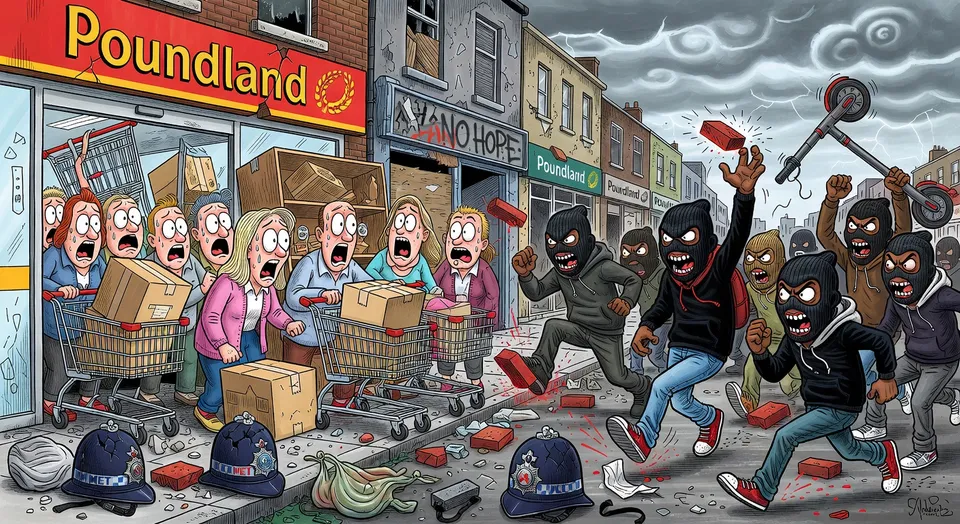
Five arrests from 160 youths, police forewarned both times
Youth mobs overrun Clapham shops twice in days despite police warnings and dispersal orders. Minimal arrests and repeat incursions expose frontline policing's collapse amid rising youth impunity.
Terrified locals locked themselves inside McDonald’s, Marks & Spencer, and Sainsbury’s on Tuesday evening.
This marked the second youth rampage in Clapham within days.
Police anticipated chaos from midday.
Yet mobs of around 60 teenagers still overran the street at 7pm, starting fires with fireworks on the nearby common.
Shop closures followed police advice.
Waitrose posted a “police advised” sign.
Boots suffered heavy targeting.
Officers arrived in four vehicles, including two vans.
Dozens faced off against the teenagers.
Most youths dashed past unimpeded, shouting jibes.
Only two teenage girls faced arrest, for assaulting an emergency worker.
A dispersal order ended the disorder after 10:30pm.
Saturday’s earlier incident drew over 100 youths.
They stormed an M&S store, sparking brawls.
Police issued another dispersal order.
Three girls—aged 15 and 16—arrested for shoplifting and assault, then bailed.
Five arrests total from roughly 160 participants.
Zero charges mentioned.
The Met touts progress.
Shoplifting arrests rose 44 percent last year.
London shoplifting fell four percent.
Yet repeat invasions expose deterrence failure.
Police knew timings both days.
Preparation yielded minimal results.
Youths returned undeterred.
Policing Prioritised on Paper
Metropolitan Police prioritise anti-social behaviour and shoplifting.
Dispersal orders enforce this.
But orders merely delay, not prevent.
Mobs regroup hours later.
Institutional response stays reactive.
Youth Impunity Takes Hold
Teenagers dominate these outbreaks.
Many wear balaclavas, run in packs.
No adult oversight evident.
This echoes Wembley’s recent zero-arrest rampage.
National youth unemployment hits record highs.
One in five 16-17-year-olds work.
Experience gaps widen.
Public Spaces Yield First
High streets once bustled safely.
Now they shutter mid-afternoon.
Commuters film chaos or hide.
Traffic halts.
Businesses absorb losses uncompensated.
Civic life contracts.
Cross-Party Legacy of Leniency
Every government since 1997 cut youth sentences.
Prison space trumps accountability.
Drug drivers serve one-third terms before deportation.
Youth justice follows suit.
Bail prevails over custody.
Repeat offences surge.
National crime data confirms the pattern.
The Cost to Ordinary Londoners
Shoppers with babies cower inside stores.
Security guards hold doors against mobs.
Escorts to safety come hours late.
Daily routines fracture.
Trust in streets evaporates.
This is public order’s quiet surrender.
Clapham reveals Britain’s street-level breakdown.
Police predict riots but contain none.
Youths learn law holds no teeth.
Institutions issue statements, not solutions.
Decline embeds when high streets barricade against children.
Commentary based on 'Terrified' shoppers barricaded themselves in stores as youths rampaged through Clapham for the second time in days by Frankie Elliott on LBC.