Council Officers Relocate Under Midnight Death Threats
Trading Standards officers face death threats, assaults, and forced relocations from mini-mart gangs. Survey data reveals 96% involvement with organized crime, exposing breakdowns in enforcement and public safety.
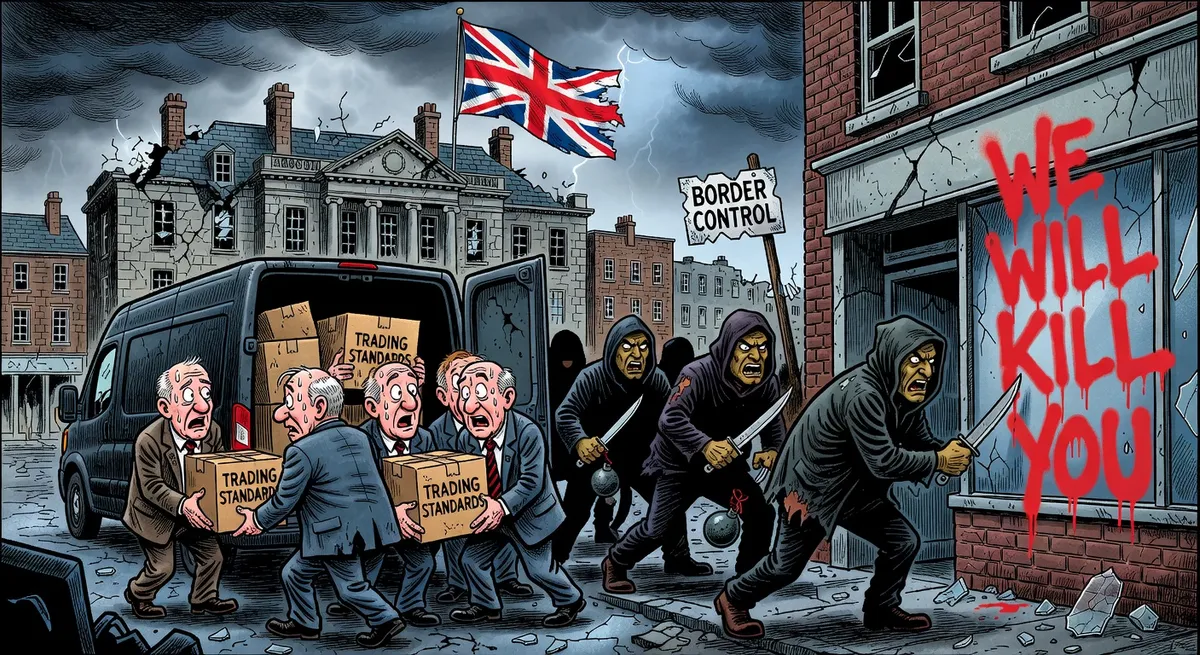
96% of Trading Standards teams battle organized High Street gangs
A Trading Standards investigator received a midnight call from a Kurdish gang: “We will kill you and burn your house.” Her car suffered £10,000 damage from two rammings by uninsured vehicles linked to defendants on bail. She sold her renovated home and moved, using three removal firms on police advice.
This case forms part of testimony from 24 officers across the UK.
They detailed extreme threats, including shouts of “I kill you” followed by rape warnings.
A female officer endured manhandling and forced pornography viewing; another faced breast-poking.
Shops yielded axes, bats, blades, hammers, and a gun in a connected car.
Vehicles bore trackers; one officer faced a car mounting pavement to run her down.
The Chartered Trading Standards Institute surveyed over 2,000 members.
Results show 96% of front-line teams confront organized crime.
Over 70% of officers report personal threats or violence.
In some locales, half of mini-marts and vape shops tie to gangs; a third of American candy stores follow suit.
Criminality spans cities like London and West Midlands, towns such as Great Yarmouth and Barry, and villages.
Enforcement Without Teeth
Trading Standards officers inspect, seize evidence, and call police.
They lack arrest powers.
One Welsh officer with 36 years experience wears a stab vest routinely.
He suffered throat-grabbing and spitting after halting a tobacco-laden car; the assailant paid a £415 fine.
That sum matches one day’s illicit sales.
A London apprentice describes pre-raid nightmares and post-inspection filth.
Shop workers lock doors, leer sexually, and threaten social media stalking.
Gang Profiles Emerge
Gangs peddle Class A drugs, illegal cigarettes, vapes, nitrous oxide, cannabis, and prescription pills.
Many operators are failed asylum seekers barred from work yet flaunt BMWs.
One prosecuted network spanned 50 shops in a multimillion-pound tobacco fraud.
Defendants, released on bail, surveilled the lead investigator’s home with three or four men parked outside.
They sent aggressive texts demanding seized cash.
Decade-Long Surge
Organized crime on high streets built steadily over ten years.
The CTSI labels it the top threat to the profession.
A prior BBC probe exposed mini-mart networks enabling illegal migrant labor.
Undercover filming caught over-the-counter cocaine and cannabis sales.
The Prime Minister pledged more neighborhood officers in response.
Institutional Response
The government claims collaboration with police, National Crime Agency, and Trading Standards.
Prosecutions occur—Mandy’s harassers drew jail for money laundering, tobacco fraud.
Yet intimidation persists round-the-clock, forcing career public servants to flee.
Light penalties and bail practices embolden gangs.
Police advise evasion tactics, not elimination.
Councils deploy under-resourced teams into escalating danger.
Cross-party neglect of borders sustains illegal workforces.
High street decay accelerates as enforcement crumbles.
Once-routine consumer protection now risks lives.
This exposes foundational state failure: inability to shield enforcers from High Street gangs.
Public servants relocate; shops dispense death threats alongside vapes.
Communities lose safe streets and reliable oversight.
The pattern—unchecked inflows, porous policing, elite impunity for criminals—mirrors declines in steel mills, barracks, and council ledgers.
Britain’s basic order frays, one rammed car at a time.
Commentary based on 'We will kill you and burn your house': Council staff under attack from High Street gangs at BBC News.
← Back to commentary