Custody Claims Britain's First Arrested Senior Royal
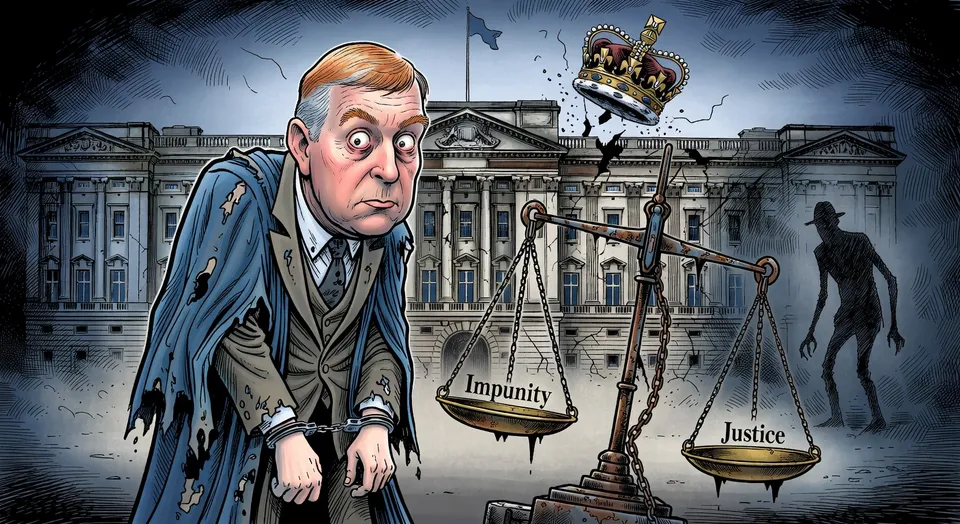
Andrew Mountbatten-Windsor detained on misconduct charges tied to Epstein files
Prince Andrew's arrest as the first senior royal in custody exposes decades of monarchical impunity and elite sharing of state secrets with criminals. Police action reveals institutional rot at the UK's apex, with no exemptions from law.
Commentary Based On
BBC News
Shell-shocked, haunted photo of Andrew will be part of how arrest is remembered
Police arrested Andrew Mountbatten-Windsor on Thursday morning in Norfolk. He became the first senior member of the Royal Family in modern history taken into custody. The charge: suspicion of misconduct in public office during his 2001-2011 tenure as UK trade representative.
Officers held him after Epstein files revealed he shared state documents with Jeffrey Epstein. These included trade visit reports, a confidential Afghanistan investment briefing, and a Treasury document passed to a business contact. No royal status shielded him from detention.
Previous Sanctions Fell Short
Andrew lost his trade envoy role in 2011 over Epstein ties. The 2019 Newsnight interview stripped his working royal duties. A 2022 settlement with Virginia Giuffre and 2024 title removals followed email disclosures of ongoing Epstein contact.
Yet he retained line-of-succession status and counsellor-of-state eligibility until this arrest. Palace actions distanced him without legal reckoning. Impunity persisted through internal measures, not courts.
King Charles issued a statement: “The law must take its course.” This distanced the monarchy from Andrew’s fate. No familial intervention emerged, unlike past royal protections.
Documents Crossed Criminal Lines
Epstein files detail Andrew passing sensitive materials to a convicted sex offender. Trade reports exposed UK commercial strategies. The Afghanistan briefing risked national security details amid conflict.
Such sharing breached public office duties. Epstein, under house arrest in 2001 for procuring a minor, hosted no barriers to royal access. Andrew’s 50th birthday at St James’s Palace referenced “mysterious mischief,” with Epstein invited despite incarceration.
The arrest occurred on Andrew’s 66th birthday. Police statements confirmed custody bluntly: “The man remains in police custody at this time.” Theory placed him steps from the throne; reality delivered handcuffs.
Public Revulsion Builds
Epstein revelations fueled anger at elite networks blending wealth, power, and crime. Decades of unchallenged associations bred perceptions of immunity. Andrew’s haunted post-release photo—slumped, collar up—contrasts his 2001 confident pose with Giuffre.
Polling shows trust in institutions at lows: monarchy approval dipped below 50% in recent surveys amid scandals. This arrest tests public faith further. Networks once untouchable now face exposure.
Institutional Rot Exposed
Monarchy operated above law for generations, with royals as trade envoys wielding unchecked influence. Andrew’s role funneled state secrets through personal ties. No vetting prevented Epstein proximity.
Cross-party governments endorsed this: Labour and Conservatives alike granted trade briefs without safeguards. Failures repeat—elite capture prioritizes connections over security. Police action marks rupture, not reform.
Accountability gaps span elites: mandarins evade scrutiny, politicians cycle through scandals unscathed. Andrew’s case forces confrontation. Yet history questions if conviction follows arrest.
This pierces sovereign exceptionalism at Britain’s core. Royal arrest signals cracking impunity, but systemic elite protections endure across institutions. The UK declines as trust erodes when power evades law no longer by design, but by grudging exception.
Commentary based on Shell-shocked, haunted photo of Andrew will be part of how arrest is remembered at BBC News.