Decade Waits Drive Nurses from NHS Frontlines
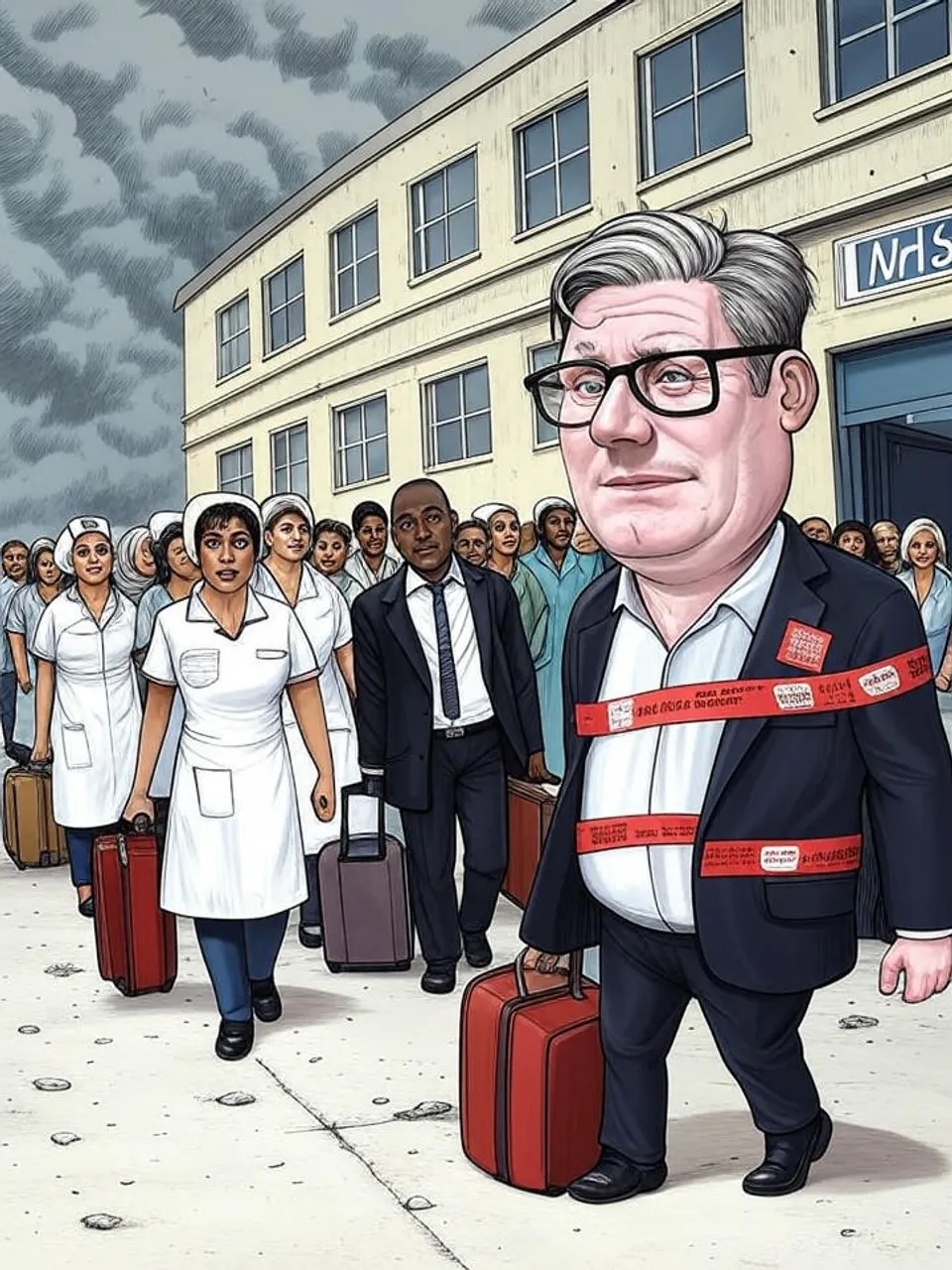
Survey warns of 50,000 exodus amid migration curbs
Government plans to extend settlement periods for migrants threaten to lose 46,000 foreign nurses, exposing NHS reliance on international staff without domestic fixes. This political move deepens workforce shortages and patient risks across party lines.
Commentary Based On
The Guardian
Up to 50,000 nurses could quit UK over immigration plans, survey suggests
Foreign nurses, who staff a quarter of UK hospitals, now face a decade-long wait for settled status under new immigration rules. The Royal College of Nursing survey reveals that 60 percent of non-permanent residents among them plan to leave, potentially stripping 46,000 workers from the NHS. Government vows to cut net migration clash with the health service’s dependence on these 200,000 international staff out of a total 794,000.
The proposals extend indefinite leave to remain from five to ten years for all migrant workers. They also demand degree-level qualifications and stricter English tests, even for dependents. Sources indicate a consultation launches soon, timed against Reform UK’s rise.
Nursing leaders label these changes immoral. They argue the rules treat skilled migrants as bargaining chips in political fights. Without settled status, nurses remain tied to single employers, fostering exploitation in underpaid social care roles.
Patient safety hangs in the balance. An exodus would worsen waiting lists, already at record highs after years of understaffing. The NHS recruited 76,876 foreign nurses on visas since 2021, all previously on track for settlement in five years.
Financial insecurity drives the distress. The survey shows 53 percent of migrant nurses fear for their finances, 52 percent for family impacts, and 49 percent for career paths. Only 11 percent would have migrated knowing the ten-year hurdle.
Fees compound the burden. Indefinite leave applications cost £3,029 each, against a processing expense of £523. In 2003, that fee stood at £155, a tenfold inflation that prices out many contributors.
Migrants pay taxes yet cannot access child benefits or disability support for a decade. This setup denies public services to those delivering them. It signals to future recruits that the UK offers no long-term security.
Recruitment Reliance Exposed
The UK has leaned on foreign labor to plug NHS gaps for decades. Domestic training programs stagnate; the government admits failure to grow the homegrown workforce. Post-Covid, many nurses arrived at personal cost, only to face this reversal.
Political motivations override practical needs. Keir Starmer’s pledge targets net migration to counter Farage’s appeal. Yet health and care sectors bear the brunt, with no sector-specific exemptions proposed.
Cross-party neglect fuels the cycle. Conservative governments expanded visa routes during shortages, then tightened them amid backlash. Labour now extends waits, ignoring the same vulnerabilities it once criticized.
Economic and Social Costs Mount
An outflow of 50,000 nurses would cost billions in recruitment and training. It would deepen care deserts in rural and deprived areas. Social cohesion frays as families uproot, adding to integration strains.
Broader migration curbs deter future talent. Countries like Australia offer faster paths to residency, drawing skilled workers away. The UK’s productivity lags; losing health expertise widens that gap.
Institutions prioritize optics over outcomes. Officials express gratitude to overseas staff but proceed with rules that push them out. Accountability evaporates: no minister faces repercussions for the resulting crisis.
This pattern traces back to the 1990s, when NHS expansions outpaced training investments. Every administration since has patched holes with migrants, then scapegoated inflows. Functional governance would scale domestic education and streamline integration, not erect barriers after reliance.
The proposals betray the very workers who sustained the NHS through pandemics and reforms. They reveal a system that exploits global labor while eroding trust in public services. Ordinary citizens face longer waits and higher taxes to fix the fallout.
In the end, these immigration plans accelerate the NHS’s collapse, a cornerstone of Britain’s welfare state. They underscore how electoral posturing across parties perpetuates institutional decay, leaving essential services—and the public they serve—perilously exposed. The uncomfortable truth: the UK builds its health system on imported hands, then slams the door.
Commentary based on Up to 50,000 nurses could quit UK over immigration plans, survey suggests by Andrew Gregory on The Guardian.