Defence Chief Records Cold War-Level Threats as Funding Plan Stalls
The head of the armed forces warns of peak post-Cold War danger amid years of postponed spending decisions and capability erosion.
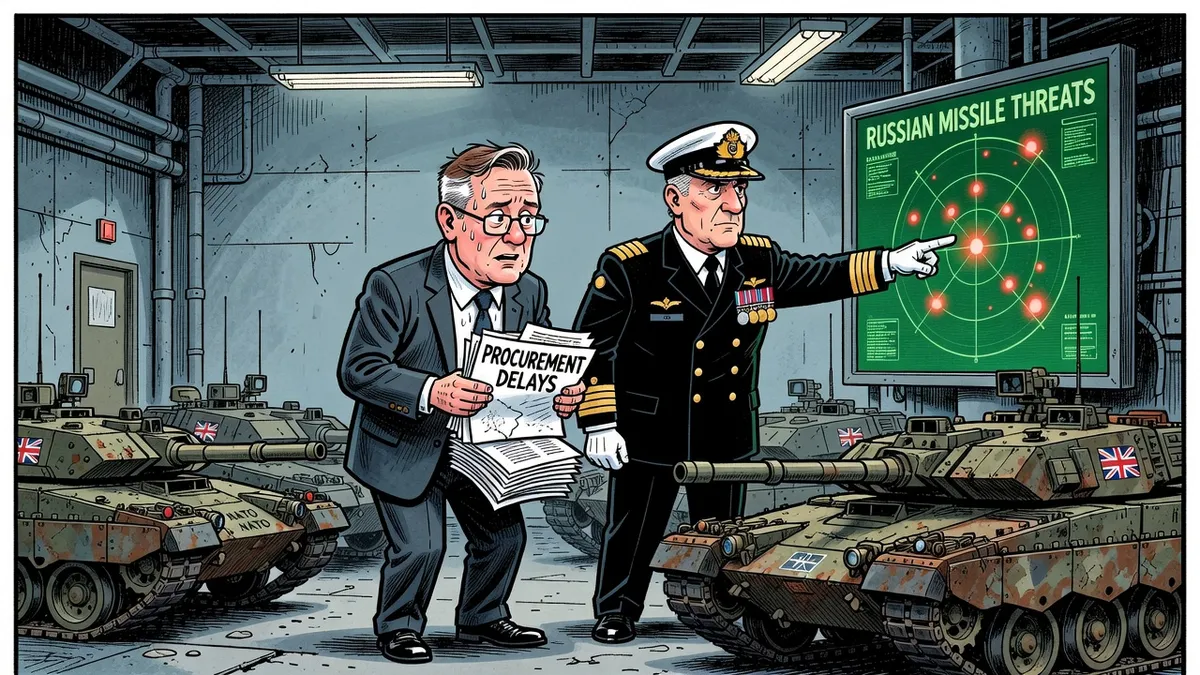
Knighton cites Russian incursions while investment document misses third deadline
Britain’s most senior military officer has declared the current risks to the country greater than at any time since the Cold War. Sir Richard Knighton told the BBC that Russian forces are probing defences, conducting long-range aviation incursions into the High North, and testing lines through cyber and sabotage activity. The statement arrives weeks before a repeatedly delayed Defence Investment Plan.
The plan was first scheduled for autumn 2025. It remains unpublished in June 2026. Starmer has now promised delivery ahead of a NATO summit, yet the document is meant to set out equipment and infrastructure funding for the next decade. Past governments left similar exercises unfinished or under-resourced.
Knighton noted that armed forces previously trained for short, contained operations. Ukraine demonstrates the requirement for sustained industrial output, munitions stockpiles, and personnel endurance. Drones and autonomous systems will dominate future conflicts, yet Britain has not matched the pace of adaptation seen elsewhere.
Lord Robertson, a former defence secretary now advising the government, stated in April that Britain is under-prepared and under attack. He criticised the expansion of welfare spending at the expense of security. Downing Street responded that budgets are already rising to record levels, without addressing the specific capability shortfalls identified.
Russian aircraft have flown as many sorties near UK airspace in 2026 as in 2025. No aircraft has entered sovereign airspace, but the pattern shows sustained pressure rather than isolated incidents. The RAF conducts intercepts with ageing platforms whose replacement timelines have slipped across multiple administrations.
Investment Gaps
The Strategic Defence Review was described by Knighton as a call to arms. Ministers must still choose between competing domestic priorities to meet the required spending trajectory. These trade-offs have been deferred for years.
Recruitment shortfalls, maintenance backlogs, and munitions depletion predate the current government. Successive reviews identified the same shortfalls without reversing them. The result is a force sized and equipped for a different era of conflict.
Pattern of Delay
Defence spending as a share of GDP fell steadily from the late 1990s onward. Each administration cited fiscal constraints while extending equipment programmes. The current plan’s repeated postponement continues that sequence.
Knighton stated that society may need to accept different priorities. No mechanism currently exists to enforce that reallocation against entrenched domestic budgets. The warning therefore functions as an institutional signal rather than a policy shift.
Britain now confronts elevated state and hybrid threats with forces whose readiness has been calibrated downward for decades. The gap between declared danger and sustained delivery remains unclosed.
Commentary based on UK in most dangerous period I've known, UK Chief of the Defence Staff tells BBC at BBC News.
← Back to commentary