Diesel Holds Near Record as Crude Prices Ease
Diesel averages 197p per litre with only a 2p drop from October peaks despite falling oil costs and added Middle East shipping expenses.
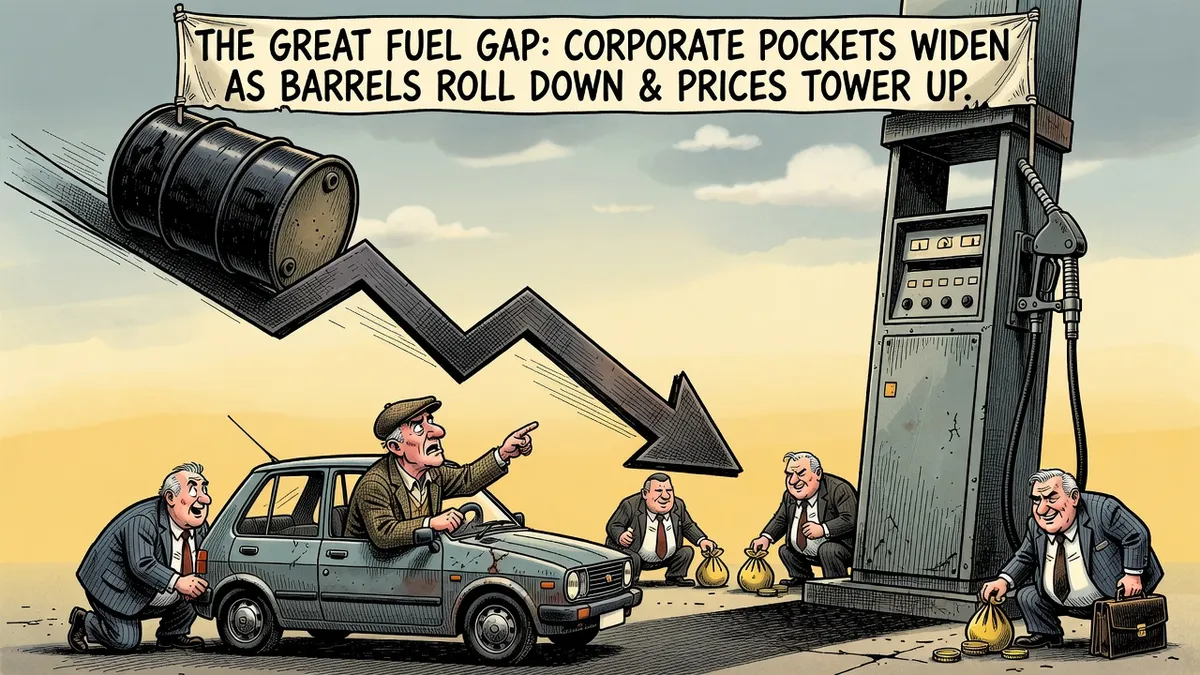
UK pump prices show minimal response to wholesale declines and refining limits
Diesel prices average 197 pence per litre across UK forecourts, down only 2p from the October record of £2 despite falling wholesale crude costs.
The AA reported that petrol has dropped 6p to 168p over the same period. Diesel has not followed because refining capacity remains constrained and additional costs from Middle East shipping routes add $20 to $30 per barrel in insurance and transfers.
US Federal Reserve governor Christopher Waller stated that diesel prices are unlikely to moderate as readily as crude in current conditions. UK wholesale unleaded costs have fallen below 62p, yet diesel margins at the pump show minimal adjustment.
Price Transmission Failures
Retailers in London and the south-east have held prices near peak levels even as northern stations and some in Wales and Scotland offer reductions below 160p. The AA described the diesel situation as dismal, with only a possible further 4p wholesale drop yet to reach drivers.
Each 5p reduction at the pump saves £2.75 on a typical 55-litre tank. Persistent gaps between wholesale declines and pump prices indicate weak competition and limited regulatory pressure on margins.
Household and Business Exposure
High diesel costs directly raise transport expenses for goods and services. Businesses reliant on road haulage face sustained input inflation that feeds into consumer prices across sectors.
Households already managing elevated living costs absorb the difference through reduced spending elsewhere. The pattern matches repeated episodes where global commodity relief fails to translate into domestic relief.
Infrastructure Constraints
Britain operates with limited domestic refining capacity, increasing dependence on imports and external supply chains. This structural shortfall amplifies price stickiness during periods of international tension or logistics disruption.
Policy focus has remained on consumption taxes and short-term relief rather than expanding or protecting refining infrastructure. Successive governments have left the sector exposed to the same bottlenecks.
The result is repeated vulnerability where falling global prices produce uneven or delayed effects at the pump. Diesel’s resistance to downward movement reveals how UK energy costs remain decoupled from market signals that should deliver relief.
Commentary based on Diesel still costing close to a ’dismal’ £2 a litre despite oil price falls at the Guardian.
← Back to commentary