Diesel Imports From America Reveal Britain's Refining Deficit
UK ministers seek European stockpile releases after Washington threatened export curbs, exposing long-standing dependence on foreign diesel.
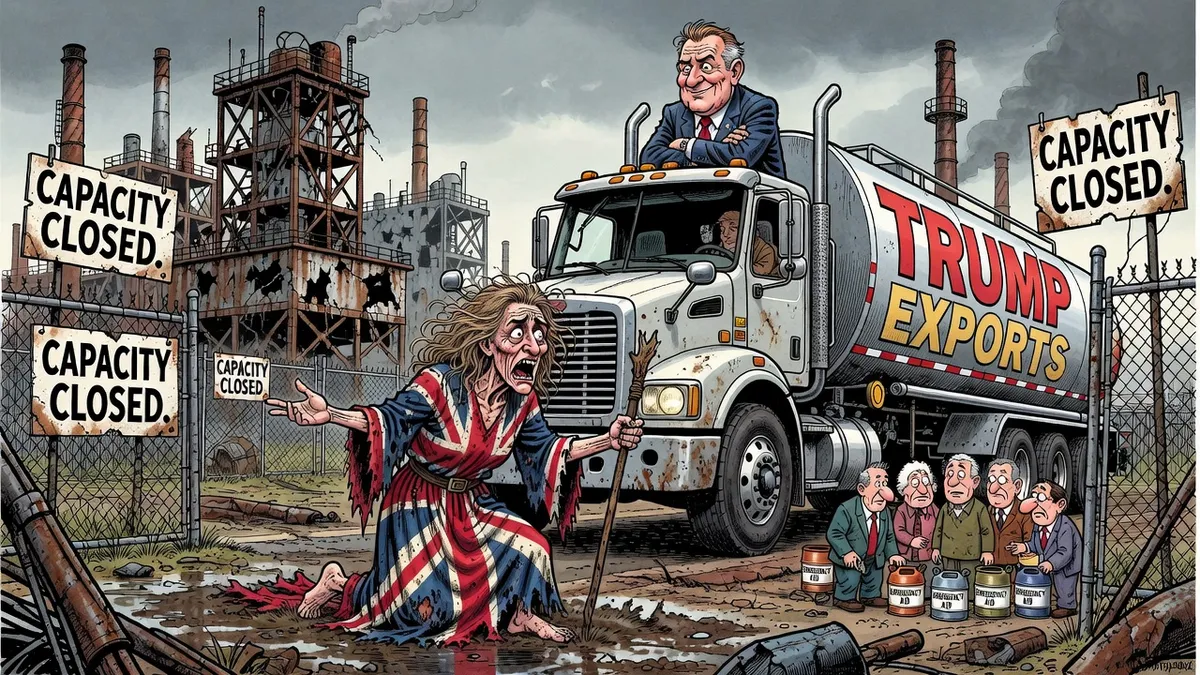
One third of UK supply now travels from the United States while domestic capacity remains fixed
Britain’s diesel imports from the United States reached one third of total supply last year while domestic refining capacity covers only part of annual demand. This leaves pump prices exposed to decisions made in Washington. The average price already stands at 199.72 pence per litre.
Ministers contacted the European Commission, Germany, France, Italy and Ireland after the Trump administration directed those countries to release strategic reserves or face an export ban. The UK holds no comparable leverage in those conversations. A government statement claimed a diverse and resilient supply, yet the same statement confirmed ongoing talks to secure alternative cargoes.
Refining gap
The United Kingdom closed several refineries after 2010 without building replacement capacity. Domestic output now meets roughly two thirds of diesel consumption. The remaining volume travels by tanker from Gulf states and the United States. Any interruption in those routes immediately tightens wholesale markets.
Trump administration officials cited the need to lower American prices ahead of midterms. They also referenced the ongoing conflict in Iran that has pushed Brent crude above 101 dollars a barrel. European countries face the same pressure but retain larger strategic stocks and stronger diplomatic channels with Washington.
Price transmission
Higher global diesel prices reach British forecourts within days because contracts are priced against international benchmarks. Households already absorbed successive increases tied to earlier supply disruptions. Further rises would add directly to transport, food distribution and heating oil costs.
Elizabeth de Jong of Fuels Industry UK noted that reliance on overseas production undermines domestic energy security. The observation matches recorded data on refining closures and import shares. No current policy restores lost domestic capacity within the next decade.
Pattern of exposure
Energy security now depends on foreign governments releasing reserves or maintaining export flows. Previous governments accepted this arrangement in exchange for lower capital spending on refining. The result is a system that functions only while external suppliers remain cooperative.
Britain continues to require diesel for transport, agriculture, chemicals and defence. Each of those sectors inherits the same import risk. The current talks with European partners simply defer the question of how long the arrangement can hold.
Commentary based on Britain in talks with European allies over release of emergency diesel stockpiles amid Trump pressure by Alex Daniel on the Guardian.
← Back to commentary