Director Extracts Millions Before Repeated Company Collapses
Andrew Woosnam removed substantial funds from recruitment firms prior to their failures, shifting losses to taxpayers through standard phoenix mechanisms.
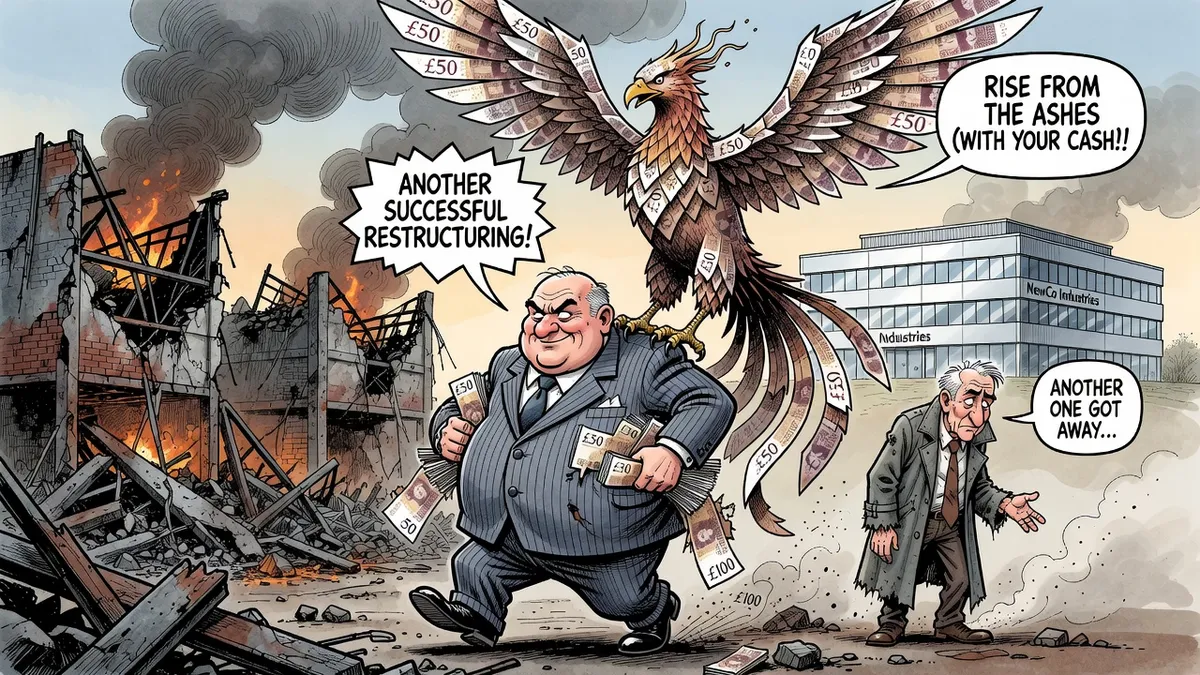
HMRC left with over £1m unpaid after two insolvencies and a third trading name
Andrew Woosnam took more than £3.4 million in loans and dividends from his recruitment firms before they entered insolvency twice in under a year. Creditors, including HMRC, now face claims exceeding £3 million with limited recovery prospects.
The first company, Premier Group Recruitment, entered administration in September 2025 owing £2.9 million. This included £647,000 to HMRC. Three days later, Woosnam acquired the assets through a new entity, PGGBR Ltd, via a pre-pack deal that required an initial £10,000 payment plus £600,000 in instalments.
Those instalments did not arrive. The successor company accumulated another £400,000 in HMRC debt before its own liquidation. Woosnam had already extracted a £1.2 million director’s loan and nearly £2 million in dividends from the original firm.
Repeated structure
Pre-pack administrations allow connected parties to retain control of assets while shedding liabilities. Studies cited in the case show these arrangements produce worse outcomes for unsecured creditors than open-market sales. In this instance, the mechanism enabled continuity of operations with minimal cash outlay.
A third recruitment brand, Xpertis Talent, now operates with at least eight former Premier staff. Marketing materials have reused the prior company’s award history. The new entity is registered to an owner in Thailand, a jurisdiction that provides no automatic disclosure link to UK insolvency records.
Taxpayer exposure
HMRC has recorded more than £1 million in unpaid liabilities across the two failed companies. Enforcement proceedings that began before the first administration yielded no material recovery. No restrictions currently prevent the same director from operating in the sector under a new corporate structure.
This outcome follows a documented pattern in UK insolvency practice. Directors can extract substantial funds prior to collapse, transfer assets through deferred-payment deals, and resume trading with reduced creditor oversight. Public records show repeated instances where tax debts form the largest single category of loss.
The process leaves ordinary taxpayers covering shortfalls while the operator maintains access to the same customer base and workforce. No regulatory barrier has interrupted the sequence from the first administration through the emergence of Xpertis Talent.
Commentary based on The boss whose twice-bust business appears to be back despite £3m debts at the Guardian.
← Back to commentary