Divergent Testing Standards Trigger Billions in Lost UK Exports to Europe
UK manufacturers lose £3.7-6.5bn annually in EU exports from duplicate testing without mutual recognition, with motor vehicles, electronics and pharmaceuticals hit hardest since 2021.
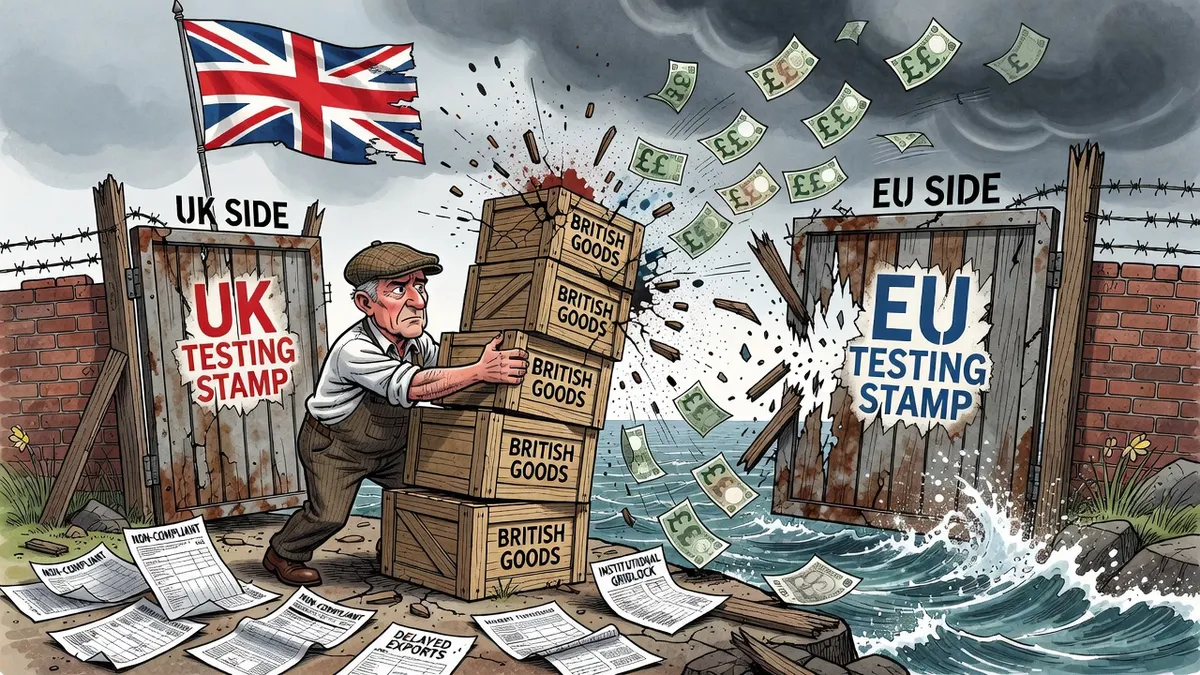
Duplicate Testing Erodes UK Export Markets
UK manufacturers have recorded annual export shortfalls of £3.7 billion to £6.5 billion to the EU since 2021 because product testing rules diverged without a mutual recognition agreement.
The IPPR analysis isolates this regulatory friction from other shocks such as Covid disruptions or energy price spikes. Motor vehicle and parts exports alone fell short by £2.48 billion to £3.42 billion each year. Electronics and pharmaceuticals added further shortfalls of £1.17 billion to £1.67 billion and £740 million to £820 million respectively.
Persistent Negotiation Failure
No UK government has secured an operational mutual recognition deal despite four years of post-Brexit trading. The Starmer administration proposed a goods single market arrangement that EU officials rejected on grounds of policy cherry-picking. Earlier Conservative efforts produced only limited technical discussions that left duplicate certification requirements intact.
Companies responded by abandoning EU markets or establishing subsidiaries inside the bloc. These adjustments convert one-time setup costs into ongoing revenue leakage for UK-based production.
Measurable Scale of Loss
The annual shortfall equals roughly 0.18 percent of UK national income. That figure exceeds the combined projected gains from the CPTPP agreements with Japan, Canada, Australia and Singapore by a factor of three. The losses concentrate in high-value manufacturing sectors where testing duplication adds direct administrative overhead and delivery delays.
IPPR researchers confirmed the regulatory divergence remained statistically significant after controlling for supply chain shifts and sanctions effects. The data therefore points to a structural barrier rather than transient market conditions.
Cross-Government Continuity
The same friction has survived changes of administration because each government treated alignment talks as secondary to broader political positioning. EU counterparts have consistently required dynamic alignment on standards as the price of reduced checks. UK negotiators have not delivered that alignment while claiming sovereignty gains elsewhere.
Ordinary exporters absorb the resulting costs through higher compliance spending and foregone sales. Domestic consumers see no offsetting reduction in prices or increase in choice.
This outcome reflects the wider pattern of UK institutions promising frictionless outcomes while delivering repeated, quantifiable shortfalls in trade performance.
Commentary based on UK ‘losing up to £6.5bn a year in EU trade’ without post-Brexit product deal at the Guardian.
← Back to commentary