Driver Dies After Stopped Train Receives No Signal Warning
A fatal crash on Britain's oldest rail lines exposes ongoing signalling failures and deferred renewal despite official safety claims.
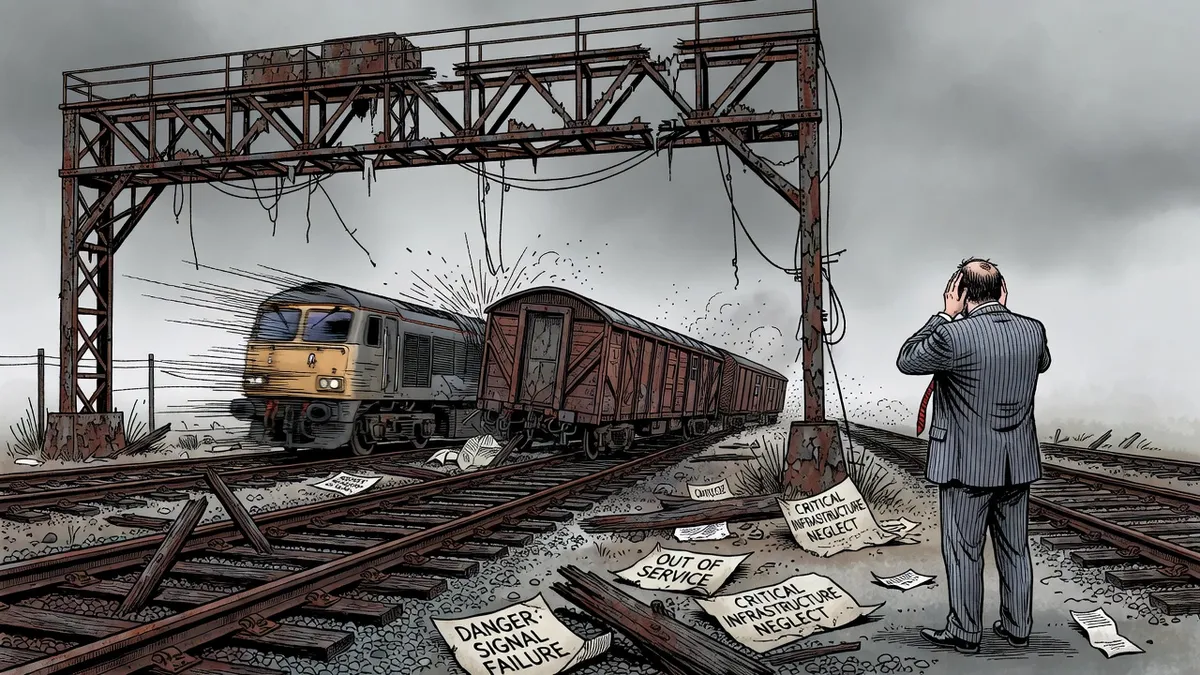
Bedford collision kills one and injures 89 on ageing infrastructure with recurring signal faults
One train halted on the tracks south of Bedford. Another struck it at speed, killing the driver of the second service and injuring 89 passengers. Eleven suffered very serious injuries and 22 more required serious medical attention.
Passenger accounts describe immediate chaos inside the carriages. Seats detached, blood covered floors and faces, and several people sustained broken limbs or spinal injuries that left them unable to move. One survivor noted the stopped train had braked hard just before impact, an action he found unusual on that section of line.
East Midlands Railway confirmed both trains were on scheduled routes to London St Pancras. The 16:40 from Corby and the 15:50 from Nottingham collided around 17:15. Emergency services declared a major incident and responded within minutes, yet the damage to the rear driver’s cab was extensive enough that witnesses described it as badly mashed.
Transport Secretary Heidi Alexander stated that Britain’s railways remain among the safest in the world. A passenger who escaped physical harm rejected that framing on the following morning, pointing to repeated signal failures on one of Europe’s oldest networks and asking why the stopped train received no warning.
The investigation has only begun. No cause has been confirmed, yet the incident fits a documented pattern of signalling shortcomings on routes that have received incremental upgrades rather than comprehensive renewal. Successive governments have deferred full modernisation while maintaining the same operational framework.
Passengers on older sections of the network continue to encounter the same physical constraints that existed decades earlier. Tables in first class became impact points for abdominal and rib injuries. Doors jammed after the collision, delaying exit from carriages that had already sustained heavy internal damage.
The death and injuries occurred on infrastructure that carries daily commuter and long-distance traffic without fundamental changes to its signalling architecture. Official statements emphasise comparative safety metrics, yet the concrete outcome remains one fatality and dozens of casualties from a collision that began with a stationary train.
This event shows how deferred capital investment and persistent technical limitations combine to produce routine operational risk. The network continues to function under those constraints while carrying the same volume of services.
Commentary based on Bedford train crash passengers describe how collision unfolded at BBC News.
← Back to commentary