Drought Exposure Locks England's Farmlands Into Production Risks
Mapping shows 81 percent of fresh produce and major shares of wheat, barley and other staples grown in England's moderate to very high drought-risk zones, driving repeated shortfalls.
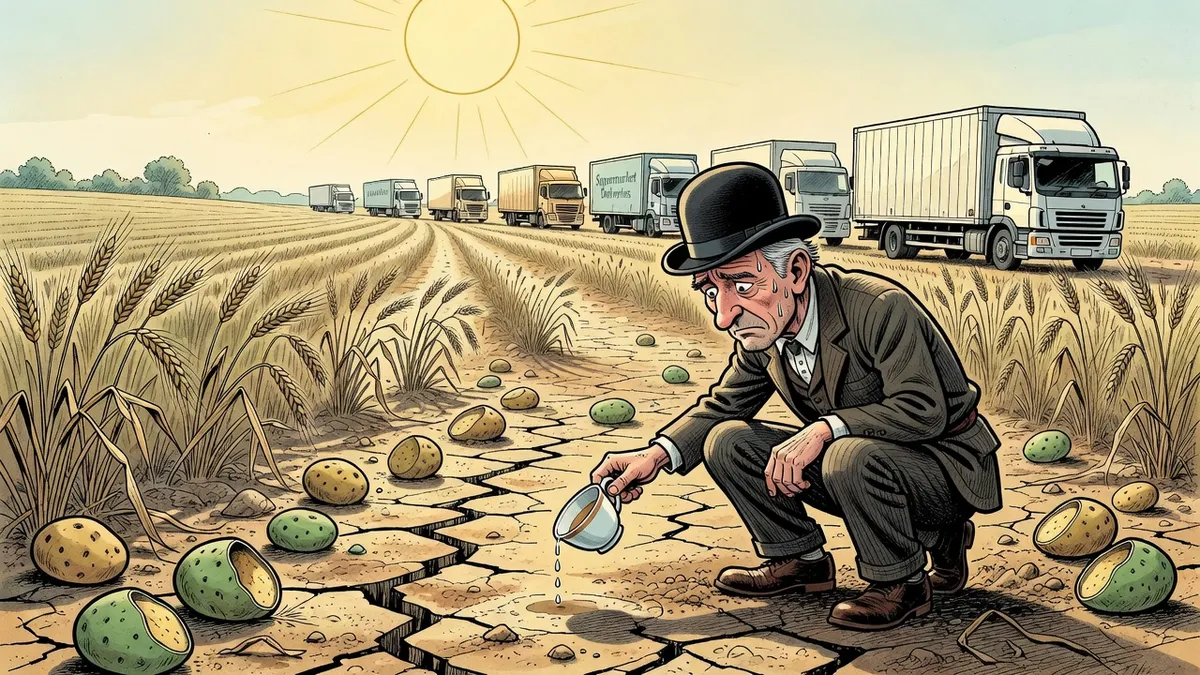
England’s core food production remains locked into regions already rated moderate to very high drought risk. Eighty-one percent of fresh produce, 77 percent of wheat and 75 percent of barley sit inside those zones according to Rebalance Earth mapping. Recent harvest data show yields below long-term averages for wheat, spring barley and oats.
Production Concentration
The same pattern holds for oilseed rape at 74 percent, sugar beet at 70 percent and potatoes at 67 percent. A quarter of staple crops occupy areas facing acute drought exposure, including 30 percent of wheat and barley. East Anglia and Kent, long treated as reliable growing belts, now record repeated dry spells that reduce output on sandy soils.
Harvest Shortfalls
The Agriculture and Horticulture Development Board recorded disappointing cereal volumes across England and Wales in 2026. Elveden estate managers in Suffolk report drought conditions three years out of five. Their 9,000 hectares still aim for 100,000 tonnes of annual output, yet the estate has added reservoirs to offset repeated shortfalls.
Water Allocation Gaps
No national mechanism currently matches crop locations to projected water availability. Productive land continues in use because switching production would increase import volumes and transfer resource pressure elsewhere. Current policy leaves yield variability to be absorbed through higher consumer prices and supply-chain strain once drought reduces domestic volumes.
Systemic Exposure
Britain’s food system therefore carries structural dependence on weather patterns that have already begun to degrade output. Lower harvests feed directly into elevated borrowing costs for processors and tighter margins for retailers. The absence of coordinated irrigation investment or relocation incentives leaves the same acreage exposed year after year.
This configuration shows how post-war agricultural geography has outlived the water security that once supported it. Continued concentration without adaptation raises the probability of recurring shortfalls that cannot be offset by imports without widening the existing trade deficit in food.
Commentary based on Most of UK’s essential food supply grown in drought-risk areas, report warns at the Guardian.
← Back to commentary