Endometriosis Patients Navigate Nine-Year Diagnostic Gaps
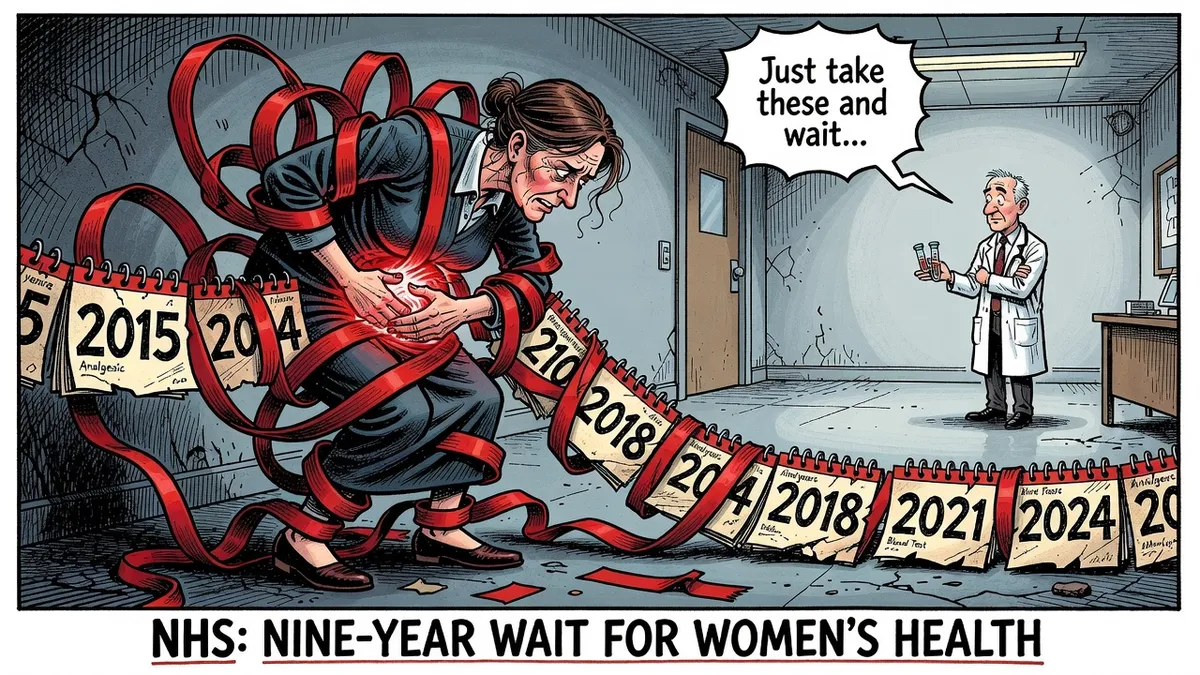
Nine-year waits for endometriosis diagnosis persist under the NHS despite new pilot tools and guidance for GPs.
Draft tests arrive while primary care recognition stays unchanged
Women with endometriosis continue to face average diagnosis delays of nine years or more through NHS primary care, despite the condition affecting one in ten women of reproductive age. New draft guidance proposes two non-invasive tests for GPs to use, yet these remain in pilot stages and require specialist oversight for access.
The saliva test, Endotest, and the abdominal electrical signal test, Endosure, aim to speed identification before referral for laparoscopy. Current practice relies on surgical confirmation under general anaesthetic, leaving symptom overlap with conditions like irritable bowel syndrome unaddressed in routine consultations.
Patient accounts illustrate repeated GP visits without ownership of the case. One 23-year-old reported pain from age 16, multiple misattributions, and eventual private payment for confirmation. Another family described over ten hours in A&E across multiple attendances before any pathway opened.
Limited Rollout Constraints
The guidance applies only in England and Wales and mandates that tests occur under professionals with endometriosis expertise. Not every practice will offer them immediately, and the NHS continues evidence collection on accuracy rather than full deployment.
These measures supplement rather than replace existing checks. They do not resolve underlying capacity shortfalls in general practice that produce the initial delays.
Systemic Pattern
Nine-year waits reflect consistent shortfalls in symptom recognition and referral speed across primary care. Similar gaps appear in other chronic conditions where overlapping presentations delay specialist input.
The introduction of pilot tools after prolonged patient advocacy shows reactive rather than proactive system adjustment. Historical performance data on endometriosis pathways indicate no sustained reduction in diagnostic intervals despite prior service reviews.
This case demonstrates how stated improvements in NHS access fail to materialise at the point of first contact. Ordinary citizens encounter extended uncertainty and self-funded workarounds while official metrics track incremental guidance updates.
The persistence of such delays across successive administrations points to structural limits in primary care delivery rather than isolated implementation issues.
Commentary based on GPs to offer two new tests to help spot endometriosis at BBC News.
← Back to commentary