England's Record Heat Deaths Reveal Persistent Infrastructure Gaps
England recorded 5,258 heat-associated deaths this summer, the highest since records began in 2016, during the UK's hottest summer on record with prolonged heat episodes and drought declarations.
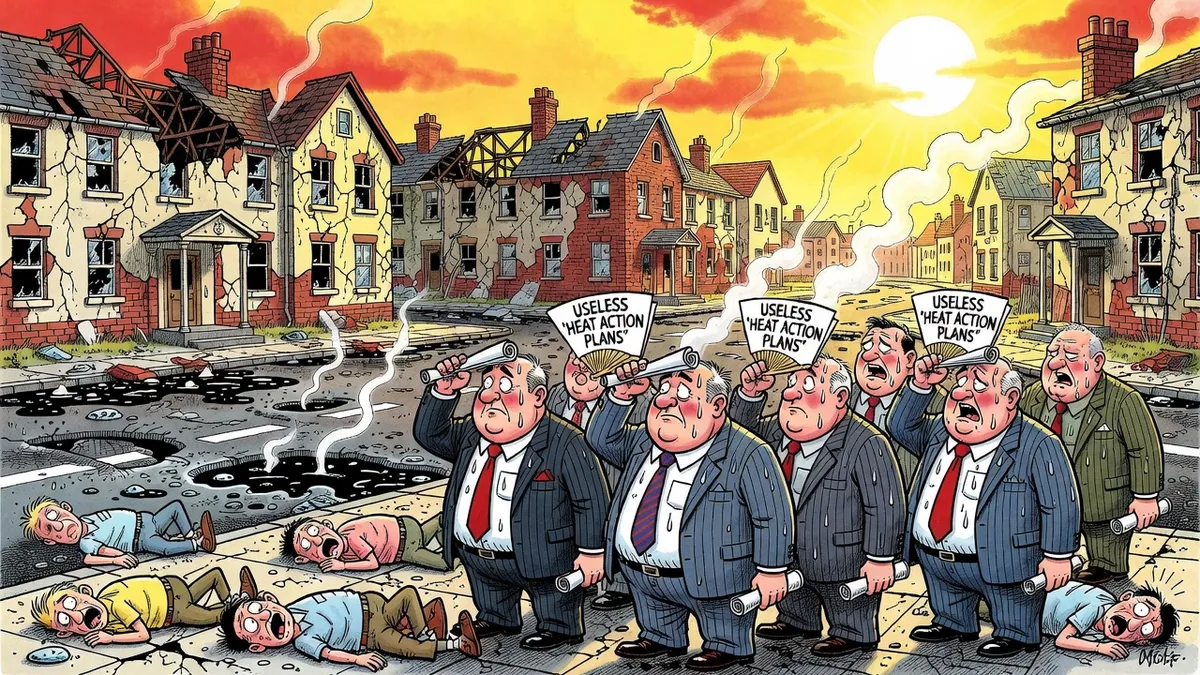
England recorded 5,258 heat-associated deaths this summer, the highest figure since records began in 2016 and more than double the previous peak of 2,985 in 2022. The UK Health Security Agency attributes the toll to seven heat episodes spanning 41 days, with the deadliest period between 21 and 28 June alone claiming 2,401 lives as temperatures reached 38C.
The Met Office confirmed 2026 as the hottest summer on record, driven by repeated heat domes that produced monthly temperature records in May and June. Drought declarations covered all of Wales and over two-thirds of England, accompanied by wildfires in multiple regions. These conditions followed earlier official exercises that had already identified gaps in heat response capacity.
Institutional Response
Health Secretary Yvette Cooper stated the figures required the NHS to prepare for summer as seriously as winter. Prime Minister Andy Burnham described the weather at COP31 as “not normal.” UKHSA called for longer-term adaptation of homes, neighbourhoods and care settings, noting that extreme heat episodes will grow longer, more frequent and more intense.
No equivalent national infrastructure programme exists for heat as for winter pressures. Housing stock remains largely unadapted, with limited retrofitting of ventilation, shading or insulation in social and private dwellings. Care settings and hospitals continue to rely on reactive measures once temperatures rise.
Pattern of Delayed Action
The same sequence has repeated across multiple governments. Warnings from prior heat episodes and modelling exercises produced statements of intent but few binding targets for building standards or urban planning. Local authorities lack powers or funding to enforce widespread changes to existing properties. National policy continues to treat heat as an episodic emergency rather than a structural risk.
Public health data shows the burden falls disproportionately on older residents and those with pre-existing conditions, groups already concentrated in poorly insulated housing. Emergency services absorb the immediate costs while long-term prevention remains underfunded.
This summer’s deaths demonstrate how UK institutions register rising risks yet maintain the same reactive posture. Adaptation remains aspirational language rather than delivered infrastructure. The gap between recorded temperatures, projected frequency of heatwaves and actual changes to the built environment continues to widen.
Commentary based on Record 5,200 heat-linked deaths estimated in England this year at BBC News.
← Back to commentary