Equinor Links UK Investment to North Sea Approvals
Equinor’s warning highlights policy inconsistency between manifesto pledges and ongoing energy needs.
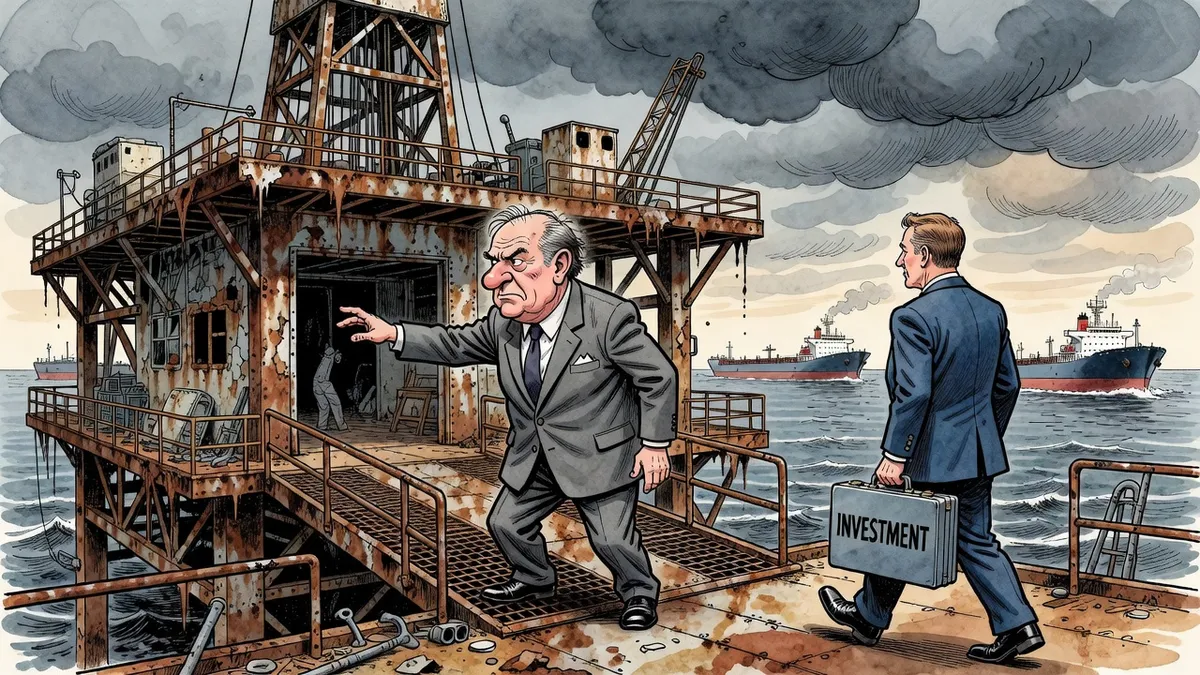
Norwegian state firm flags potential withdrawal if Rosebank and Jackdaw are blocked
Equinor has warned that the UK could become uninvestable if the government rejects new drilling at Rosebank and Jackdaw. The Norwegian state oil company owns stakes in both fields and has tied future capital decisions to the outcome of the current approvals process.
The company’s chief executive stated that rejection would force a hard reassessment of UK commitments. Rosebank alone is estimated to contain up to 500 million barrels. Its exploration licence dates back to 2001, with discovery in 2004 and an initial investment decision in 2023.
Labour’s election manifesto contained a pledge to block new oil and gas fields. The current government has delayed a decision while conducting a public consultation that closed in August. Officials now describe the North Sea as a vital national asset that will remain central to energy supply for decades.
The UK already imports half its gas from Norway. Norwegian authorities continue to issue new exploration licences on their side of the North Sea. Equinor has projected stable production levels through the middle of the next decade.
Jackdaw construction stands at 99 percent complete. If approved promptly, the field could deliver gas to UK homes this winter. Environmental groups have challenged both projects in court over inadequate climate impact assessments.
New production from these sites will not lower domestic energy bills according to campaigners. Most output from Rosebank is expected to be exported. Britain would retain the emissions while receiving limited price relief.
Policy signals have shifted from a pre-election ban to talk of a pragmatic approach. This reversal occurs against a backdrop of falling UK North Sea output, forecast to halve by 2035. Successive governments have presided over increasing import dependence while domestic infrastructure ages.
The pattern shows repeated failure to reconcile stated climate targets with actual supply requirements. Investors receive mixed signals on project certainty. Norway maintains consistent licensing while the UK creates legal and political uncertainty around fields that share the same geology.
Commentary based on UK risks being 'uninvestable' if new oil and gas fields not approved, warns Equinor at BBC.
← Back to commentary