Equity for Punks Yields Nothing
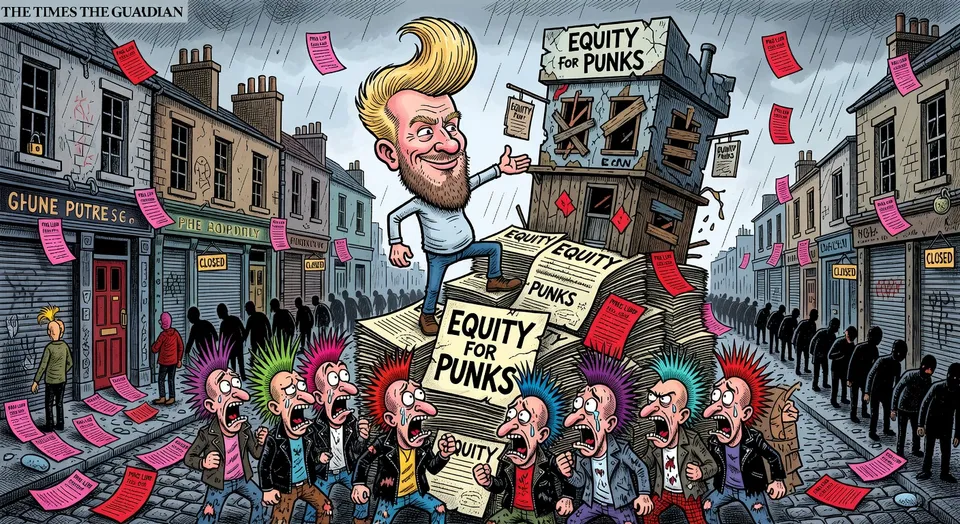
200,000 investors lose £75m as Brewdog's £33m sale axes 484 jobs and 38 bars
Brewdog's administration wiped out small investors' £75m stakes and shed 484 jobs despite a £33m asset sale. This collapse reveals how UK economic pressures turn challenger brands into standard failures.
Commentary Based On
BBC News
Brewdog: Bars close and hundreds lose jobs as beer firm sold in £33m deal
Administrators sold Brewdog’s UK brewing operations, brand, and 11 pubs to US firm Tilray for £33 million. This preserved 733 jobs but erased 484 positions and shuttered 38 bars immediately. The deal left 200,000 small investors with zero return on their £75 million crowdfunding stake.
Brewdog launched in 2007 as a garage-born challenger to corporate brewing. Equity for Punks raised funds from ordinary buyers at £20-£30 per share, typically £500 investments, fueling global expansion to four breweries and 100 pubs. By 2017, US firm TSG took a 22% stake with priority “preference shares” ahead of small investors.
Losses mounted. The firm posted a £37 million deficit recently, totalling nearly £150 million over five years amid debt and no profits. It cut jobs in October 2024, closed 10 bars in 2025 including its Aberdeen flagship, and halted gin production last month.
Management faltered under scrutiny. Founder James Watt faced allegations of a “culture of fear” in a BBC documentary, prompting his shift from CEO to “captain.” The firm dropped new hires from real living wage to legal minimum in 2024, alienating its punk image.
Unite union condemned the redundancies. Workers learned of immediate job losses via conference call with 25 minutes notice, echoing P&O ferries’ mass sackings. Senior management drew charges of treating staff as “disposable pawns.”
Investor Betrayal
Small investors foresaw the wipeout. Preference shares ensured TSG recovered first in any sale, leaving Equity for Punks holders last. About 200,000 people funded expansion expecting perks and growth; instead, administration nullified their stakes.
No bidder preserved the full company despite “significant interest.” Tilray acquired core assets like the Ellon brewery and Motherwell distribution centre. Brewdog’s US, Australian, and German operations face separate fates, with Berlin assets liquidating.
Hospitality’s Breaking Point
Britain’s craft beer sector buckles under pressure. Brewdog employed 1,400 before collapse; now 484 join rising unemployment at 5.2%. Bars in Basingstoke, Bath, Bristol, and 35 others close, hitting local economies from Aberdeen to Plymouth.
High costs crush operators. Stagnant wages, rising energy bills, and taxes squeeze margins after Covid recovery stalled. Organised thefts already cage supermarket stock; pubs face similar survival fights without relief.
This mirrors wider business decay. Once valued at £2 billion, Brewdog followed the arc of UK “success stories”: rapid hype, scandals erode trust, insolvency claims the rest. Governments change, but high operating costs and low growth persist across parties.
Institutions enable the pattern. No safeguards protected retail investors from preference share hierarchies. Regulators watched losses accrue without intervention, as with NHS drug addictions or postal delays.
Accountability evades leaders. Watt retains “captain” title post-scandal; co-founder Martin Dickie exited for “personal reasons.” Administrators prioritise secured creditors, standard in UK insolvency law that shields elites over crowdsourced backers.
Ordinary citizens bear the cost. Redundant bar staff lose livelihoods abruptly. Investors, often middle-class savers, forfeit nest eggs poured into a marketed rebellion. Taxpayers fund benefits for the newly jobless.
Brewdog’s fall exposes Britain’s economic sclerosis. Thriving enterprises expand abroad or fold under unrelenting pressures, draining skills and capital. In a stagnant UK, even punk disruptors deliver corporate cadavers, not disruption.
Commentary based on Brewdog: Bars close and hundreds lose jobs as beer firm sold in £33m deal at BBC News.