False Claims Flood Domestic Abuse Visa Route
Home Office admits surging false domestic abuse claims by migrants exploiting residency schemes. Verification lags enable fraud, eroding protections for genuine victims amid cross-party failures.
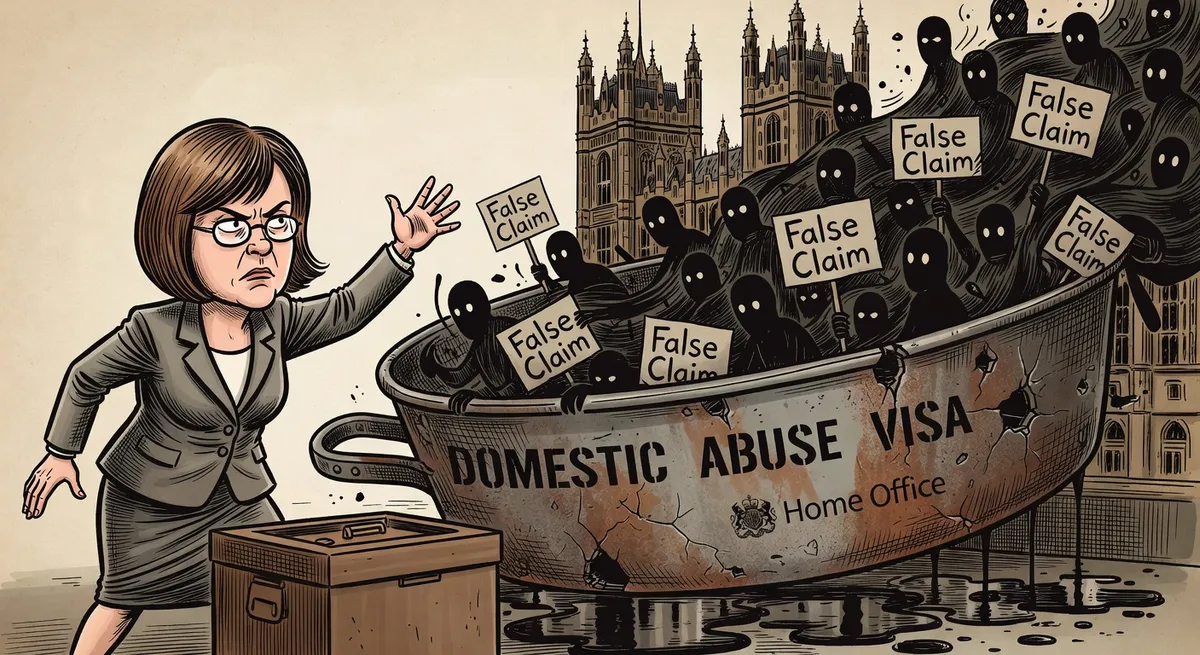
Over 5,500 annual applications, up 50%, prompt evidence hikes
Home Office minister Jess Phillips told MPs false allegations of domestic abuse by migrants have risen sharply over five years. Claims under the fast-track residency scheme hit over 5,500 annually, up 50% in two years. Officials now consider raising evidence thresholds after years of lax verification.
The scheme grants indefinite leave to remain to migrants on partner-sponsored visas who claim abuse. It shields genuine victims from deportation or staying with abusers. Exploitation turns this protection into an immigration shortcut.
Phillips flagged “claim and counterclaim” cases, where both partners allege victimhood. She likened tactics to a perpetrator WhatsApp group sharing system cheats. Police require training to spot this as a deliberate ploy.
A BBC investigation prompted her disclosure. It followed exposés on legal advisers fabricating gay persecution or asylum stories. False domestic claims mirror these patterns, with support letters from organisations passing as proof.
Numbers tell the scale. From under 3,700 claims two years prior, the total now exceeds 5,500 yearly. Phillips insists thousands remain legitimate but admits growing fraud.
Verification Breakdown
Home Office verification relies on thin evidence like service usage confirmations. Phillips demands tighter controls on trusted organisations. Past thresholds enabled easy gaming.
Training gaps compound this. Police often miss tactical claims amid rising caseloads. Robbie Moore, Conservative MP, cited a constituent’s mother who lost her teaching job to a false allegation.
Phillips pledged accountability for liars. Yet no data quantifies successful fakes or deportations. The system processes claims without public fraud statistics.
Cross-Party Inertia
The scheme predates Labour’s 2024 government. Conservatives expanded protections without robust checks. Both parties prioritised victim safeguards over fraud prevention.
Phillips raised the issue upon taking office but acted slowly. Five years of noticeable rise passed before parliamentary scrutiny. Institutional delays let exploitation embed.
Genuine victims bear the cost. Tighter rules risk delaying escapes from rape or coercion, as Phillips noted. Fraudsters dilute resources, forcing all through higher hoops.
Taxpayers fund indefinite residency for cheats. Successful false claims secure benefits, housing, and citizenship paths. No clawback mechanism exists for exposed lies.
Broader Immigration Pathology
This fits a pattern of unchecked loopholes. Fake asylum via posed gay identities or atheism claims persist. Car washes and barristers peddle fabricated evidence with minimal deterrence.
Border inflows strain every safety net. Domestic abuse routes join family reunion and human rights appeals as soft entry points. Verification fails across 100,000+ annual claims.
Ordinary citizens see eroded protections. False accusations ruin lives, as in Moore’s case. Trust in institutions frays when rules bend for migrants but not locals.
Phillips balances fraud curbs with victim access. Home Office works the “tension,” she said. Five years late, partial fixes expose deeper enforcement collapse.
UK governance promises secure borders and fair systems. Instead, protections for the vulnerable become ladders for the unscrupulous. This visa scam reveals how immigration dysfunction permeates welfare safeguards, turning policy intent into public liability across every administration.
Commentary based on More migrants making false domestic abuse claims, minister Jess Phillips tells MPs at BBC News.
← Back to commentary