Financial Shortfalls Top Risk Registers at 31 NHS Trusts
Thirty-one NHS trusts in England have logged lack of money as their highest-rated risk, with some facing savings targets up to £106 million through staff and service cuts.
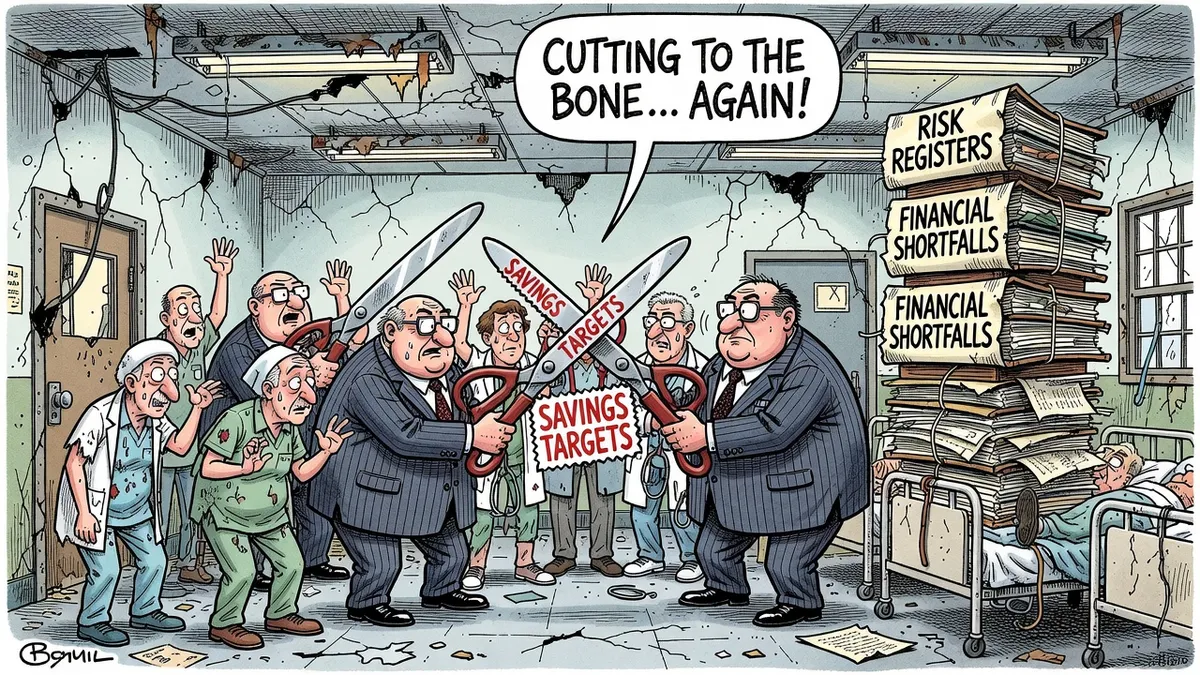
Thirty-one NHS trusts in England have logged lack of money as their highest-rated risk, with six assigning it the maximum score of 25 in their official registers.
These declarations come as NHS England requires each trust to deliver large savings this financial year. Twenty-seven of the trusts identify funding shortfalls as their primary threat. Targets range up to £106 million per trust, achieved through reduced services and smaller workforces even as vacancies remain widespread.
Specific Reductions Underway
King’s College Hospital NHS Trust seeks £85 million in savings. St George’s, Epsom and St Helier group targets £91 million. Nottingham University Hospitals plans to cut 1,279 posts. Barts Health Trust intends to remove 1,100 positions.
East Kent Hospitals reduced pay rates for bank shifts, producing understaffing that delayed chemotherapy appointments by up to a month for cancer patients. York and Scarborough Trust closed a 28-bed step-down ward at Bridlington to save £1 million, increasing pressure on its acute sites. Harrogate and District Trust ended out-of-hours GP cover across a large rural area after fifteen years.
Sherwood Forest Trust proposes closing a hydrotherapy pool used by 1,500 patients annually to save between £150,000 and £200,000. Torbay and South Devon Trust is eliminating 199 non-clinical posts and raising charges for staff parking and food to meet a £54.4 million target.
Central Pressure and Local Outcomes
NHS England has instructed trusts to break even or face leadership reviews. Trust leaders describe their finances as precarious and severe, citing drug costs, pay awards, strikes, and heatwave demand. Several privately state that central targets compel them to cut locally to balance the national position.
One chief executive with more than ten years in post described current conditions as the toughest encountered. The Department of Health and Social Care allocated £217 billion for 2025-26, the bulk directed to the NHS, yet multiple trusts still forecast deficits larger than recent years.
Repeated Pattern
The same cycle has operated across successive governments. Central demands for financial balance produce local service reductions that increase waiting times, reduce rehabilitation capacity, and shrink staffing levels. Understaffing is recorded as both a cause and a consequence of the savings measures.
These adjustments occur while the service already operates without sufficient beds for winter demand. The result is measurable deterioration in access and safety at multiple sites, documented in trust board papers rather than external claims.
England’s hospital system now requires repeated internal declarations of maximum financial risk to maintain basic operations. This condition persists regardless of the party holding office and regardless of annual spending totals.
Commentary based on NHS savings drive leaves hospitals in England facing ‘unpalatable’ cuts at the Guardian.
← Back to commentary