Firms Told to Patch Holes Left by Foreign Policy
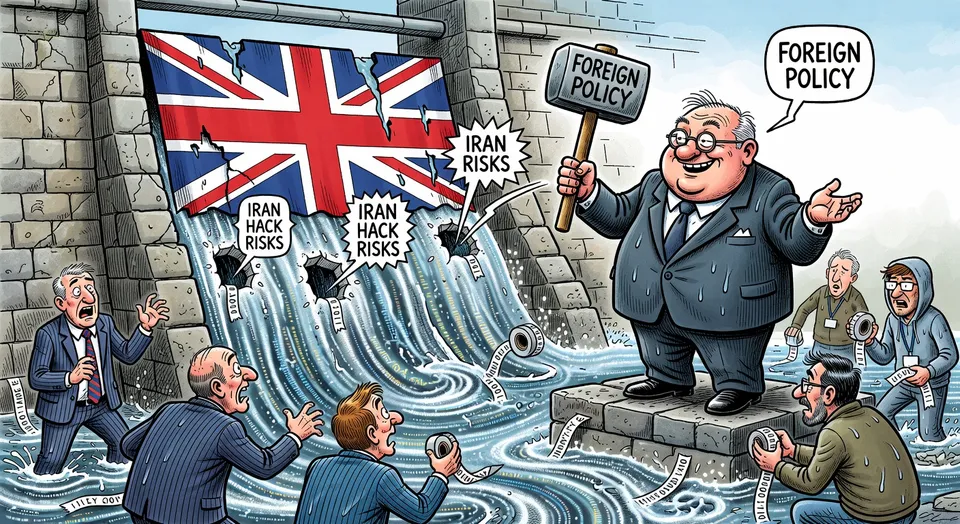
NCSC alert shifts cyber defense burden amid Iran tensions
NCSC warns UK businesses of inevitable indirect cyber spillover from Middle East conflict, exposing government's failure to provide national protections and leaving firms to self-defend.
Commentary Based On
theregister.com
UK businesses told to brace cyber defenses amid Iran conflict risk
The NCSC assures no elevated direct cyber threat from Iran targets the UK. Yet it demands all organizations review their defenses now. Indirect spillover from Middle East escalation rates as almost certain.
Iran’s internet access dropped near zero after US-Israel strikes. State media and infrastructure faced parallel cyber hits. UK firms with regional ties top the exposure list.
Businesses must scan internet-facing assets and enforce access controls. They face standard escalations: DDoS floods to intrusion bids. Critical infrastructure operators get separate severe-threat guidance.
NCSC pushes its Early Warning service for live alerts. Director Jonathon Ellison calls for immediate action. No new resources or mandates accompany the advisory.
Iranian cyber actors trail China and Russia in sophistication. Past efforts stuck to espionage and vandalism, not grid-killing sabotage. SentinelOne predicts intensified retaliation blending hacks with physical strikes.
CISA echoes long-standing warnings on Iranian scans of weak networks. UK joins allies in shared vulnerability. No coordinated national uplift follows.
This setup externalizes defense to private actors. Government pursues alliances entangling Britain in distant conflicts. Firms divert budgets from investment to firewalls.
Successive administrations built no ironclad national cyber barrier. Voluntary checklists substitute for enforced standards. Attacks succeed where basics fail, as in prior NHS and supply-chain breaches.
Ordinary enterprises lack state-level tools. A single breach cascades: data theft, downtime, ransom payouts. Economic output shrinks as recovery consumes months.
Critical sectors pore over NCSC playbooks yearly. Yet baseline protections erode under cost pressures. Geopolitics now triggers routine alerts, normalizing exposure.
Policymakers claim robust cybersecurity posture. Reality shows outsourced vigilance. No entity enforces compliance across 5.5 million UK firms.
Foreign policy risks amplify domestic fragility. Businesses self-insure against blowback from decisions beyond their control. State sovereignty stops at the server rack.
This pattern defines institutional decay. Governments entangle the nation abroad while hollowing defenses at home. Private resilience props up a system that demands it but supplies nothing.
UK decline manifests in weaponized interdependence. Firms shoulder cyber costs of elite geopolitics. Citizens and companies pay the digital premium for unshielded power plays.
Commentary based on UK businesses told to brace cyber defenses amid Iran conflict risk by Carly Page on theregister.com.