G20 Growth Wound Hits UK Hardest
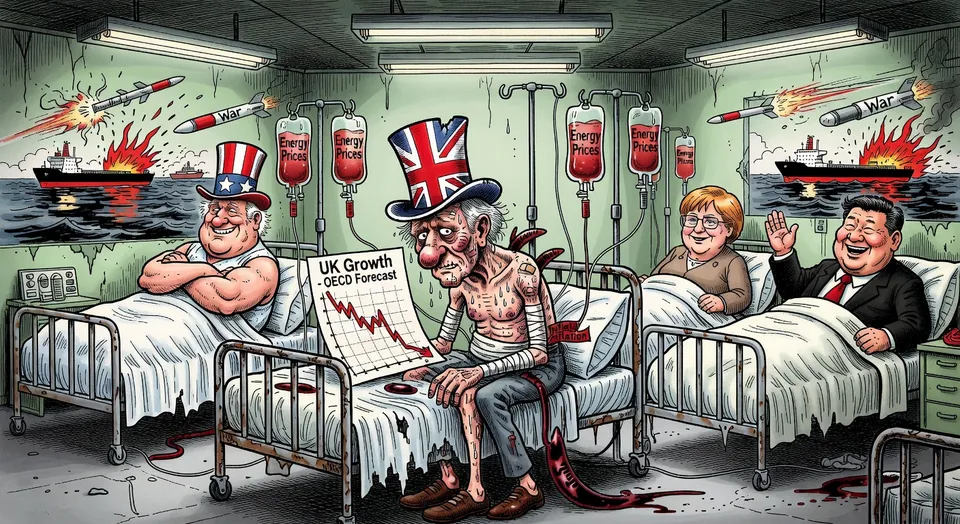
OECD slashes forecast to 0.7% amid Iran energy shock
UK faces the largest growth downgrade among G20 economies from Iran war, exposing decades of import dependence and cross-party energy policy failures that amplify global shocks for households and firms.
Commentary Based On
BBC News
UK forecast to see biggest hit to growth from Iran war out of major economies
UK growth forecast plunges to 0.7% this year, the sharpest downgrade among G20 economies from the Iran war. The OECD slashed its previous 1.2% prediction while global output holds at 2.9%. Claims of economic resilience from Chancellor Reeves meet a reality of deepest vulnerability.
Oil and gas prices surged after Iran’s conflict closed the Strait of Hormuz and damaged Middle East facilities. This chokepoint handles one-fifth of global oil trade. UK households face immediate petrol hikes and £1,972 gas bills from July.
Inflation jumps to 4% in the UK, up from 2.5%, outpacing most G7 peers except the US. Food prices loom higher as fertiliser costs persist, hitting crop yields. Mortgage rates climb, with lenders axing deals.
Energy Exposure Defined
The OECD warns of “significant energy shortages” if conflict drags. UK import reliance amplifies this: 40% of gas and most oil come from abroad. Decades of North Sea decline left no buffer.
Pre-war, the Office for Budget Responsibility cut growth to 1.1% from 1.4%. Iran war adds “very significant” downside, per OBR. Yet forecasts predate the shock, masking full exposure.
Businesses absorb hits first. M&S reports skyrocketing policy-driven energy tariffs unrelated to wholesale prices. Next eyes £15 million extra costs from three months of war, planning price pass-through beyond that.
Reeves insists her plan shields finances from “global instability.” Shadow chancellor Stride blames Labour choices for weakness. Both ignore cross-party patterns in energy neglect.
Since 1997, governments chased net zero without securing supplies. Fracking bans, North Sea taxes, and subsidy shifts chased ideology over output. Imports rose as domestic production fell 70% since peak.
G20 peers fare better through diversification. US shale buffers shocks; Norway hoards gas reserves. UK chose high-cost LNG terminals over self-reliance.
Inflation Trap Tightens
Central banks delay rate cuts amid 4% inflation forecasts into 2027. OECD global inflation rises to 4% from 2.8%. UK leads G7 decline, with Italy alone weaker.
Households lose twice: stagnant wages meet soaring bills. Real incomes dropped 2.5% last year pre-war. Now, energy claims 10% of spending for low earners.
OECD urges targeted aid with expiry dates to spur efficiency. Reeves nods to help for the needy, bound by borrowing rules. Past handouts like 2022 caps bred dependence without reform.
Retailers like Next offset short-term costs but signal hikes ahead. M&S decries green levies adding £100 million yearly. Firms pass burdens, eroding competitiveness.
Productivity stagnates at 0.5% annual growth since 2008, below G7 average. War shocks expose this: no slack to absorb hits. Output per hour trails Germany by 20%.
Institutions recommend medium-term fossil fuel cuts via domestic efficiency. Yet UK policy cycles deliver wind farms slow to build, grids prone to blackouts. Grid capacity lags demand by 15%.
This forecast crowns years of warnings ignored. IMF flagged import risks in 2022; National Grid warned of shortages. Cross-party inaction built fragility.
Britain’s deepest G20 growth wound from Iran reveals chronic policy rot. Governments of all stripes prioritised rhetoric over resilience, leaving citizens to bear external blows. Prosperity erodes as shocks compound, with no reversal in sight.
Commentary based on UK forecast to see biggest hit to growth from Iran war out of major economies at BBC News.