Gas-Linked Pricing Exposes UK Steel to Widening Cost Gap
Britain's steelmakers now pay nearly £30 per MWh more than French rivals due to gas-set wholesale prices, despite renewables growth, undercutting reindustrialisation and EU exports.
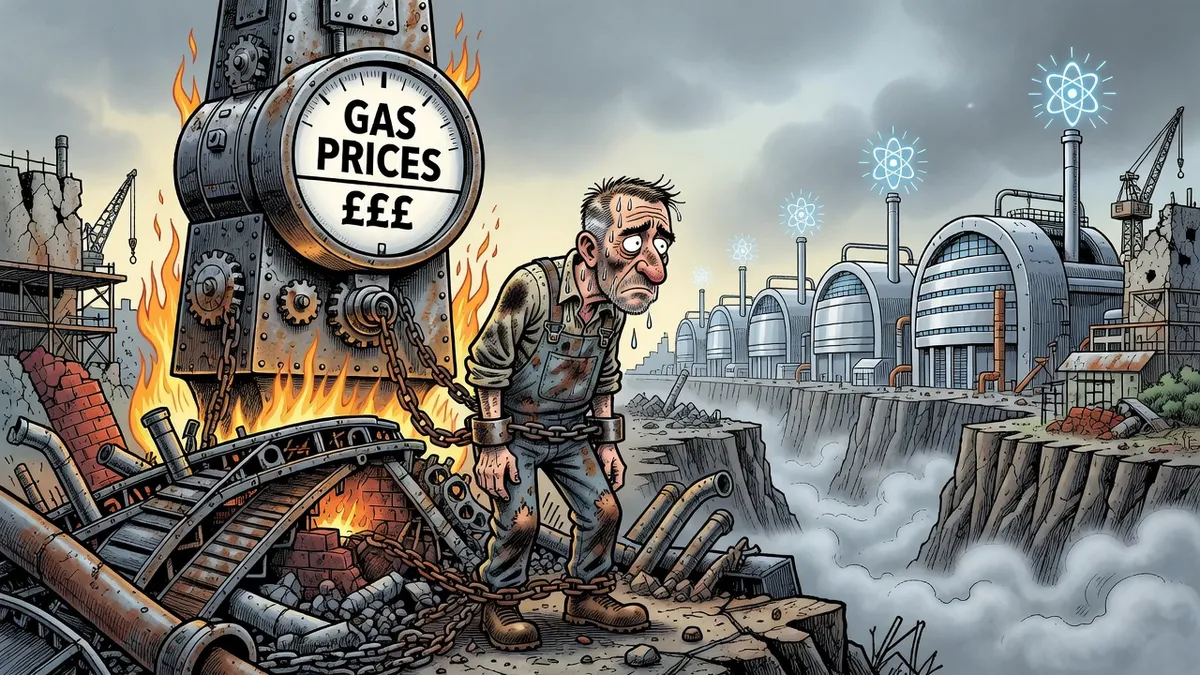
Britain’s steelmakers now face an electricity premium of nearly £30 per megawatt hour over French competitors, the widest gap in three years. This differential stems directly from the UK’s gas-dependent generation mix, which sets wholesale power prices even for cheaper renewables. French output, anchored by nuclear reactors, avoids equivalent exposure to global gas swings.
The surge traces to Iran’s closure of the Strait of Hormuz following US strikes, which lifted gas prices and widened the UK-France spread from £18 last year. UK Steel data confirm the current level matches the highest since the 2022 Ukraine shock. Germany maintains a smaller £12 gap, partly through continued coal use.
Market Design Effects
The UK pricing mechanism ties electricity costs to the marginal gas plant regardless of lower-cost sources. This structure persists despite expanded wind and solar capacity. Electric arc furnaces, required for lower-emission steel, amplify the disadvantage because they consume large volumes of power.
Government policy removed certain levies under Keir Starmer, cutting bills for some intensive users. These adjustments fall short of closing the structural gap. UK Steel estimates a price cap mechanism would require £51 million annually in direct support to match rival costs.
Industrial Policy Contradiction
Reindustrialisation targets announced by ministers rely on competitive manufacturing. Steel exports to the EU, worth £3 billion and representing 75 percent of the total, operate under these elevated input prices. No equivalent handicap applies to French or German producers.
Past gaps narrowed temporarily but widened again with each gas price spike. The pattern shows repeated vulnerability rather than resolution through diversification. Domestic refinery shortfalls and import reliance compound the same exposure across fuels.
The £30 differential demonstrates that stated industrial goals remain subordinate to an energy market that rewards gas price volatility. British steel capacity therefore contracts relative to European peers under identical global conditions.
Commentary based on Electricity costs put UK steelmakers in worst position in three years against EU rivals at the Guardian.
← Back to commentary