Generals Label Human Rights a Battlefield Hazard
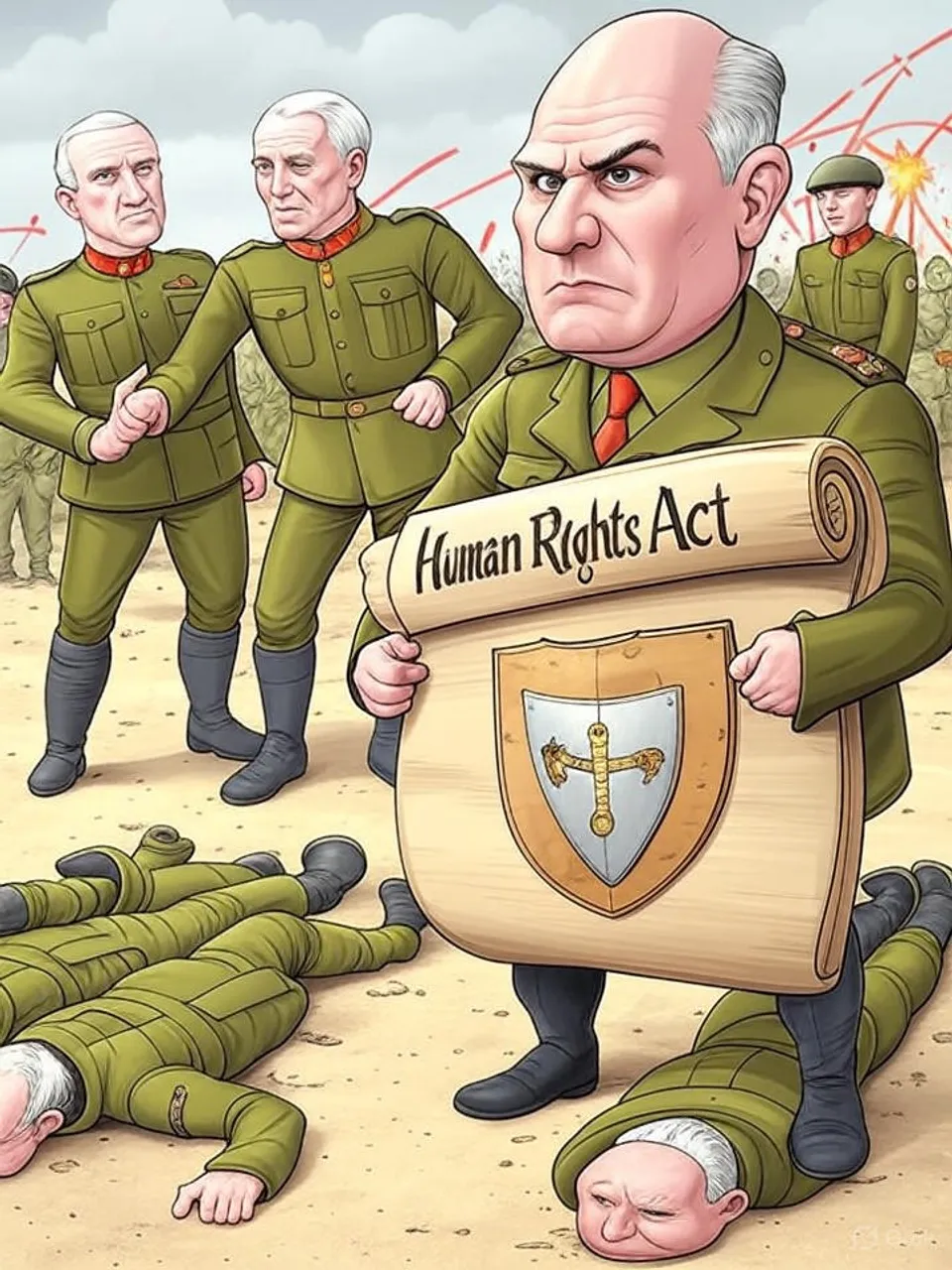
Nine ex-Army chiefs warn Starmer's legal stance risks troop morale and national defense
Former British Army leaders decry 'lawfare' under human rights laws as a security threat, exposing tensions between legal accountability and military readiness that weaken UK institutions across governments.
Commentary Based On
thetimes.com
Former heads of the British Army attack Keir Starmer on human rights law
Nine former British Army generals, all four-star officers, have publicly condemned Prime Minister Keir Starmer’s defense of human rights laws. They argue that these laws fuel “lawfare,” a term for legal actions that harass soldiers over past operations, eroding their trust in the justice system. This intervention exposes a widening rift between political commitments to international obligations and the operational needs of the armed forces.
The generals’ letter, addressed to Starmer, highlights investigations into alleged war crimes in Iraq and Afghanistan as prime examples. Soldiers face repeated legal scrutiny years after deployments, often without resolution. Such processes, they claim, deter potential recruits and undermine unit cohesion.
Human rights frameworks, including the European Convention on Human Rights incorporated via the Human Rights Act 1998, aim to hold all actors accountable. Yet the generals contend that their application to military contexts creates paralysis. Troops hesitate in high-stakes decisions, fearing post-mission prosecution.
This criticism lands amid Labour’s recent election pledges to uphold these laws, contrasting with the previous Conservative government’s push to derogate from them in security matters. Starmer’s administration has reaffirmed commitment to the ECHR, rejecting opt-outs. The generals see this as prioritizing legal absolutism over defense pragmatism.
Data from the Ministry of Defence underscores the strain. Over 3,000 service personnel have faced inquiries since 2009, with costs exceeding £500 million. Convictions remain rare, at under 1%, yet the process persists, fostering resentment.
Broader military recruitment figures reveal the fallout. The Army missed targets by 15% last year, with morale surveys citing legal fears as a factor. This echoes patterns in other NATO allies, but the UK’s entanglement with Strasbourg courts amplifies the issue.
Institutional trust erodes across sectors, but in defense, it carries acute risks. Soldiers operate in environments where split-second judgments define outcomes; doubt in legal safeguards amplifies vulnerabilities. The generals’ warning signals not isolated discontent, but a symptom of policy misalignments that weaken national resilience.
Past governments, from Blair’s invasion era to Johnson’s Brexit-linked reforms, navigated similar tensions without resolution. Labour’s inheritance includes unresolved Iraq Inquiry recommendations from 2016, which called for streamlined processes but saw no action. Accountability for military errors competes with operational impunity, yet neither side delivers clarity.
Who benefits from this impasse? Legal advocates secure oversight, while politicians avoid hard choices on treaty exits. Soldiers and taxpayers foot the bill in delayed justice and diverted funds. Functional governance would balance rights with readiness through targeted exemptions, not endless debate.
The episode reveals deeper fractures in Britain’s security architecture. As global threats from state actors and non-state groups intensify, internal divisions sap deterrence. Starmer’s response—silent so far—mirrors institutional inertia that prioritizes compliance over capability.
This confrontation between retired brass and the government lays bare a core dysfunction: the UK’s legal-military compact, forged post-World War II, now buckles under modern pressures. Human rights laws, once a bulwark of civilized conduct, morph into tools that hobble the very forces meant to defend it. In documenting this, The Decliner observes how successive administrations, Labour and Tory alike, permit such erosions, diminishing the nation’s ability to project strength abroad while trust crumbles at home.
Commentary based on Former heads of the British Army attack Keir Starmer on human rights law by Tom Newton Dunn on thetimes.com.