Geopolitical Shocks Push UK Red Diesel Above £1.20 per Litre
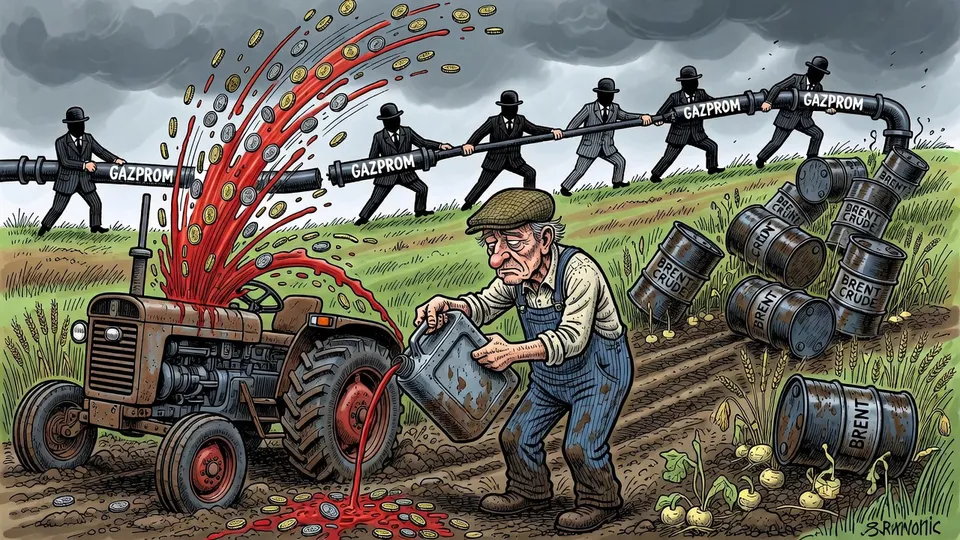
UK agricultural diesel prices climbed 10-14 pence per litre after US strikes on Iran and Russia's export ban, with red diesel exceeding £1.20 and Brent crude near $97 amid constrained global supply.
Diesel prices for UK agricultural use rose 10 to 14 pence per litre in days after renewed US strikes on Iran and Russia’s extension of its diesel export ban.
Red diesel now sits above £1.20 a litre for many buyers. Motor diesel reached 183.5 pence per litre nationally. Paraffin for farm heating climbed to roughly £1 a litre from 60 pence before the latest round of Middle East fighting.
The surge follows directly from constrained global refining capacity. Russia supplies about 10 percent of world diesel yet faces Ukrainian strikes on its plants and its own export restrictions. Brent crude traded near $97 a barrel, its highest level in six weeks.
UK farmers responded by ordering smaller quantities more frequently. Fram Farmers, representing 1,400 businesses, reported members hedging cash flow rather than securing winter volumes. Harvest demand has passed, yet land preparation for the next season still requires reliable fuel access.
Exposure without buffer
Britain imports the bulk of its refined fuels and maintains limited strategic stocks. No domestic mechanism offsets sudden wholesale spikes for primary producers. The same pattern appeared after the 2022 Ukraine invasion, when prices also climbed sharply before easing.
Rural households off the gas grid face parallel pressure on heating oil. Construction firms and hauliers absorb identical cost increases, feeding through to wider supply chains.
Recurrent vulnerability
Each geopolitical flare-up transmits straight into farm operating costs. Ministers have offered no targeted relief or storage incentives since the last cycle. The sector therefore absorbs volatility while food production margins remain thin.
The price movement coincides with already elevated input costs and static support payments. Growers must decide whether to reduce activity or pass costs onward at a time when retail food inflation remains politically sensitive.
This latest spike shows that external supply shocks continue to dictate British agricultural expenses. No structural change in energy procurement or refining capacity has altered that dependence.
Commentary based on ‘Astronomical’ fuel price surge hits farmers in UK and US at the Guardian.