Glasgow's 43% Refugee Homelessness Share Burdens Council Budgets to £74m Peak
Ex-asylum seekers comprise 43% of Glasgow's homelessness applications, costing councils £74m by 2027 amid 6,000-person waits. Central dispersal and backlog policies overload local housing without resolution.
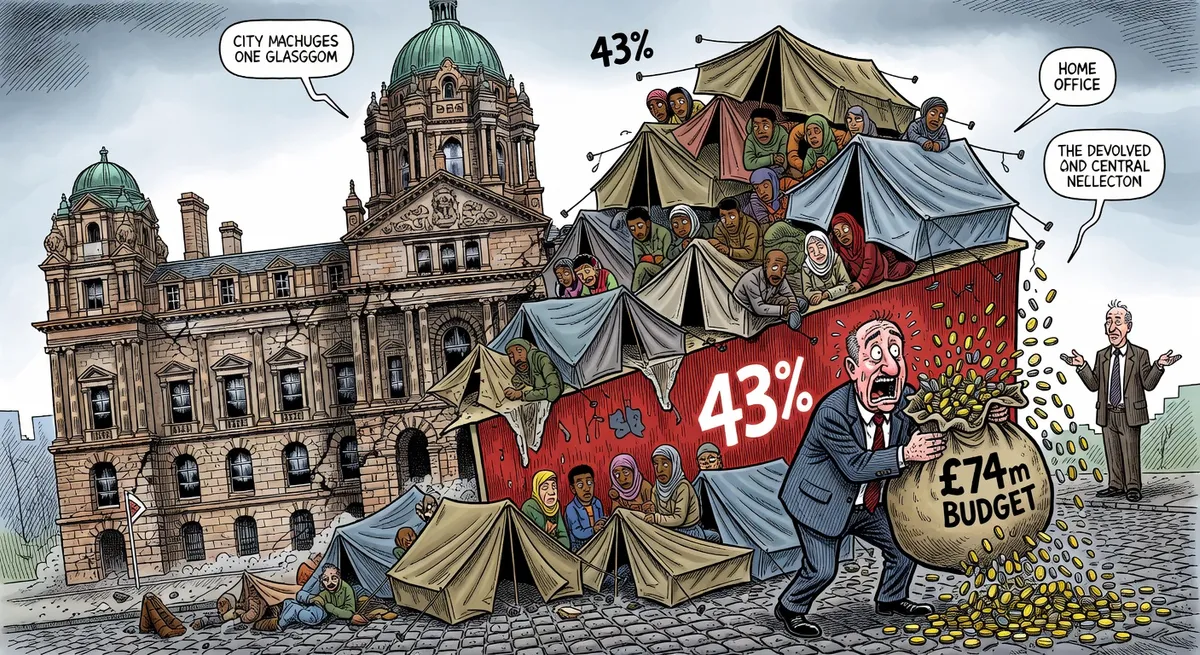
1,685 claims drive costs from £38m to £74m by 2027-28
Ex-asylum seekers filed 1,685 of 3,895 homelessness applications in Glasgow from April to September 2025—43% of the total.
This dwarfs Scotland’s 15% average.
The city council absorbs the full cost: £38 million in 2025-26, forecasted at £56 million next year and £74 million by 2027-28.
Glasgow houses 3,683 asylum seekers under Home Office support—over half of Scotland’s 6,500 total.
The city joined the dispersal scheme in 1999 and remains the UK’s largest host despite a shift to full dispersal in 2022.
Granted refugees get 42 days to vacate Home Office accommodation, then claim local homelessness aid.
Councils must house unintentionally homeless people under 2003 Scottish laws that removed prior eligibility barriers.
Temporary flats go to these applicants first, as hotels cost more.
Over 6,000 households await permanent housing; 4,200 occupy temporary spots with no waitlist cap.
Local Strain, Central Neglect
Home Office backlog clearance drives the surge: resolved claims eject people into local systems.
Groups label it “homelessness by design” due to short move-on periods.
Yet projections show costs tripling regardless.
Glasgow declared a housing emergency in 2023 amid chronic shortages.
Asylum seekers cluster there post-dispersal, drawn by communities and support networks.
Protests erupted in 2021 over Home Office enforcement.
Reform UK and Conservatives call it queue-jumping; BBC clarifies no formal priority exists.
The outcome matches: waiting locals lose temporary housing to ex-asylum claimants.
Cross-Party Policy Echoes
Scottish Parliament expanded homelessness duties in 2003 under Labour-led coalitions.
The “local connection” rule ended in 2022 under SNP rule.
Westminster controls inflows; Glasgow pays the dispersal price since 1999 across governments.
Home Office added liaison officers and extended notice to 42 days, but numbers persist.
No party reversed dispersal or tightened post-grant support.
Housing stock shrinks while claims mount.
Retail and ordinary citizens face the wait; ex-asylum seekers enter the net legally.
This pattern repeats UK-wide: central migration policy overloads local resources.
Birmingham, Manchester, and others echo Glasgow’s strain.
Voters rank immigration high in Scotland’s election, yet MSPs lack power.
Councils forecast collapse under rising bills.
Institutions prioritize legal duties over capacity.
Home Office saves on hotels; Glasgow rents them for the newly homeless.
Taxpayers fund the gap.
Failed backlogs and open dispersal expose the disconnect.
Local services crumble as central failures cascade.
Britain’s housing decay accelerates: devolution divides responsibility without resolving inflows.
Glasgow proves migration policy burdens the vulnerable first, across all parties in power.
Commentary based on What impact do refugees have on housing in Glasgow? at BBC News.
← Back to commentary