Half a Million Offences, Five Hundred Targets
Shoplifting reached a new peak of over 500,000 offences in 2024 while the response focuses on 500 repeat offenders and limited additional funding.
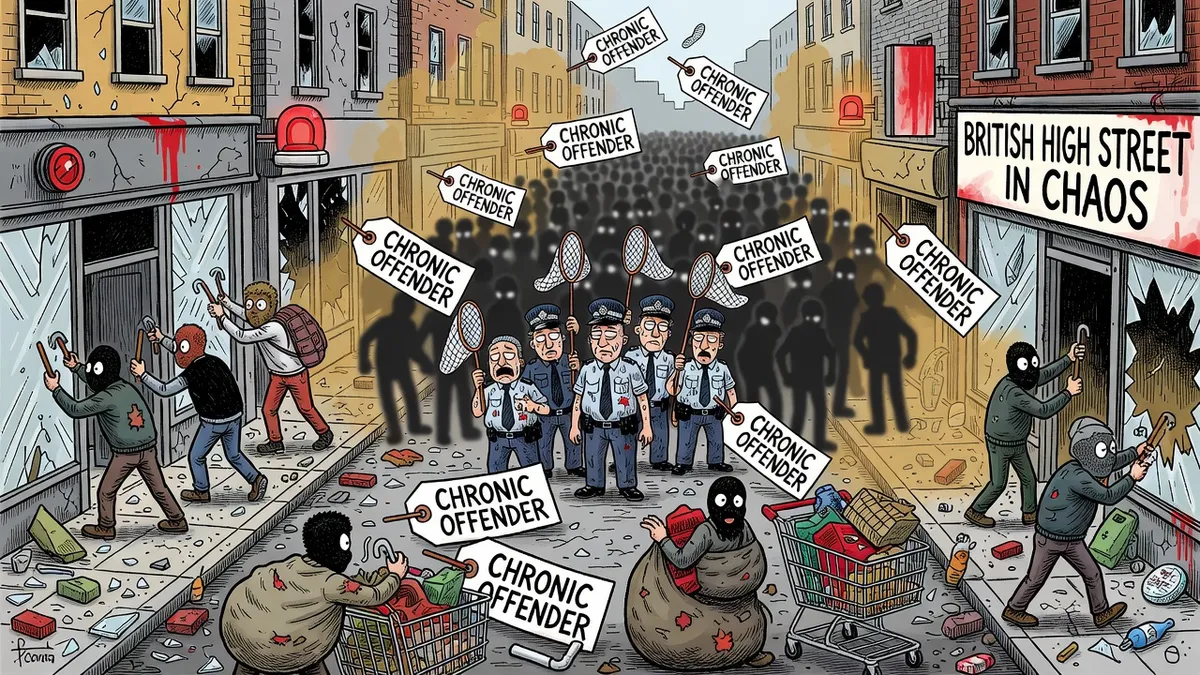
England's latest retail crime plan confronts record theft volumes with narrow enforcement
Record shoplifting offences in England and Wales exceeded 500,000 in 2024, the highest annual total on record. The new response targets just 500 repeat offenders with GPS tags, high street bans and extra funding of £2.5 million.
This approach follows a familiar pattern. Ministers highlight a small cohort responsible for disproportionate offences, citing one local operation in Bromley that cut recorded crime by 70 percent in a single area. National data shows the underlying trend has continued upward regardless.
Limited Reach of the Measures
The scale of the response remains narrow. One hundred and four offenders in the Metropolitan Police area alone accounted for more than 5,300 offences over two years. Extending similar tactics across 17 forces to cover 500 individuals leaves the vast majority of recorded thefts untouched.
Retail executives describe the situation as a national emergency. Chains report daily incidents of theft, aggression and violence that affect staffing and store viability. The government response pairs enforcement with references to addiction and mental health support, yet allocates no new funding for treatment services.
Persistent Drivers of Offending
Charities note that drug dependency and homelessness frequently sustain repeat theft. Past attempts to combine punishment with rehabilitation have produced mixed results, with many offenders cycling through courts without sustained intervention. The current plan repeats the language of breaking cycles without addressing capacity shortages in drug services or housing.
High street businesses already operate under pressure from online competition and rising costs. Sustained theft adds direct losses and security overheads that smaller retailers struggle to absorb. Recorded offences have risen steadily since 2014, indicating enforcement gaps that predate the latest statistics.
The pattern shows repeated announcements of targeted action against a narrow group of offenders while aggregate crime volumes continue to climb. Resources remain concentrated on visible symptoms rather than the volume of cases or the conditions that sustain them.
Commentary based on Police to target 500 chronic shoplifters in retail crime crackdown in England by Jessica Murray on the Guardian.
← Back to commentary