High Street Crime Networks Expanded After Enforcement Cuts
A new national taskforce targets shopfront crime long after trading standards capacity halved and networks took root.
£30m unit arrives after 3,700 illegal shops and £1bn annual laundering
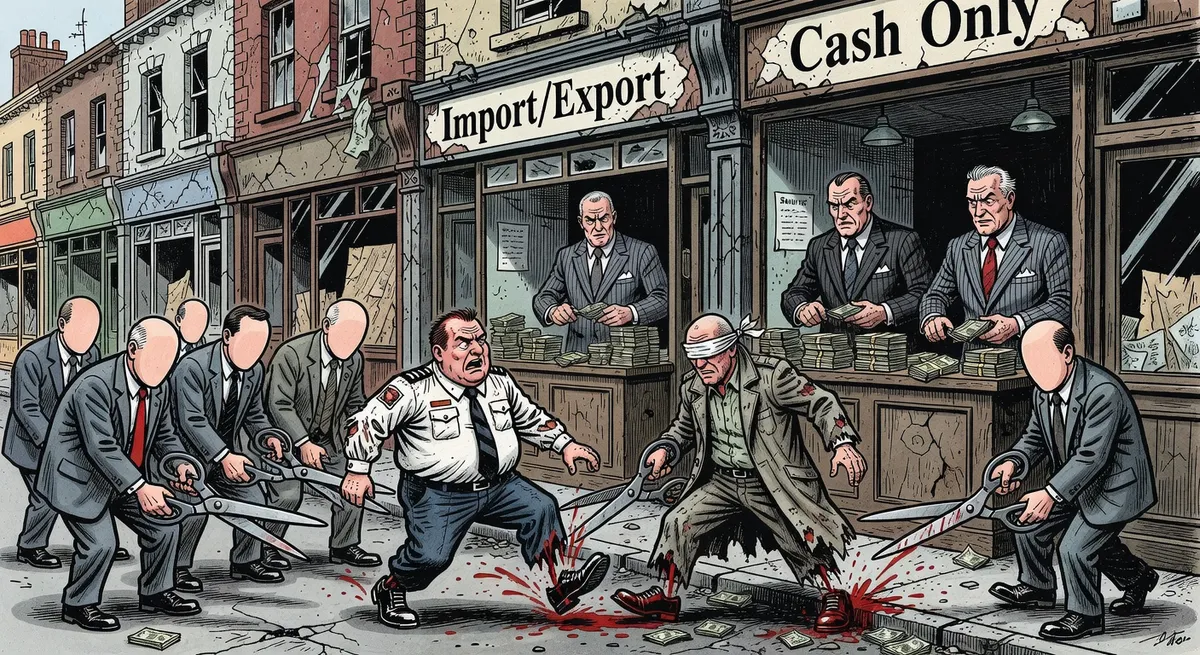
Britain’s high streets now host organised crime networks that launder an estimated £1 billion each year through mini-marts, vape shops and barbers. The government response is a new £30 million unit run by the National Crime Agency, with 75 additional officers and extra trading standards money spread across three years. This comes after BBC investigations documented 3,700 illegal outlets, underground cigarette tunnels, child sexual exploitation reports and repeated failures to close the businesses.
Trading standards resources fell by roughly 50 per cent between 2011 and 2023. Local officers reported being overwhelmed by ghost directors, erased fines and cash purchases of premises by asylum seekers. Courts can currently close offending shops for only three months, a limit the Chartered Trading Standards Institute has flagged as inadequate for repeat offenders.
The new unit targets three regions: Greater Manchester, West Midlands, and Essex and Kent. It adds immigration enforcement and HMRC involvement but leaves the rest of the country reliant on existing, depleted teams. The National Crime Agency already recorded 950 arrests and £10 million in seizures over the preceding 18 months, yet the laundering volume has continued to grow.
Previous administrations across parties tolerated the expansion. Immigration ministers described the findings as a national scandal, while home secretaries called them a disgrace. No sustained increase in frontline trading standards capacity occurred until media exposure forced the latest pledge. The pattern shows enforcement scaled to publicity rather than to the measured scale of the problem.
Ordinary residents experience the direct result. Streets once used for legitimate retail now function as distribution points for illegal tobacco, drugs and cash. Legitimate businesses lose trade, tax revenue disappears, and communities report feeling unsafe in what were once routine commercial spaces.
The funding announcement does not reverse the cumulative loss of local enforcement capacity built up over more than a decade. It adds a temporary national overlay while the underlying conditions that allowed criminal networks to embed remain largely intact.
Resource and Legal Gaps Persist
Current closure orders remain short and fines can be erased through company changes. The government has promised consultation on longer bans, yet no timetable or legislative vehicle has been set. Without those powers, repeated raids simply displace activity to new premises.
Cross-Party Continuity
The decline in trading standards began under one government and continued under the next. Each administration responded with statements of intent once specific cases reached national media. The underlying data on illegal shops and laundering volumes stayed consistent regardless of which party held power.
This episode shows how regulatory retreat created space that criminal organisations filled methodically. The new unit addresses symptoms after the networks have already secured footholds across multiple high streets.
Commentary based on New police unit to target crime gangs fronting High Street shops at BBC News.
← Back to commentary