Ibstock Cuts Brick Output as Sales Plunge and Profit Outlook Dims
Ibstock has reduced brick production by a fifth after third-quarter sales fell 22% short of forecasts, issuing its second profit warning and projecting lower earnings as UK housing demand weakens.
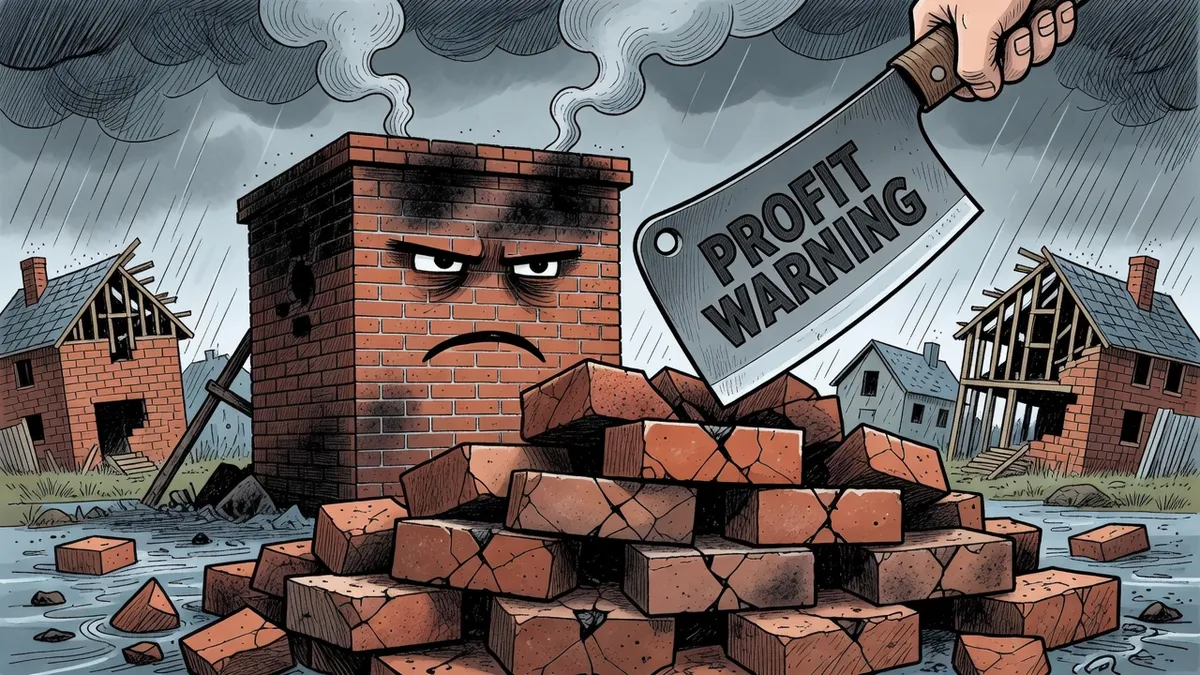
Ibstock cut brick production by a fifth after third-quarter sales fell 22 percent below internal forecasts. The Leicestershire firm issued its second profit warning of the year and now projects full-year earnings in the mid-£40 million range, against prior analyst estimates of £59 million.
UK brick market volumes dropped 17 percent year on year in July and August, with the decline extending through September and October. Chief executive Joe Hudson described trading conditions as having deteriorated sharply, prompting inventory reductions and further cost controls.
The Office for Budget Responsibility has already lowered its projection for new homes by 2031 by 190,000 units. Housing secretary Angela Rayner has separately stated there is only a slim chance the government will reach its 1.5 million home target this parliament, with estimates suggesting a shortfall of around one third.
Scheme Delay Adds Pressure
Ibstock criticised the postponement of the Your First Home equity scheme until April 2027. The company noted that the measure, intended to support first-time buyers with a 2.5 percent deposit, would have helped stimulate near-term demand but now arrives too late to offset current weakness.
Shares in Ibstock fell 13 percent on the day of the announcement, reducing the firm’s market value to £277 million, half its level from a year earlier. Domestic construction suppliers face the same demand contraction.
Forecast Revisions Accumulate
The latest data fits a longer sequence of downward revisions to housebuilding expectations. Successive governments have set volume targets while actual completions remain constrained by planning delays, high interest rates, and limited buyer affordability. Each revision lowers the baseline without altering the underlying delivery constraints.
Brick output reductions directly limit future supply. Lower production today means fewer completed homes available in 2025 and 2026, regardless of later policy adjustments. The gap between stated ambitions and measurable output continues to widen.
Sector-Wide Effects
Analysts at Peel Hunt noted that lower interest rates remain the primary requirement for any sustained recovery in activity. The Your First Home programme is described as only modestly helpful next year. Without broader improvements in mortgage costs and planning throughput, the current contraction in orders will persist.
Construction employment and supplier chains absorb the immediate impact. Reduced volumes at the largest brickmaker signal parallel pressure on smaller manufacturers and related trades.
The shortfall in new homes feeds directly into higher existing property prices and continued pressure on rental costs. Targets announced in manifestos and restated in budgets have not produced corresponding increases in completed units. Ibstock’s production cut records one measurable consequence of that persistent mismatch.
Commentary based on Sales slump at UK’s largest brickmaker as housebuilding downturn deepens at the Guardian.
← Back to commentary