Ikea Redirects European Investments Away from Britain Over Tax Disparities
Ikea reports £2.26bn UK sales but cancels new stores after identifying Europe's highest business taxes, shifting capital elsewhere amid weak demand and no budget relief.
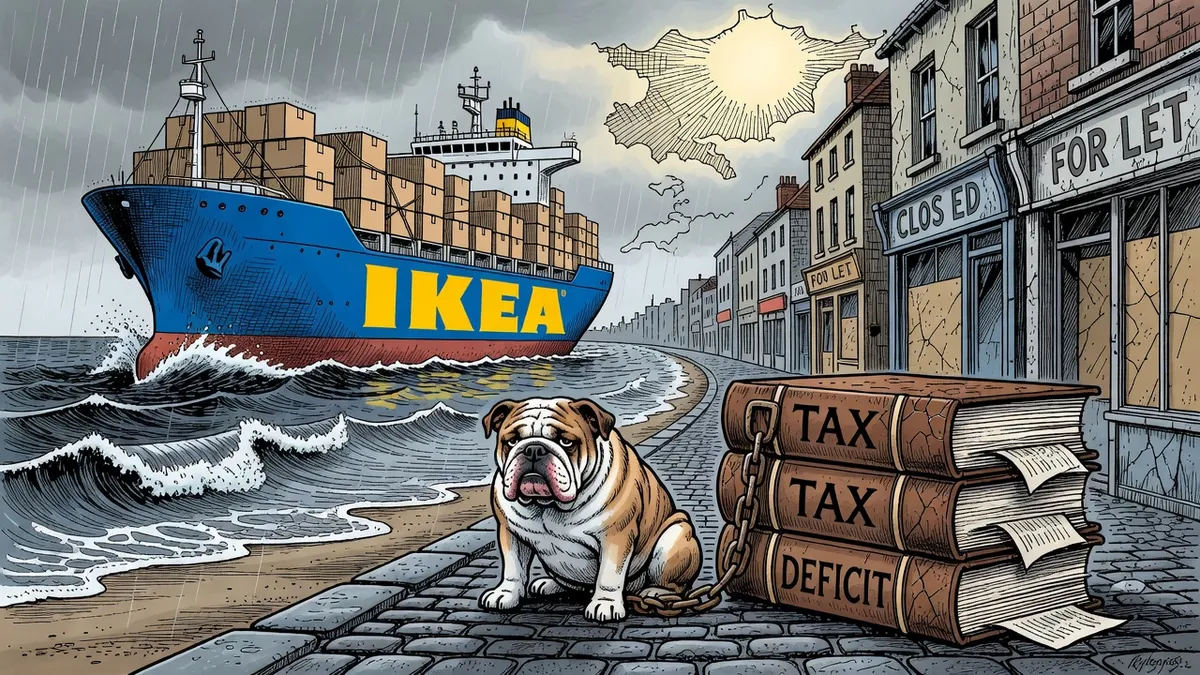
Ikea has abandoned planned store openings in the UK after identifying that its British operations face the highest business taxes in Europe and the third highest worldwide.
The Swedish retailer reported UK sales of £2.26bn for the year to August, a 0.5 percent increase that masked a second-half decline. Consumer spending on larger items contracted as households restricted purchases to single pieces or textiles. Smaller-format stores in cities including Oxford Street, Brighton, and York had formed the core of recent expansion, yet several additional sites were dropped.
David McCabe, Ikea’s UK boss, stated that the tax burden and market complexity directly caused the cancellations. Investments will now move to other European countries. The October budget drew specific criticism as a missed opportunity to ease pressure on retailers already facing weak demand.
Tax and Cost Pressures
Business rates and corporation tax levels in the UK exceed those across the continent, according to the company’s internal comparisons. This differential persists even as the retailer cut prices by an average of 20 percent on 425 products at a cost of £54m. No offsetting relief appeared in recent fiscal measures despite repeated warnings from the sector about margins.
Retail investment decisions now weigh these costs against returns available elsewhere. The pattern shows capital allocation shifting away from Britain when tax differentials widen without corresponding productivity gains.
Consumer and Market Signals
Household budgets remain under sustained pressure, with shoppers deferring replacements for bedrooms or dining sets. Sales growth reversed after an initial four-month rise, confirming that confidence has not recovered. This behavior aligns with broader data on paycheque dependency and reduced discretionary outlays.
Ikea anticipates no sudden reversal. Seasonal promotions and smaller sites represent tactical adjustments rather than a return to prior growth trajectories.
Investment Flight Patterns
The decision to redirect funds follows documented cases of other operators reducing UK exposure or relocating functions. High fixed costs compound the effect when revenue growth stays near zero. Capital that once targeted British sites now seeks locations with lower tax loads and fewer regulatory layers.
This outcome reflects measurable gaps between stated policy goals of supporting domestic business and the actual tax environment delivered.
Britain’s retail sector contracts further as incremental tax burdens compound existing weaknesses in consumer demand and infrastructure efficiency. Capital continues to exit for jurisdictions that maintain lower operating costs without equivalent fiscal drag.
Commentary based on Ikea ditches plans for new UK stores, blaming high business taxes by Julia Kollewe on the Guardian.
← Back to commentary