Islington's Child Population Shrinks as Housing Costs Rise
Inner London's lowest fertility rates track directly with rents at 46% of income and house prices twelve times earnings.
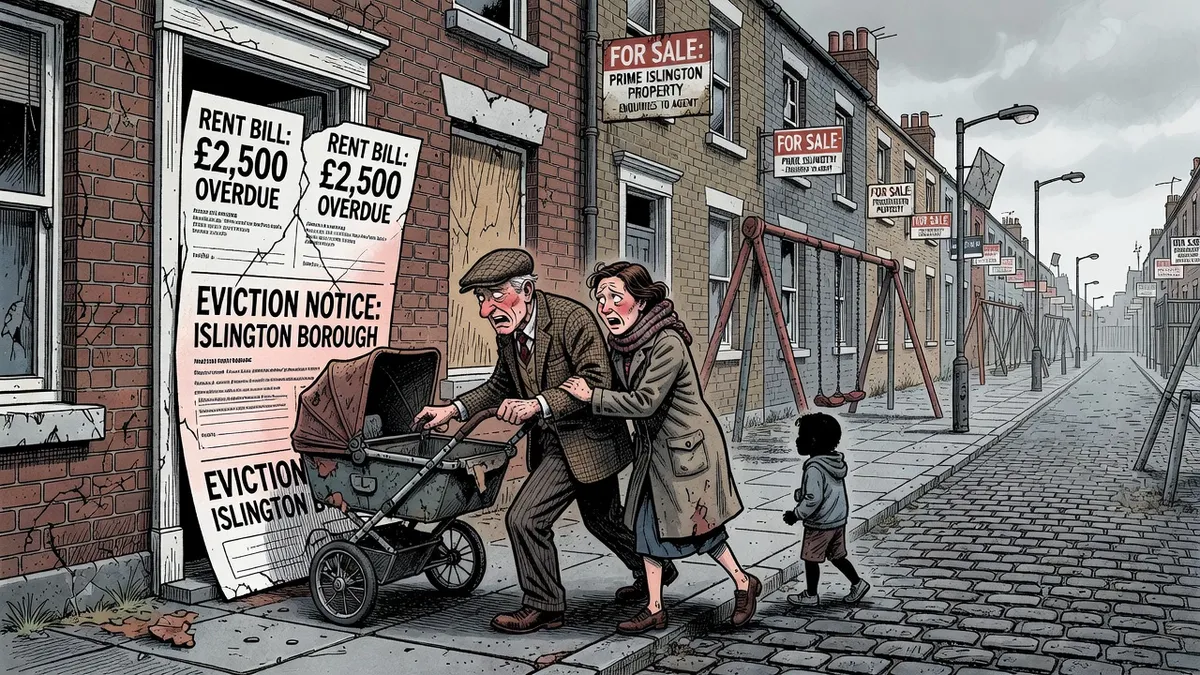
Fertility rate hits 0.99 while families convert living rooms into bedrooms
Islington recorded a total fertility rate of 0.99 in 2025, the second lowest in London after the City of London. Between 2013 and 2023 the borough’s population of children aged 0-9 fell while overall numbers rose by more than half a million across the capital. Couples leaving cite median house prices at nearly twelve times local income and childcare costs averaging £9.39 per hour for two-year-olds.
Housing and Childcare Barriers
Rents consumed 46 percent of median income in Islington during 2023-24. One-bedroom flats now house entire families, with living rooms converted nightly into bedrooms. Parents report waiting lists for social housing exceeding 16,000 households.
These conditions coincide with net outflows of women aged 30-34. Official data show one such loss of 1,062 residents in a single year. Families that remain often delay first births until the early forties or forgo children altogether after repeated IVF attempts.
Career and Migration Patterns
Women interviewed described prioritising executive roles before attempting pregnancy. Those who succeeded still relocated abroad once childcare expenses reached £2,000-£3,000 monthly. Luxembourg and outer boroughs draw residents seeking free or cheaper provision and larger properties.
The same pressures appear in multiple inner London boroughs. London’s Assembly has labelled the trend an existential challenge for the city’s future workforce. Projections indicate fewer workers available to sustain services and infrastructure within four decades.
Demographic Contraction
England and Wales recorded a national fertility rate just under 1.4 births per woman in 2025, down from 1.9 in 2010. Islington’s figures sit well below that already reduced level. Schools have closed even as the capital’s total population expanded.
No reversal appears under current housing supply or wage trajectories. Successive administrations have treated affordability as secondary to other priorities, allowing costs to compound across generations. The result is measurable population ageing concentrated in the densest urban areas.
The capital now functions as a location for career accumulation rather than family formation. Young residents who cannot secure space or support leave, while those who stay record sustained sub-replacement birth rates. This pattern locks in long-term labour shortages without policy shifts on land use, construction volume, or direct childcare subsidies.
Commentary based on The London borough with one of England's lowest fertility rates at BBC News.
← Back to commentary