Labour Unveils War Blueprint, Forgets the Bill
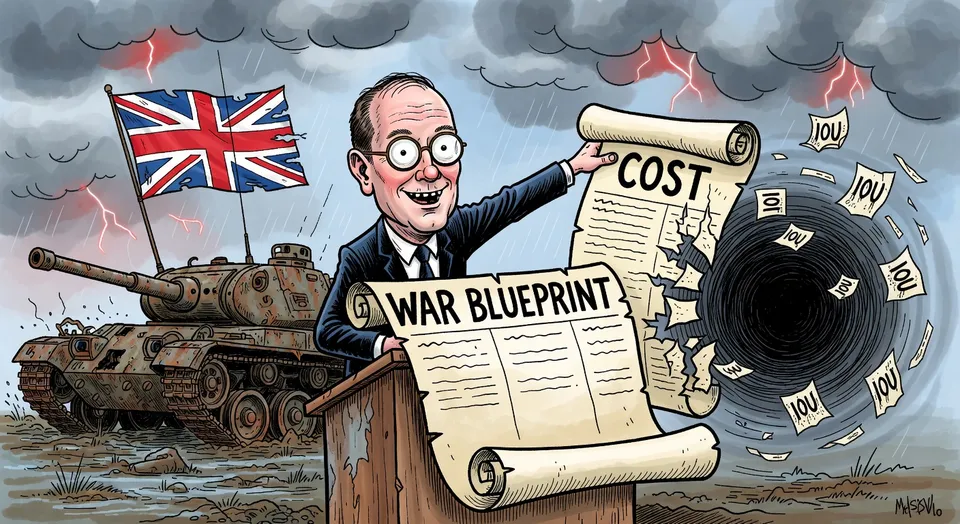
Strategic Defence Review promises 3% GDP transformation, nine months on remains uncosted
Labour's June defence review for war-fighting readiness lacks costings, exposing fiscal detachment that spans governments and weakens national security amid rising threats.
Commentary Based On
Guido Fawkes
Labour Admits Strategic Defence Review to 'Ready Britain for War' Still Not Costed
The Strategic Defence Review landed last June as Labour’s roadmap to “war-fighting readiness.” It promised a decade-long transformation of UK defence, including an ambition to hit 3% of GDP spending. Nine months later, it carries no costings.
Defence minister Luke Pollard confirmed this in a parliamentary written answer. External reviewers delivered the review as “deliverable and affordable” within the existing fiscal envelope. The department now scrambles on a separate Defence Investment Plan to attach prices to its recommendations.
Keir Starmer learned of the shortfall personally. Tim Shipman reports Starmer reacted with: “Why are you doing this to me? I thought this was costed!” No10 now eyes pushing the 3% target from next parliament to this one’s end.
This follows a pattern in defence planning. Reviews outline grand visions—2.5% GDP pledges under Conservatives, now 3% under Labour—but delivery hinges on future budgets that never materialise. The 2021 Integrated Review met a similar fate, with procurement delays and unfunded capabilities.
Pollard’s response reveals the mechanism. Reviews set “strategic direction,” but actual funding arrives later, if at all. Defence spending rises in rhetoric, yet real-terms budgets stagnate amid inflation and competing demands.
Fiscal Detachment in High Stakes
National security demands precision, not ambition. Uncosted plans risk capability gaps when threats mount—Russia’s war in Ukraine exposed NATO’s munitions shortages, which UK stockpiles failed to fill adequately.
Veterans and analysts already charge deception on funding. Recent accusations highlight cuts masked as increases. An uncosted review amplifies this, as forces train for wars their equipment cannot sustain.
Procurement cycles stretch decades. The review targets “major sustained increase” over ten years, but history shows slippage: Ajax vehicles years late, Type 45 destroyers underpowered until fixes cost billions extra.
Bipartisan Tradition of Overpromise
No party escapes scrutiny. Conservatives’ 2015 review pledged 2% GDP minimum; they hit it sporadically amid austerity. Labour’s 1998 Strategic Defence Review overhauled forces post-Cold War, only for equipment shortfalls in Iraq and Afghanistan.
The cycle persists because electorates reward bold announcements over delivery. Leaders announce paths to strength, parliaments shift, funds divert to welfare or debt interest—now £100 billion yearly.
Institutions enable this. External reviewers operate under terms ignoring full costs. Ministries produce plans, then negotiate budgets annually, diluting intent.
Ordinary citizens bear the risk. Taxpayers fund piecemeal fixes while adversaries invest methodically—China’s navy grows, Russia’s drones proliferate. UK readiness erodes through serial underfunding.
This admission strips pretence from defence policy. Labour governs as predecessors did: visions precede viability, leaving forces under-resourced for peer conflicts. Britain’s decline embeds in such routines—security rhetoric without the substance to back it.
Commentary based on Labour Admits Strategic Defence Review to 'Ready Britain for War' Still Not Costed by Eleanor Wheatley on Guido Fawkes.