Levers Jam Under Layers of Abdication
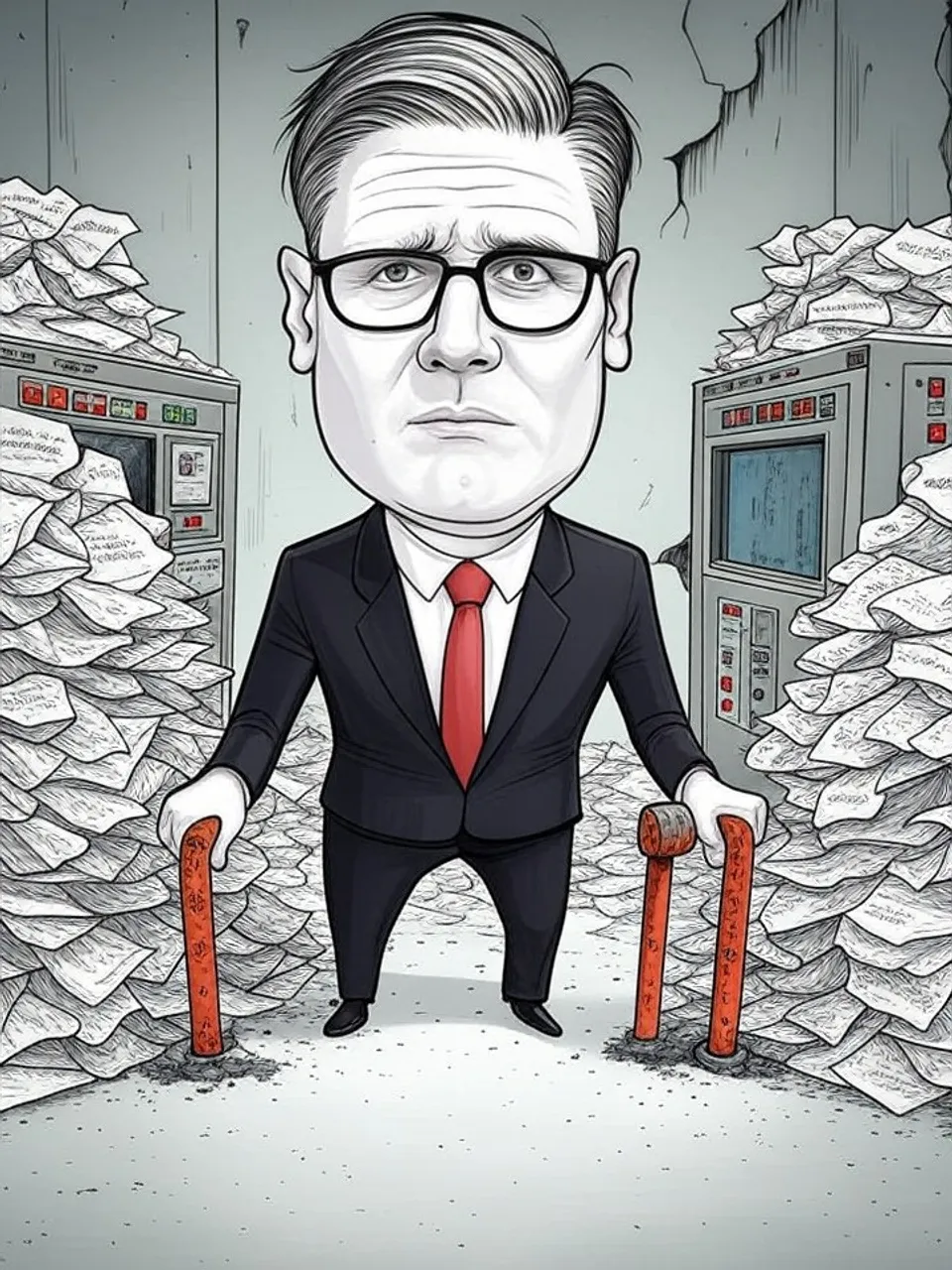
Ex-Starmer aide blames power handover to quangos for stalled pledges
Insider admissions reveal successive UK governments ceded control to regulators and lawyers, paralyzing delivery on core promises. Cross-party layers of safeguards now block action amid rising public discontent.
Commentary Based On
BBC News
Politicians have given away too much power to deliver pledges, says PM's ex-aide
Paul Ovenden, Keir Starmer’s former director of political strategy, declares that politicians across parties ceded control to lawyers, activists, and regulators. This handover crippled their ability to deliver on pledges. The state ballooned in size while losing executive muscle.
Ovenden resigned in September 2025 after offensive messages from 2017 emerged. He now writes in The Times that Whitehall fixates on distractions like the Alaa Abd El Fattah case. British-Egyptian activist Abd El Fattah, jailed in Egypt for over a decade on “fake news” charges, arrived in the UK last week after government lobbying.
Starmer welcomed him initially. Social media posts by Abd El Fattah calling for killing Zionists and police surfaced later. Starmer called them “abhorrent,” admitted unawareness, and ordered a review of information failures.
Government meetings derailed repeatedly into Abd El Fattah discussions, Ovenden told BBC Radio 4. Political staff barely registered the case amid daily priorities. It became a “running joke” symbolizing bureaucratic obsessions.
Politicians handed away power to offload risk, Ovenden argues. Arm’s-length bodies, quangos, and legal frameworks now block action. Examples include colonial reparations debates and vaping bans in pub gardens.
Starmer echoes this frustration. Before Christmas, he told the Liaison Committee that checks, consultations, and regulations slow delivery. Successive governments added these layers after every scandal, he said.
Every lever pull meets resistance from arm’s-length bodies. Starmer pins this on all political colors since entering office. His solution targets regulation cuts, including environmental rules on building and judicial review curbs.
Chris Powell, Labour election veteran and brother to Starmer adviser Jonathan Powell, demands a government “reset.” Voters feel ignored, he writes in The Guardian. Reform UK’s rise threatens Labour amid local elections and internal challenges.
Cross-Party Paralysis
This diagnosis spans governments. Labour now confronts structures it helped build during opposition and prior terms. Tories expanded quangos and judicial oversight post-expenses scandal and Iraq inquiry.
The 1997-2010 Labour era birthed bodies like the Equality and Human Rights Commission. Coalition years layered environmental judicial reviews. Each addressed a failure but entrenched veto points.
Result: A state where ministers promise housing or energy security but stall. Ovenden claims politicians can reclaim control with “stiffening resolve.” History doubts quick fixes.
Delivery Deficit Exposed
Official pledges falter against this machinery. Labour’s 2024 manifesto vowed 1.5 million homes yearly. Output lags as planning rules and consultations multiply.
Economic stagnation follows. Productivity flatlines while regulators probe firms. The £31 billion AI deal collapse cited censorship risks from UK rules.
Public frustration mounts. Polls show trust in government at historic lows. Ovenden notes no surprise voters reject inaction.
Institutional design rewards deflection. Officials delegate to quangos, insulating themselves from blame. Failures trace to faceless bodies, not ministers.
Abd El Fattah’s case exemplifies misplaced priorities. Whitehall obsessed over one activist while domestic crises—Channel crossings, NHS waits—escalate. Core functions erode.
Reform requires dismantling veto networks. Starmer eyes a “bonfire of quangos,” per earlier reports. Yet his own term adds consultations on winter fuel cuts.
The pattern endures. Governments diagnose self-inflicted wounds but apply bandages. Power diffusion ensures no party regains full control.
This confession unmasks UK governance as a voluntary straitjacket. Politicians built an executive that defies executives, perpetuating decline. Ordinary citizens pay with undelivered services and unaddressed decay.
Commentary based on Politicians have given away too much power to deliver pledges, says PM's ex-aide at BBC News.